

Market overreacting to changes in China, says DBS chief
Slowing growth there due to economic and social reforms; region can absorb short-term knock
Singapore
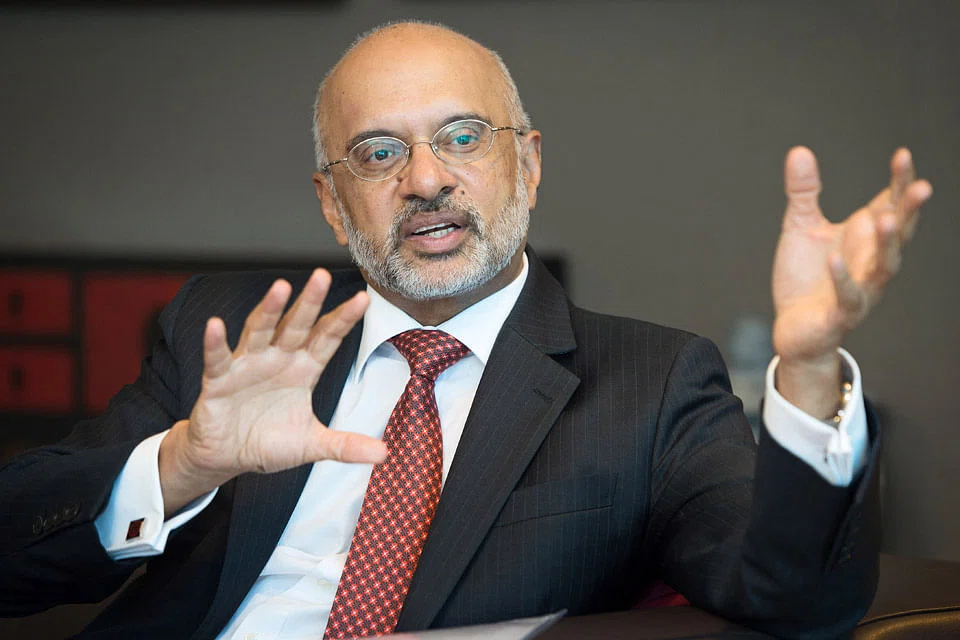
CHINA's slowing growth reflects economic and social reforms laid out as early as five years ago, and the short-term knock on Asia's economy during this transition can be absorbed by the region, DBS chief executive Piyush Gupta said on Thursday.
He told a conference organised by Milken Institute that the market has overreacted to changes in China, which have been a "one-on-one match" with policy prescriptions that include a move towards the consumption model.
The Chinese central bank has also laid out a blueprint for market liberalisation. "China has been doing exactly what people thought they should do. And even more, China has been doing what it said it would do," said Mr Gupta. "Problem is, most people didn't take that seriously."
And as China expands its economy, the scale of growth will naturally slow. But Asia can handle a couple of years of growth slowing by 1-1.5 per cent, said Mr Gupta. "The question is, can US pick up some of the slack?"
He noted that the Chinese may not have understood all the factors that come into play in a transition from a controlled market, to one driven by market forces.
"The transition from control to a market economy is not simple at the best of times," said Mr Gupta, adding that investors must be shrewd to navigate a reformed China. This comes amid the "idiosyncratic risks" associated with social reforms such as its anti-corruption campaign. "Long term, I think it's good for China. In the short term, it is creating a lot of anxiety in the system," said Mr Gupta.
China has the capacity to absorb the amount of potential bad debt in the system, he added. It will also lift its overarching protection of state- linked companies, as it moves towards a capitalist model.
"As part of their migration, I think China will let companies go. We've already seen that in the last year. So the general belief that the state will support everybody is not going to happen," said Mr Gupta.
But the head of DBS was clear that the markets will remain choppy this year, especially given the uncertainty over the Fed rate hike.
"I call it the 'balik kampung trade'," said Mr Gupta, referring to the capital outflow linked to a rate hike. "But the trade lasts a month, it lasts a quarter."
Broadly, panellists noted that China - and most of Asia - will be able to adapt to changes in the economy, as long as the focus on education stays.
"When I look at China, and most of Asia, the fact (is) that the middle class is spending 15 per cent of their income on tutoring or supplementary income on their children," said Michael Milken, chairman of Milken Institute.
But the US still has a global edge in nurturing creativity, he noted.
"It was almost 30 years ago that I met with Gorbachev at the Russian Embassy ... and they told me they wanted to go into the venture capital business. They have great scientists, (and) very highly educated group of PhDs," recalled Mr Milken.
"And I mentioned to him, 'Are you aware that seven out of the 10 fail?' He said, no he wasn't, and 'what do you do? Do you put them in jail?' I said to them, 'I don't think you're ready.' "
READ MORE: China's economy is 'resilient, has huge potential'
TRENDING NOW

Nvidia reinstates Jensen Huang as CEO; Trump says move poses no national security risk

Beyond the greenback, Vietnam’s big borrowers turn to Asian-currency bonds

Indonesia’s coal tycoon Low Tuck Kwong replaced as Bayan Resources president-director

Six workers file employment claims against Crystal Jade Food Manufacturing

