

Markets brace for headwinds, inflationary shocks as Ukraine-Russia crisis looms

EQUITY markets will not escape from the tensions building in Ukraine, and investors should brace themselves for rude shocks in the form of inflation spikes and increased volatility.
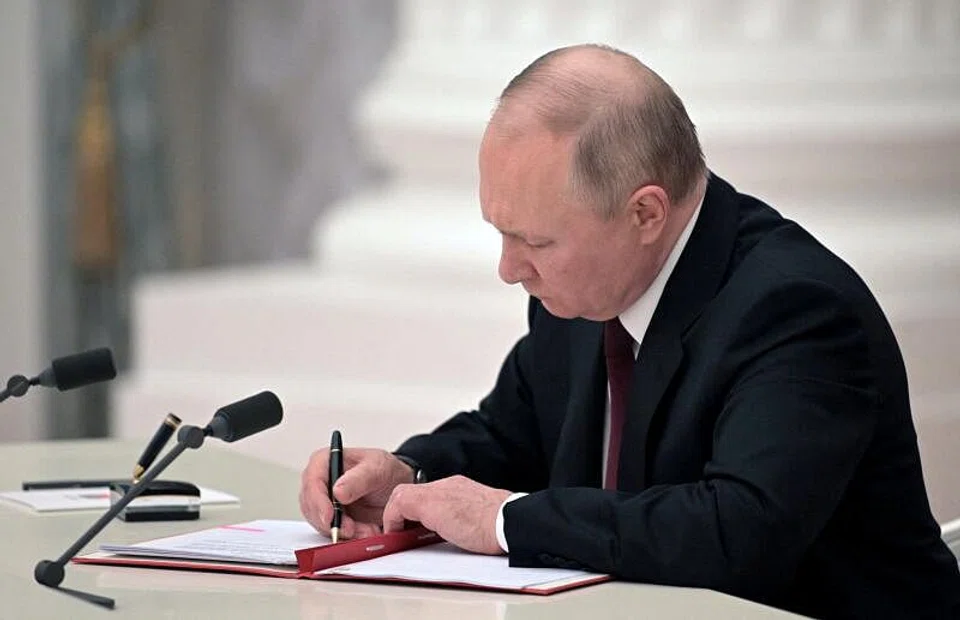
The situation took a turn for the worse on Monday (Feb 21) after Russia President Vladimir Putin recognised 2 breakaway regions in eastern Ukraine as independent entities. This brought with it threats of new sanctions and fears of a major war.
In simple terms, there is no way this could end smoothly for financial markets around the world, and investors should best stay away from risks, market watchers said.
Oanda senior market analyst Jeffrey Halley said that a Ukraine crisis that "culminates in a full-scale Russian invasion" would deliver an inflationary shock to the world as energy exports would likely be cut off from Russia.
"That would be a strong headwind for equity markets in general apart from energy producers and refiners, coming just as the world's central banks look set to begin the monetary normalisation process," he said.
Even if there is no invasion, countries in Emerging Asia face "consequential strategic ramifications" from an "emboldened and largely unchecked Russia" with whom China appears to have deepening ties and implied military alliances, said Vishnu Varathan, head of economics and strategy at Mizuho Bank.
Asian markets have already been hit, with the whole region a sea of red as at Tuesday's close. In Singapore, the benchmark Straits Times Index finished the day at 3,400.58, down 1 per cent or 35.78 points. Malaysia's Bursa fell 0.4 per cent; South Korea's Kospi slid 1.4 per cent, and Japan's Nikkei was down 1.7 per cent. The Hang Seng Index and ASX/200 also shed 2.7 per cent and 1 per cent respectively.
What does this mean for traders? Johanna Kyrklund, group chief investment officer and co-head of investment at Schroders, said the Ukraine crisis broadly highlights the need for investors to be "ready for risks".
"As ever with geopolitical risk, the stakes are incredibly high, and we are faced with seemingly binary outcomes. These risks are unforecastable, clearly, nobody can read the Russian president's mind," she said.
In her view, the probability of adverse outcomes is significant, even if one thinks de-escalation of the tensions is the most likely outcome. She is advising investors to identify positions that could help to protect their portfolios in the worst-case scenario. Commodities, she said, is one option.
"We like this asset class as a hedge against ongoing inflationary concerns, but assets like oil and gold would also provide very helpful protection in the event of a Russian military invasion of Ukraine."
Some noted that Singapore could be more buffered. CMC Markets analyst Kelvin Wong said the "defensive" local stock market could potentially outperform due to its stable and relatively higher dividend yields, as well as a stable foreign exchange rate against the US dollar - both of which will help buffer against a short-term global risk-off scenario.
In the longer term, however, Wong said Singapore could be victim to a "global stagflation scenario".
He said: "Energy and food-related prices escalate and global aggregate demand from the core developed nations will start to wane, which in turn will reduce goods and services provided by peripheral countries such as Singapore.
"Hence, the current 'defensive premium' that (the) Singapore stock market is enjoying may start to dissipate and shall kick-start a potential major correction in line with the rest of the developed nations' stock markets (US, Europe, Japan)."
As for specific sectors, Oanda's Halley said transport, travel and leisure would be the obvious immediate losers in this scenario, but the ensuing rise in prices would also potentially crimp domestic consumption which would affect companies more reliant on discretionary spending. Utilities, however, would be "relatively immune" as they have strong pricing power, he added.
Investors also should not rejoice too early in the event a war is averted, Schroders's Kyrklund cautions.
"If a war is averted it would obviously be helpful to markets in the short term. However, the broader backdrop suggests the situation won't be resolved. Russia may still be a source of risk for months and years to come and one that we'll have to learn to live with."
READ MORE:
TRENDING NOW
32 companies, 6 individuals bag accolades at Singapore Corporate Awards 2026

He built the Vingroup empire. Now South-east Asia’s richest man is handing some key roles to his sons
URA to review guidelines on floor space to give developers more design flexibility: Chee Hong Tat

Chagee, Mixue and Luckin won the market. Sustaining their edge is the harder part

