

MAS seeks views on classification of complex products, including perps
Vivienne Tay &
Claudia Tan HS
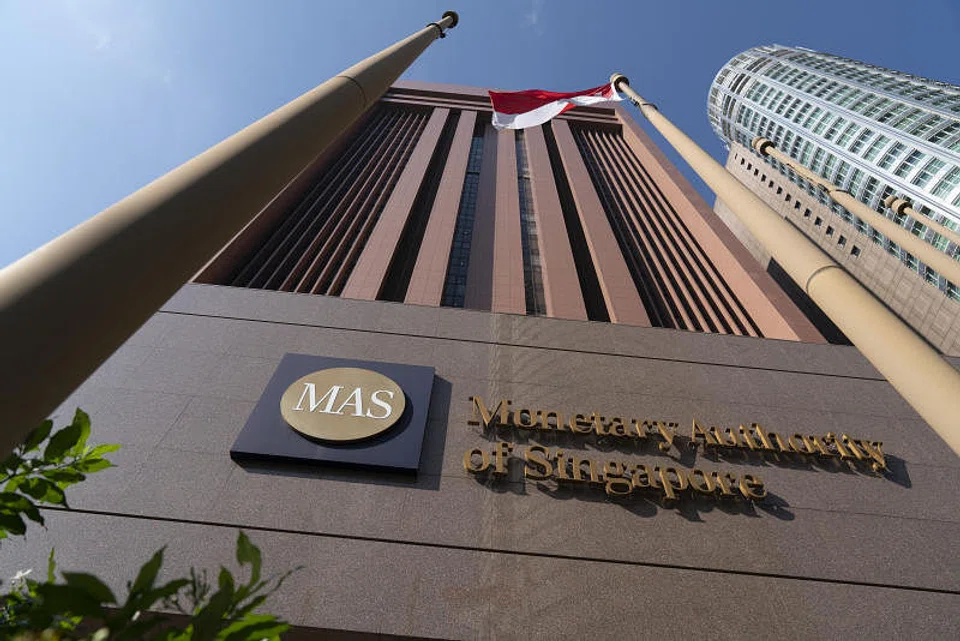
THE Monetary Authority of Singapore (MAS) is seeking comments on whether perpetual securities should be reclassified as specified investment products (SIPs), a move that could affect the future distribution of such instruments to retail investors.
Other investment products highlighted include collective investment schemes (CIS), debentures and preference shares, according to the consultation paper issued on Wednesday (Nov 3).
MAS is looking to classify these investment products as either excluded investment products (EIPs) or SIPs. This means enhanced safeguards when these products are being distributed to retail investors.
EIPs are a list of well-established products prescribed by MAS with terms and conditions generally understandable by the market.
In contrast, SIPs are products that do not fall under the prescribed EIPs list. They must be sold with enhanced distribution safeguards - including requiring intermediaries to assess a customer's investment knowledge and experience before investing.
The consultation seeks to enhance MAS's existing complex products regime introduced in 2012. MAS is also proposing changes to increase retail investors' access to diversified investment funds.
MAS observed that while perps are generally clear about terms and conditions, not all investors may fully understand their features and risks - particularly the feature that redemption is optional.
On top of revising the classification of perps and requiring assessment of retail investors' knowledge and experience, MAS proposed enhanced requirements on the marketing and disclosure surrounding perps.
Enhancements include disallowing perps to be marketed or described as bonds and making compulsory cautionary statements in advertising material that highlight the key features and risks of perps.
Other jurisdictions like Australia rely on risk warnings and enhanced disclosures, while financial institutions in the European Union, Hong Kong and the UK are required to assess the suitability of the product for the investor, taking into account their knowledge and experience, MAS said.
Data from DBS as at Sep 17 showed S$5.45 billion had been raised from 17 perp issuances this year, already exceeding the S$1.9 billion raised across 11 deals in 2020.
When it comes to CIS, MAS is proposing to classify all authorised and recognised CIS as EIPs, except for a small group of more complex funds which are currently subject to additional disclosure requirements and enhanced distribution safeguards for SIPs.
Expanding the EIP-CIS criteria can allow retail investors easier access to a wider choice of diversified and professionally managed funds in their investment portfolios - including exchange-traded funds, MAS said.
At present, only CIS that invest in simple products like shares or gold and use derivatives solely for hedging purposes or efficient portfolio management are marked as EIPs.
MAS is looking to maintain the balance between providing retail investors convenient access to a range of investment products and ensuring sufficient safeguards are present for informed decision-making, said MAS assistant managing director (capital markets) Lim Tuang Lee.
"These include helping retail investors better understand and appreciate the unique characteristics and risks associated with more complex products," he added.
The consultation will end on Dec 15.
Terence Lin, general manager of iFast Global Markets, told The Business Times that the proposed changes for the reclassification of most retail funds to EIPs is a positive development.
"From a practical perspective, this change is aligned with the nature of the retail (authorised and recognised) mutual fund landscape. From our experience, most funds which are currently captured under the SIP regime are actually fairly 'plain vanilla' and well-diversified," said Lin.
The suggested reclassification of more complex debentures, however, does not address the root of the issue in the local bond market today, said Lin.
Most investors are not able to achieve any form of meaningful diversification due to large minimum lot sizes for wholesale bonds, as well as a lack of available retail bonds to diversify across, he said.
"The implementation of classification without an associated change in the way bonds are sold today won't have a significant impact," he added.
Lin suggested that regulators consider permitting distributors or platforms to offer bonds in smaller lot sizes to all investors including non-accredited investors.
This would allow all investors to be able to diversify across a wide range of issuers, rather than being forced to choose from a limited set of available retail bonds, said Lin.
"In alignment with the ongoing education of investors, the platforms could then be required to perform their own classification and provide better product education for retail clients who want to invest in these bonds, which would also help improve financial literacy across the retail investor base," he added.
Lin also said that MAS's move is possibly related to specific defaults experienced in the retail bond market.
Hyflux, for instance, had in 2016 issued perps paying 6 per cent per annum. The water treatment company's long association with Singapore's national water infrastructure may have lulled some investors into thinking the perps were safe instruments.
But with Hyflux winding up, there is a possibility that perp holders will get nothing given that perps are subordinated to senior debt and are not secured. This means that perp holders are only paid after the senior debts and secured bondholders have been repaid.
To add, perps have no fixed maturity date, exposing investors to the credit risk of the issuer for a prolonged period of time. Investors can only exit the investment by selling the perps in the secondary market, provided there is sufficient liquidity. Issuers could also end up deferring payments if market conditions are not favourable - leaving investors with limited exit options and no income.
READ MORE: Market perks up for investment-grade Singapore-dollar perpetual bonds
TRENDING NOW

Nvidia reinstates Jensen Huang as CEO; Trump says move poses no national security risk

Beyond the greenback, Vietnam’s big borrowers turn to Asian-currency bonds

Indonesia’s coal tycoon Low Tuck Kwong replaced as Bayan Resources president-director

Six workers file employment claims against Crystal Jade Food Manufacturing

