

Maybank aims to diversify income streams
It wants to double its non-lending income contribution from retail small and medium-sized enterprise segment in the next three years.
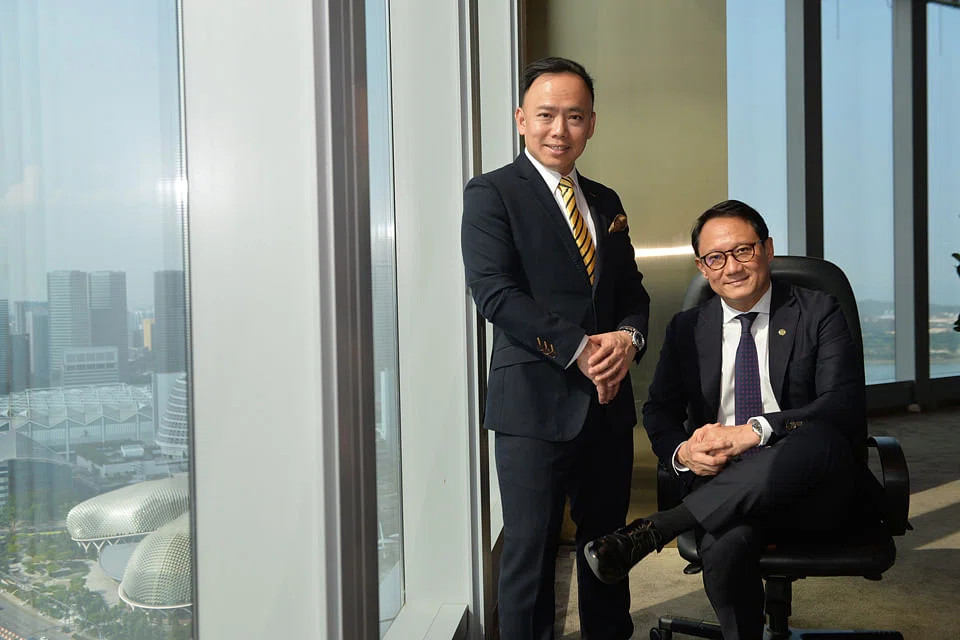
AS dark clouds continue to loom over the global economy, Maybank Singapore aims to double its non-lending income contribution from its retail small and medium-sized enterprise (RSME) segment in the next three years, in an effort to diversify its income streams.
The Malaysian-headquartered bank has already seen results from this new focus, with the RSME segment recording over 100 per cent new business growth in areas like treasury services and trade finance, said Marc Leong, head of SME banking, Maybank Singapore.
"We are trying to move more into fee-based income as we realised there's always asset risk," he noted. "And SMEs need these services, so why not offer it to them instead of having competitors do it?"
As at December 2018, non interest-based income made up 10 per cent of the RSME segment, consisting of treasury services, wealth instruments, keyman insurance, transactional banking or cash management, and cross-border banking services. This is expected to go up to 20 per cent in the near future, if all goes to plan.
This would eventually push interest-based income - meaning loans and deposits - down to 80 per cent from its current 90 per cent. But this doesn't mean that it is becoming less significant to the bank.
Alvin Lee, head of community financial services Singapore and group wealth management at Maybank, explained: "We want to keep lending as a core hook into the customers' relationship."
The RSME segment is relatively new in Maybank. It was started five years ago to target small businesses with turnover of up to S$20 million. Since its launch, its customer pool has grown by about 60-70 per cent.
Mr Leong heads the team of about 85 staff to cater to the needs of these budding businesses. He reports to Mr Lee, who also oversees the commercial banking unit, which consists of companies with turnover of between S$20 million and S$120 million.
About one in five SMEs in Singapore has a banking relationship with Maybank, which includes both the RSME and commercial banking segments.
While Mr Lee said that the bank is still pushing to grow the RSME segment, it is cognisant of the global economic headwinds that threaten many businesses.
With that, the bank is becoming more selective of who it lends to. "As a bank, we need to be slightly ahead of the curve - we mustn't only start reacting when loans turn bad," he said. "I do see us as playing a part in not lending indiscriminately."
He added: "I always tell the guys, it's okay to walk away. Sometimes, we actually do the customers or prospective customers a service by walking away."
Asset quality management is not "lending and forgetting", but about engaging customers, knowing their cashflow and helping them be better able to repay their loans, noted Mr Lee.
According to him, the asset quality of the bank's SME customers is improving year on year, on the back of more disciplined credit assessment and walking away from deals that the bank doesn't believe in.
Maybank's non-performing loans ratio for its SME segment (including commercial banking) has been stable for the last two and a half years, with numbers "well below" the industry average of about 5.1 per cent.
But even with the gloomy economic outlook, Mr Lee still sees several bright spots for Singapore. For example, medical services is one area that the bank is bullish on, he said. Sectors such as general commerce and services are also still holding up.
Separately, the bank is also toying with the idea of applying for one of the five digital banking licences in Singapore, as reported earlier by BT last week.
Mr Lee had said that both digital banks and incumbent banks can still co-exist here as their target segments are different; the former is more likely to target underserved small businesses, while the incumbent banks traditionally serve more established SMEs.
Regardless of the eventual decision, he pointed out that the bank already has digital platforms in place, and is still improving its digital capabilities to serve its customers. But that alone is not enough.
"As a firm, we think digital is important, but I don't think any digital bank will survive on its digital capability alone," he said.
It is about the engagement with customers that will anchor and solidify their long-term relationship, he added. On that note, he flagged that the bank has been ramping up its engagements with SMEs, by organising talks and other events that are relevant to their needs.
With many challenges on the horizon, such as the trade war and digital bank challengers coming onboard, Mr Leong concurs that the bank will need to step up to understand and deliver what its SME clients want.
"SME banking should be an entrepreneurial unit by entrepreneurial people for entrepreneurs," he added. "If we have this mindset and this heart, I think we are going to do okay, no matter what the headwinds are."






