Meta shares surge as digital ad rebound fuels AI investments
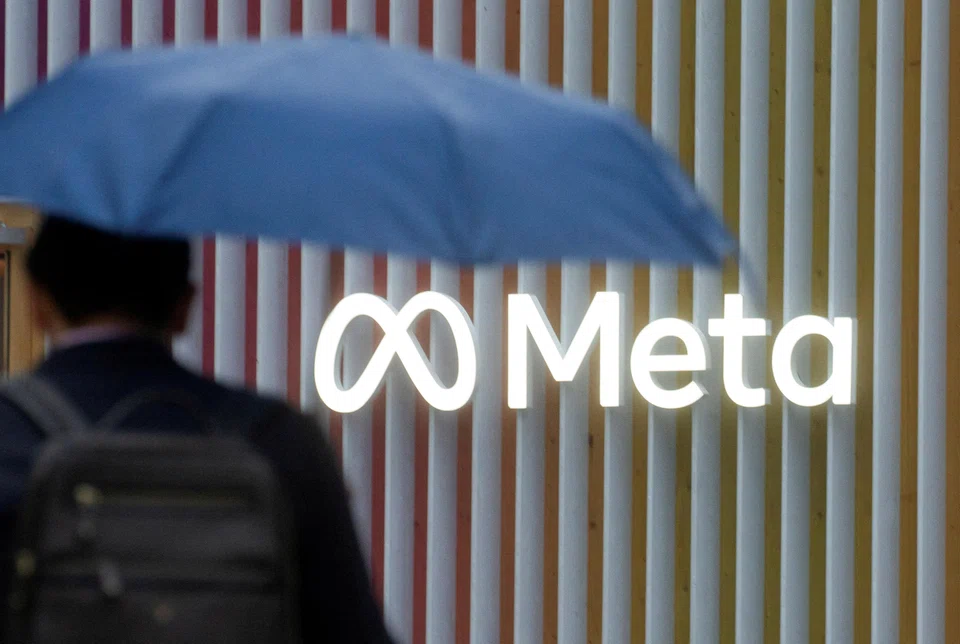
Meta Platforms shares surged 15 per cent after the company reported a surprising rebound in digital advertising sales, buying it time to keep pouring money into speculative businesses such as artificial intelligence (AI) and virtual reality (VR).
The owner of Facebook, Instagram and WhatsApp, which spent the last few months aggressively cutting costs, reported quarterly revenue and user growth that beat analysts’ estimates. As Meta’s stock surged, chief executive officer Mark Zuckerberg said that generative artificial intelligence was going to “impact every single one of our apps and services” and that Meta was well-positioned in the industry’s current AI race.
“A stronger financial position will enable us to weather a volatile environment while remaining focused on our longer-term priorities,” he told investors on a call on Wednesday (Apr 26). “There’s an opportunity to introduce AI agents to billions of people in ways that will be useful and meaningful,” improving customer service chats with businesses, the advertisement creation process and the gaming experience in virtual reality, he said.
Shares climbed to US$240.40 in New York on Thursday morning. Meta’s stock has gained 74 per cent this year till the close on Wednesday, recovering from its worst year on record with a 64 per cent decline in 2022.
Zuckerberg explained how artificial intelligence technology has already helped the company choose the right short-form videos, called Reels, for its users. He said Meta is making more money from Reels, and time spent on Instagram has gone up by 24 per cent.
Meta is working to move faster while cutting costs in what Zuckerberg has dubbed the “year of efficiency”. A slowdown in advertising demand over the last year forced the social media giant to slash headcount and reduce spending, and sparked scrutiny of the billions Zuckerberg has been investing in virtual reality technology. The company signalled that as it pares costs, it is still willing to hire in a few key areas, such as generative AI.
First-quarter sales rose to US$28.6 billion – a return to growth after three straight quarters of declines. That compared with the US$27.7 billion average analyst projection. Shares gained more than 12 per cent in after-market trading.
The company said revenue in the current quarter will be as much as US$32 billion, compared to the US$29.5 billion average estimate.
Meta continued to add users in the March quarter for Facebook, Instagram and WhatsApp. Altogether, more than three billion people used at least one of its products daily – a new milestone.

Still, there were some setbacks, including in Meta’s division focused on building virtual reality technology for the metaverse. The unit, called Reality Labs, had an operating loss of US$3.99 billion in the quarter, and brought in revenue of US$339 million – down 51 per cent from a year earlier and less than analysts projected.
The metaverse will become a “sideshow” this year as the company is “likely to double down on generative AI and large language models”, said Mandeep Singh, an analyst with Bloomberg Intelligence. “Not paring Reality Labs investments could be a sticking point with investors.”
Zuckerberg addressed concerns that the company has shifted its focus away from metaverse development, not long after changing its corporate name, in favour of work on AI. “A narrative has developed that we’re somehow moving away from focusing on the metaverse vision, so I just want to say upfront that that’s not accurate,” he said. “We’ve been focusing on both AI and the metaverse for years now. And we will continue to focus on both. The two areas are also related.”
Zuckerberg spent six minutes in his opening statement for the call discussing the company’s work on AI and 90 seconds on the metaverse.
Both efforts are expensive. AI involves a buildout of Meta’s data centres, where powerful machines process and store information for its networks and products. But Meta indicated it will not have to spend much more on that. “We are no longer behind in building out our AI,” Zuckerberg said. “And to the contrary, we now have the capacity to do leading work in this space at scale.”
Capital expenditures in the first quarter rose to US$7.09 billion, from US$5.55 billion in the same period last year. Meta reported net income of US$5.7 billion, or US$2.20 per share, more than the average estimate of US$2.01 per share. BLOOMBERG
Decoding Asia newsletter: your guide to navigating Asia in a new global order. Sign up here to get Decoding Asia newsletter. Delivered to your inbox. Free.
Share with us your feedback on BT's products and services