

Metro seeks deals in industrial property, student housing, suburban malls
It has acquired 26% stake in a Boustead portfolio and set up a fund with Lee Kim Tah Holdings and Woh Hup Holdings.
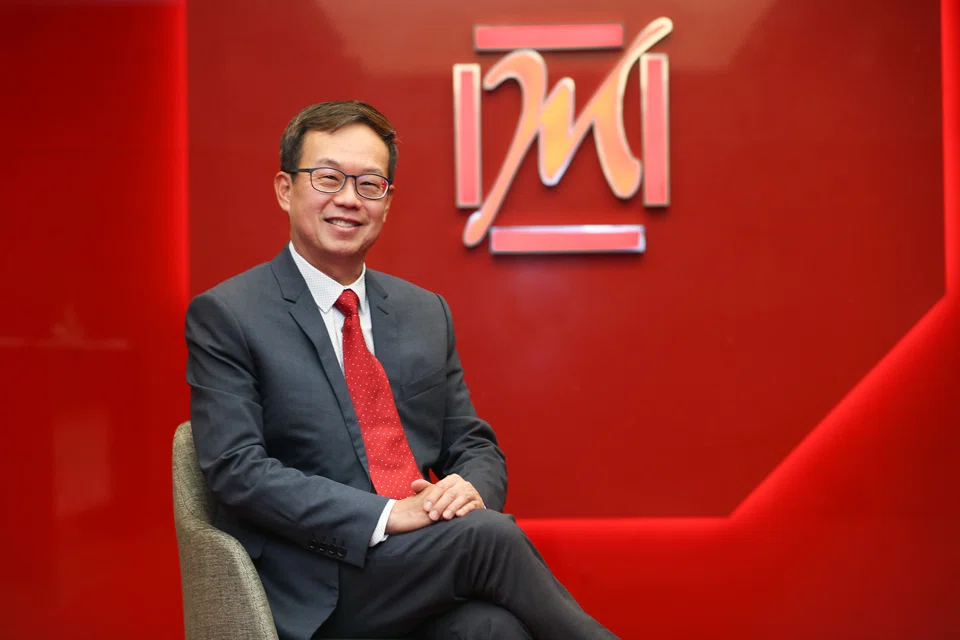
METRO Holdings plans to "scale up" its investments in industrial property and student housing, as well as in suburban malls, as the pandemic turns up good deals or new assets for sale this year, said group chief executive Yip Hoong Mun.
The mainboard-listed retail and property group has recently made some significant moves to diversify its property portfolio, which had previously comprised investments in commercial and residential properties.
Metro acquired a 26 per cent stake in a Boustead portfolio of 14 industrial and logistics properties in Singapore for up to S$76.6 million, marking its entry into what Mr Yip described as a "highly sought-after" market.
It also entered the student accommodations sector by setting up a fund with Lee Kim Tah Holdings and Woh Hup Holdings to acquire such properties in the UK.
Last Friday, Metro announced that the fund would be acquiring a student housing property in Bristol, United Kingdom, for £30.1 million (S$54.8 million).
But Metro is also facing more competition for these assets. Various buyers, spurred by the low interest rate environment, have set their sights on these resilient property sectors, Mr Yip told The Business Times in an interview.
"We realise it in a lot of the good deals. There are a lot of international funds that are coming in because they can borrow cheaply. So, more competition."
The competition has compressed yields. Mr Yip noted that returns on student accommodation and industrial properties have fallen by some 5-6 per cent of late.
For the same reason, Metro's suburban malls in Australia are yielding 4.5-5 per cent, lower than the 6 per cent when Metro invested in them in 2019.
Nevertheless, Mr Yip is confident that Metro, alongside its partners, is in a good position. The group is looking at "a few prospective investment opportunities", he said.
Metro has plenty of headroom to lever up if it needs to. Its debt-to-equity ratio was 0.1 for FY2020, according to its annual report released in August last year. It also has a S$1 billion multicurrency debt facility in place. It was established in 2018, and Metro has so far drawn S$350 million from this programme.
Resilient sectors
The Covid-19 pandemic has been tough on Metro's property investments. The property division's revenue for H1 2021 ended Sept 30, 2020 fell to S$11.5 million, down from S$67.1 million the previous year. This was mainly due to lower sales of property rights of residential developments in Jakarta.
Metro's overall revenue fell 71.5 per cent on year to S$36.7 million. The company nevertheless managed to record net profit of S$19.8 million, down just 5.7 per cent from the previous year. This was thanks to contributions from The Crest, a condominium jointly developed with Wing Tai and Maxdin in Singapore.
Metro is betting that industrial property, student housing assets and neighbourhood malls will make for more resilient investments. Mr Yip believes the demand supporting these three "hot" sectors will continue even after the pandemic.
Demand for logistics properties, he said, is being driven at least in part by a structural change in demand from manufacturers. Some of them, having experienced supply chain disruptions during the pandemic, are no longer operating on the traditional "just in time" basis. Rather, they have switched to a "just in case" model that requires them to keep more stock or inventory on hand.
"And for logistics, you need a network. So, this is a sector we believe is highly sought after," said Mr Yip. "In fact, the yield for logistics properties has come down quite a lot because of this attribute."
Metro is similarly bullish on student accommodations, even though the UK's pandemic situation worsened just as it made the investment.
Metro has considered the sector for some time, Mr Yip said.
"Education is quite different. During good times, a lot of people want to study. During bad times, even more people want to study. So, it's an evergreen business."
In addition, the number of international students in the United Kingdom may receive a boost from Chinese students turning to the UK amid frigid US-China ties.
Regional expansion
On the retail front, Metro hopes to expand into neighbourhood malls in Australia. It has stakes in 10 such properties following an A$95.8 million (about S$89.5 million at that time) investment in a property portfolio under a joint venture agreement with Sim Lian in 2019.
Those retail centres are anchored by supermarkets Coles and Woolworths, and "did better" during the pandemic.
The outlook for the office and residential property markets is slightly less bright, but Mr Yip is retaining his optimism.
Metro's premium Grade-A office towers in Tampines have faced some "difficulty", Mr Yip said. But he noted there are "a few Chinese companies that are coming to town". "And because of the trend of working from home, some companies are looking for decentralised offices," he said.
One tenant, insurance group AIA, is moving out. But "there may be some surprises soon", said Mr Yip.
On the residential property front, Metro is not ruling out the possibility of further investments. This comes even as talk of another round of cooling measures to tamp down the resurgent property market in Singapore has intensified in recent weeks.
The Crest condominium could be subject to the impact of such cooling measures, if any, but Mr Yip said the project is now "almost sold off".
"If there's a good opportunity with another developer that needs a partner, and we think both of us can work on it, then we will consider," he said.
Mr Yip added that Metro continues to have no intention of being a developer or operator of any asset. "We want to focus on what we can do well, that's our investments."
Shares of Metro closed up 2.07 per cent to S$0.74 on Friday.






