Metro sees demand for decentralised offices as companies diversify beyond CBD

Singapore
PROPERTY and retail group Metro Holdings sees demand for decentralised office space as more companies look to establish regional offices in Singapore.
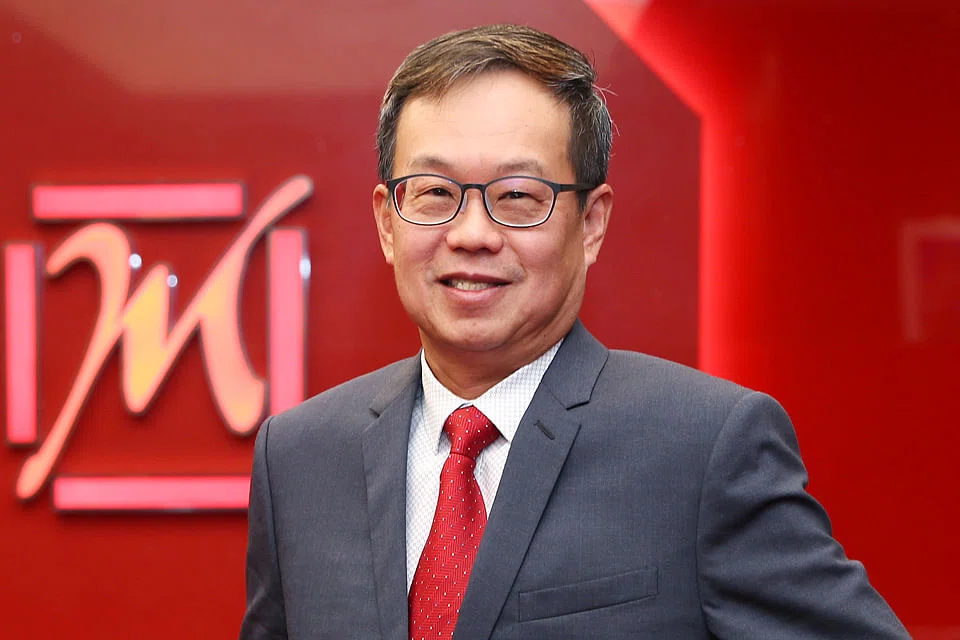
While the pandemic has raised questions over the future role of offices, group chief executive officer Yip Hoong Mun reckons that there could be demand from tenants in the financial services sector as well as the logistics sector for its Grade A office towers at Tampines Regional Centre owing to its location. In 2019, Metro acquired a 50 per cent stake in the two blocks, marking its entry into the Grade A decentralised office market.
"There's a demand for decentralised offices," said Mr Yip, adding that there are companies keen to set up regional offices in Singapore, some of whom may want to diversify with a presence outside the central business district. He was speaking at a virtual briefing on Tuesday morning after Metro released its financial results.
Occupancy at the two office towers stood at 88.9 per cent as at March 31, 2021. Earlier this year, it was announced that co-working operator JustCo would manage a space there from Q3 2021.
In response to a question on its retail operations, Mr Yip said: "Retail can be summarised in one word - challenging. Not only in Singapore, but many countries where we experience lockdowns."
Once best known as a retail player, Metro has two department stores in Singapore at Paragon and Causeway Point as the headwinds plaguing the retail space prompted it to shutter stores along the way. At the same time, it has been striving to drum up online sales via its own e-commerce platform as well as those by Lazada and Shopee.
Mr Yip said that the fallout from the pandemic has been different for both stores since one is located in the suburbs and the other along Singapore's main shopping belt.
Prior to the existing tightened measures which were introduced on May 16, Metro Causeway Point had nearly recovered to pre-circuit breaker levels, while Metro Paragon was still feeling the impact from the dearth of tourists.
He added: "Last year, we were quite happy to receive some support from the government - property tax (rebates), the Jobs Support Scheme (JSS) and also from the landlords, in terms of rental rebates. We continue to work to optimise costs. But to make it more viable, we need some help from the government and also the landlords."
Last year, Metro received some S$9.3 million from the JSS, property tax rebates and rental rebates. Mr Yip said that it is in talks with both its landlords for its two Metro stores, given the recently introduced tightened measures, and hopes to get continued support through rental rebates.
Mr Yip also said that Metro intends to build a bigger purpose-built student accomodation (PBSA) portfolio together with its partners Lee Kim Tah Holdings and Woh Hup Holdings, citing PBSA assets as a means for long-term recurring income.
In December 2020, Metro established a PBSA fund, Paideia Capital UK Trust, with its two partners. The trust acquired its first PBSA property in Warwick for £21.5 million (about S$38.7 million), followed by a second asset in Bristol for £30.1 million in January this year.
He went on to add: "We have quite stringent criteria in investment. It must be within the top 30 universities, a good asset, just completed without minimum capex."
For the six months ended March 31, 2021, Metro's net profit rose over 50 per cent year-on-year to S$16.97 million, with its results largely boosted by higher contributions and fair value gains (net of tax) from its properties in China.
Revenue slid 25.7 per cent to S$60.6 million, coming on the back of lower contributions from its property segment, which saw reduced revenue recognition from the sale of property rights of its residential development properties in Indonesia.
Revenue from its retail business, however, was comparable to the corresponding period a year ago at S$47.55 million.
Earnings per share worked out to 4.4 Singapore cents, up from 3.9 cents in the previous corresponding period.
The group has proposed a final dividend of two cents per share as well as a special dividend of 0.25 cent per share. It paid out a final dividend of two cents per share last year.
For the full year, net profit was up 14 per cent to S$36.75 million, while revenue dropped 53.7 per cent to S$97.32 million.
Metro's management also said on Tuesday that there is some S$45 million in sales yet to be recognised from its residential project The Crest at Prince Charles Crescent, a 469-unit condominium which is fully sold.
Metro shares closed at S$0.785 on Tuesday, up 4.5 cents or 6.08 per cent.