

As Middle East conflict rages, DBS urges SMEs to hedge at least half their FX exposure – not time the market
This comes as the bank expands its SecureFX facility to all corporate clients in Singapore

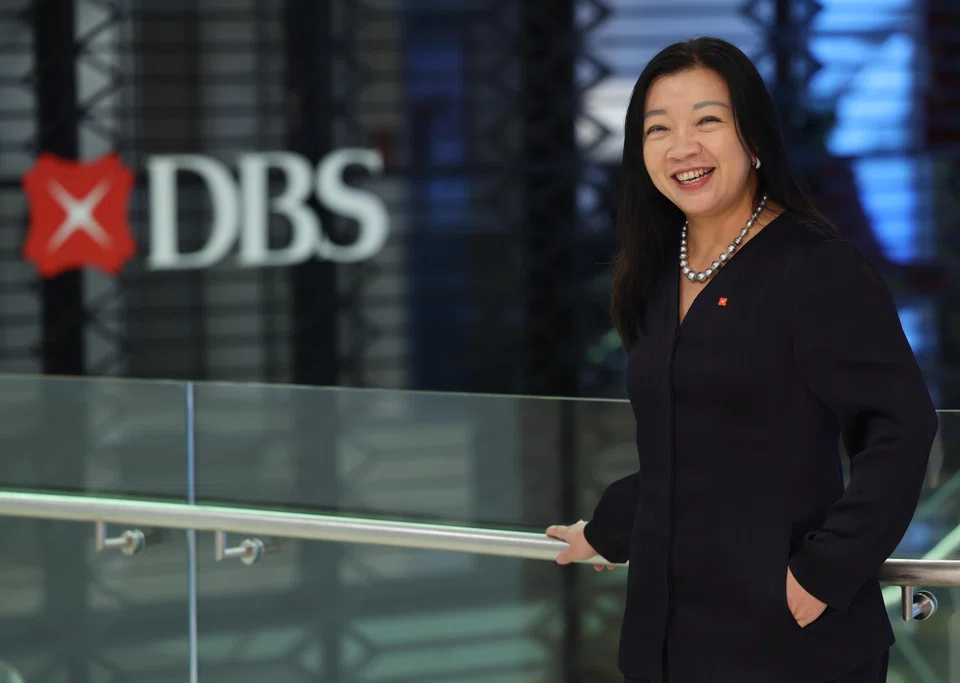
[SINGAPORE] Small and medium-sized enterprises (SMEs) in Singapore and the region should lock in foreign-exchange rates instead of trying to time the market, said Eileen Chia, regional head of corporate advisory for global financial markets at DBS.
Her advice comes as FX markets experience heightened volatility amid the ongoing conflict in the Middle East.
“Don’t try to take a view – just lock it in and remove the uncertainty from (your) business,” Chia told The Business Times on Wednesday (Mar 4), when asked how SMEs with FX exposure should navigate the current environment.
“If you’re not sure, at least do 50 per cent (hedging),” she added. “Don’t leave it totally unhedged.”
Her comments come a year after DBS introduced its SecureFX facility, which allows SMEs to lock in FX rates for payments of up to US$1 million at any given time, without requiring credit lines or incurring additional costs, across five currency pairs.
Since its launch, 60 per cent of the bank’s SME customers with cross-border payment needs have used SecureFX to lock in rates. The US dollar-Singapore dollar pair accounted for 63 per cent of cross-currency flows under the programme.
The US dollar-euro and Singdollar-euro pairs made up most of the remaining transactions, accounting for 14 per cent of flows each.
Earlier this year, DBS expanded the SecureFX facility beyond SMEs to all corporate clients in Singapore.
“The whole corporate space now will have access to SecureFX, and we expect – especially with what’s happening now – that the take-up rate will be even higher,” said Chia.
But for larger companies, FX management tends to be more nuanced and situation-dependent, as such organisations typically have a “stronger sense of what they want to do” and more tools at hand to manage hedging risks.
“Some of the large corporations also have very clear hedging mandates or hedging policies that they have to adhere to; they’re usually guided by that,” Chia noted.
This is as the conflict between the United States and Israel against Iran – which began on Feb 28 – has pushed major Asian currencies weaker against the US dollar.
Over a five-day period ending Mar 6, the Singdollar declined 1.2 per cent against the greenback to trade near the 1.28 level, compared with around 1.26 before the conflict.
When markets reopened on Mar 2, the first trading day after the Gulf clashes began, the reaction was milder than Chia had expected.
“I personally expected more volatility, but clients seem to be not as worried,” she said. “I think, generally, they feel that with the (US) midterm elections coming, it is unlikely the war will be too prolonged, (and) it’s not to the benefit of the US.”
The bank’s base case remains that macroeconomic fundamentals will reassert themselves if the conflict is “not prolonged”, she added. Expected interest rate-cuts by the US Federal Reserve in the second half of the year could also result in the American currency “slowly (trending) downwards”.
AI nudges
DBS’ in-house generative artificial intelligence (AI) tools are also helping clients manage FX exposure, said Chia.
Among these is Hyper-Personalisation, or Hi-P, an AI-driven recommendation analytics platform that sends targeted digital notifications to clients.
Companies that regularly sell US dollars, for instance, can receive alerts when daily rates reach favourable levels, or suggestions to lock in rates when currencies move in a certain direction.
“Another type is behaviourally driven, meaning that we have an analysis of all the customers’ behaviour,” Chia said. “Some clients only hedge twice a year, so when the time comes, we will also send a nudge: ‘Hey, it’s that time of the year again, do you need to do your hedge?’”
Her team is also using AI to improve lead generation.
Previously, relationship managers were given lists of customer leads and asked to contact them to assess interest in FX or investment products. Conversion rates – referring to the share of outreach that results in an actual transaction – were typically in the single digits.
Now, AI tools comb through internal and external reports to build profiles of individual customers before calls are made, helping teams identify companies more likely to have FX or investment needs.
For instance, the technology can flag businesses with idle cash based on financial statements, or identify companies that have recently raised funds – such as through initial public offerings – and may be looking to deploy surplus liquidity.
This approach has helped lift conversion rates to closer to 20 per cent.
“Using generative AI, we can prioritise the leads... and we’re more targeted in our conversation with the customer,” Chia said. “It’s transformed the way we work.”






