Minor International sees major opportunities in travel recovery

Megan Cheah
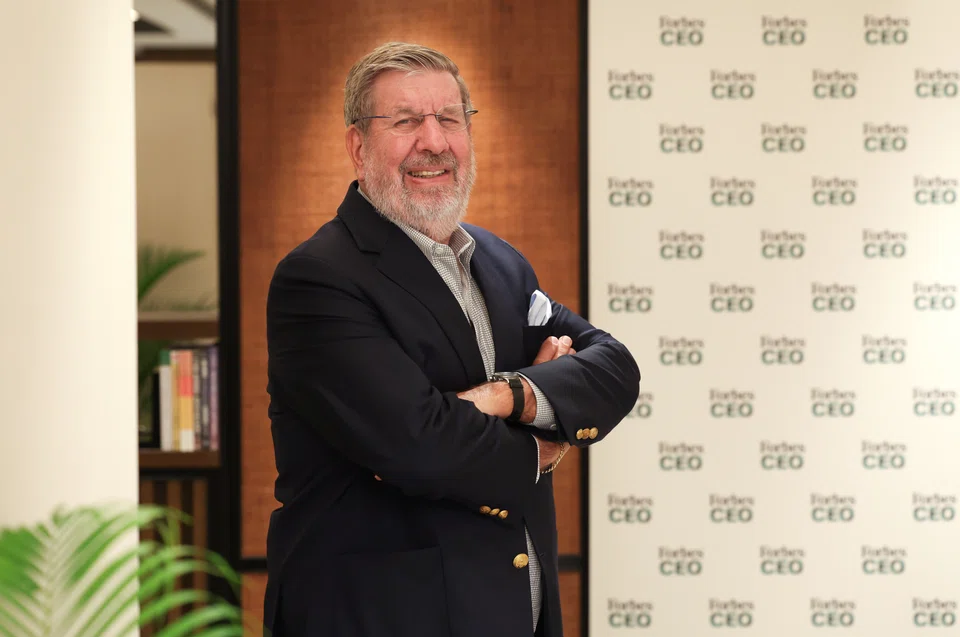
MINOR International was so named because its founder, William Heinecke, was just 17 years old – a minor, in legal terms – when he started the business.
Some 45 years on, Heinecke shows no signs of slowing down his quest to build the company’s global portfolio of hospitality and lifestyle brands.
At the last count, the Thailand-based conglomerate operated some 8,800 rooms in about 550 hotels worldwide. Its sprawling ecosystem of hotels and resorts, which serves customers across six continents, includes luxury brands such as Anantara Resorts and Avani Hotels & Resorts.
Listed on the Stock Exchange of Thailand, the group is also a distributor of lifestyle brands and runs a number of food and beverage (F&B) outposts.
Minor International’s extensive lifestyle catalogue include Charles & Keith and Anello. Its restaurant operations include The Pizza Company in nine countries and Poulet in two.
But Minor International chairman Heinecke still considers the company “relatively small”.
“As a company, we still have so many areas to open up and grow,” said Heinecke on the sidelines of the Forbes Global CEO Conference 2023, held at Shangri-La Singapore in September.
Despite its already wide array of offerings, the company is no slouch when it comes to acquisitions to enter into new markets.
In 2018, Minor International added NH Hotel Group to its portfolio, giving it a new anchor in Europe.
Then, the Covid-19 pandemic hit. And global travel curbs crippled the group’s operations.
The pandemic forced Heinecke to make some of the toughest choices in his career, he once said in a media interview.
But, on the bright side, it also taught Minor International’s leadership team to be agile and adapt to changes.
Bullish on pent-up demand
With the pandemic now firmly in the rearview mirror, the hospitality giant appears to be back on the upswing in a recovery driven by pent-up demand and revenge travel.
For the first half of 2023, the group reversed out of the red with a net profit of about 2.3 billion baht (S$86.2 million), compared to a net loss of around 2.2 billion baht in the corresponding year-ago period.
Total revenue for the half-year period to Jun 30 climbed 36.1 per cent to 73.4 billion baht, led by improvements in the hotel space.
Hotel revenue soared 41.2 per cent in H1 to 53.4 billion baht on higher contributions across all geographical segments.
Hotel revenue from Europe jumped 40 per cent to 38.8 billion baht, while hotel revenue from Thailand more than doubled to six billion baht, displacing Australia and New Zealand as the second-largest revenue contributor by geographical segments.
Revenue from Minor International’s restaurant segment rose 19.4 per cent to 15.3 billion baht in H1, while revenue from its retail business fell 9.2 per cent to one billion baht.
As the group’s earnings climb, Heinecke remains bullish on its prospects.
He highlighted that profits are up to par with 2019 numbers, despite low contribution from Chinese tourists. The bulk of the group’s international tourists now come from the rest of Asia, Europe and the Middle East, he said.
“We saw a lot of revenge travel ... but there is no revenge travel from China because they haven’t been able to get passports and visas, and get out,” said the Thai-American hotelier.
Heinecke also noted that there are not enough flights leaving and entering the country.
Analysts who previously spoke to The Business Times expect Chinese air travel to rebound once international travel regulations in the country are eased.
Likewise, Heinecke is positive China will be “nearly back” by next year.
Shifting travel preferences
But beyond the immediate-term gains of revenge travel, the hotel tycoon believes the recovery will be sustainable in the long term.
Shorter work weeks and longer vacation periods are some trends he sees fuelling this extended recovery. With “certainly high” prices for hotel rooms and travel, tourists will be encouraged to stay longer in one place and opt for activities that are more experiential, he said.
“You have Tiffany & Cos and Louis Vuittons everywhere, but what you don’t have is the food, the culture…,” said Heinecke. More than for any other reason, this is why people are travelling, he added.
To ride on the latest trends, Minor International is carefully tailoring its offerings to include unique experiences specific to destinations where the group has its hotels and resorts.
It also has to be “Instagram-able”, quipped Heinecke, referring to the social media platform.
For example, see-through, bubble-shaped lodges in Thailand’s Anantara Golden Triangle Elephant Camp & Resort bring visitors up close to the site’s elephant herd, while looking stunning in photographs.
Another travel trend that may have been influenced by the pandemic is wellness travel, as health has risen in importance for affluent consumers.
While it is nearly a basic requirement for resorts to have spas, Minor International’s resorts also have in-house clinics for both aesthetic and physical health purposes, with trained and licensed doctors, he said. “Now, when people go away on a vacation, they want to come back looking more beautiful,” he added. “A diet may take two weeks; if you want to get some botox or filler, you can do that in a hotel.”
Markets to conquer
With so many locations already under the company’s purview, are there still markets for Minor International to conquer? Yes, said the chairman – and Singapore is one of them.
Heinecke said Singapore is a market the company is “very focused on”, highlighting that Minor Food Singapore is now one of the group’s best-performing arms.
It has a firm presence here with around 20 restaurant brands under its portfolio, including familiar names such as Thai Express, City Donut and Extra Virgin Pizza.
It also has a close to 25 per cent stake in local F&B stalwart BreadTalk Group, which owns the eponymous bakery and several other recognisable F&B chains.
But on the hospitality side, something still eludes the group – a Singapore hotel. Heinecke said the company is still on the lookout for the right opportunity to enter the local hotel scene. He pointed out that the Republic has taken off again since it reopened its doors post-pandemic, with multiple events drawing tourists in.
Similarly, he is also keen to open hotels in Japan, where the group already has some restaurants.
Heinecke believes these opportunities will come in due time. “We’re trying to get to the whole world, (but) we tend to go where we have the quickest opportunities,” he said.
His current role as chairman, having stepped down as chief executive in 2020, gives him the chance to develop new relationships – and speed up Minor International’s entry into new locations.
It also enables him to focus on more long-term goals, such as sustainability-related initiatives.
Alongside the company’s quest to be zero-carbon by 2050, Minor International is also involved with specific conservation and education programmes such as rescue programmes for turtles and coral regeneration in the Maldives – areas that Heinecke says are close to his heart.
At the same time, the group is still hungry for more, and reaching into more countries. Several new openings are in the works in the Middle East and Europe, he said.
“If we were a giant that was already everywhere, (these developments) might be a little slower,” he said. “But because we’re still young enough, we have many opportunities.”
“I’m not the least bit concerned about the future.”