

OCBC Q3 profit rises 31% to S$1.6b; net interest margin sees stronger expansion than peers


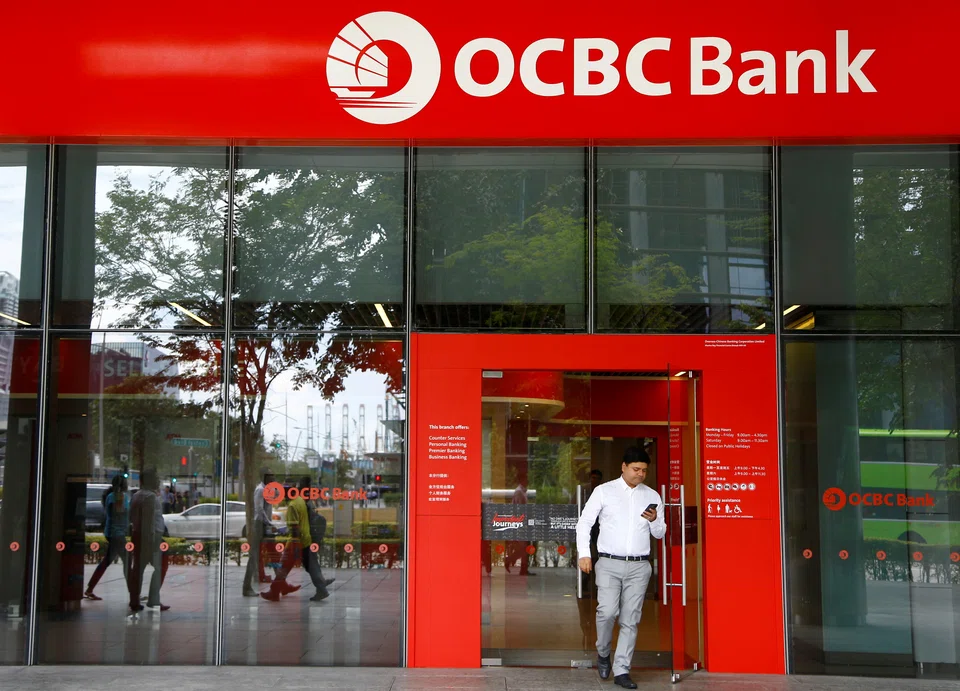
BUOYED by strong net interest income, OCBC’s net profit rose 31 per cent to a record S$1.6 billion for the quarter, beating consensus forecasts.
Net interest income surpassed S$2 billion for the first time, rising 44 per cent to S$2.1 billion for the quarter ended Sep 30. Even as all three local banks saw margin uplifts amid rising interest rates, OCBC’s quarterly net interest margin (NIM) climb of 35 basis points means that it has reaped the strongest margin expansion among its peers for two quarters now.
On a year-on-year basis, NIM rose 54 basis points.
Five analysts in a Bloomberg survey had expected OCBC’s third-quarter earnings to come in at S$1.44 billion. Its earnings per share stood at S$1.40, up from last year’s S$1.07.
Chief executive Helen Wong said in a media briefing on Friday (Nov 4) that she expects NIM for the fourth quarter to go above 2.1 per cent, and that it will come in at around 1.8 to 1.9 per cent for the full year. The high-NIM environment could potentially hold for the next year, but deposit and funding costs will also pick up in tandem with rate hikes, she noted.
Asia is likely to be more resilient amid recession risks in the US and Europe, Wong said, but added that she does not have a “firm will” as to whether a recession could befall the region.
“If the whole world goes to minus or negative economic growth, Asia would not be spared. Will it go to negative? Or is it pretty low single digits, or pretty flat? That will be difficult to say. It’s just that it should do better than the rest of the region,” she said.
Wong added that she hopes China will open up by the end of the first quarter next year or early in the second quarter. Still, she said that the bank’s strategy in China centres on linking up greater China with Asean, and that it does not intend to compete head-on with domestic Chinese banks.
She pointed out that OCBC’s onshore loanbook stands at just 2 per cent of its total loans, with a third of that in real estate.
“And so I think the strategy is not impacted by the situation in China. But of course, if China’s economy is not growing as fast, it also has rippling effects on the rest of Asia. But I think the comfort is to continue to see that Chinese exports stay strong, potentially also helped by the weakening renminbi.
“When there is trade, when there are investment flows, that is exactly what we are targeting. And the wealth flows,” Wong said.
OCBC’s non-interest income for Q3 slipped 4 per cent to S$1.05 billion for the quarter. This was primarily due to a decline in wealth management fees amid risk-off investment sentiments globally. Net fee income fell 20 per cent to S$453 million.
Nevertheless, the bank has seen net new money inflows and is looking to invest in its private banking function, including growing its pool of relationship managers. It will also deepen investments in its wholesale banking function and technology capabilities, Wong said.
Total allowances for the quarter were 6 per cent lower at S$154 million in Q3. About half of these were from impaired assets, including a S$47 million charge for the group’s overseas properties.
Its non-performing loan ratio came down to 1.2 per cent, from 1.5 per cent in the year-ago period. The bank’s non-performing assets also declined to S$3.69 billion, 13 per cent lower than last year, on the back of higher recoveries and upgrades from corporate and consumer segments in Malaysia and Indonesia.
Wong highlighted that relief loans extended at the height of the pandemic have “come down really substantially” and currently make up 0.2 per cent of the bank’s loanbook, compared with a proportion in the “high single digits” previously.
The non-performing loan ratio in Greater China, however, rose 1 per cent for the quarter. The bank said this was “largely attributable” to a single network customer name, which is mostly secured against property. “There is no structural stress observed for the group’s Greater China exposure,” said the bank’s newly appointed chief financial officer Goh Chin Yee.
The bank’s operating expenses grew 7 per cent to S$1.27 billion, led by a rise in staffing costs as well as from annual salary increments.
For 2022, Wong said that OCBC is on track to deliver on its targets of mid single-digit loan growth and keeping full-year credit costs of low to mid-teens.
OCBC shares closed S$0.09 or 0.8 per cent higher at S$12.04 on Friday.






