More asset owners may adopt ‘total portfolio approach’ to counter market concentration risk
Research shows that TPA adopters have a performance edge of 1.3% per annum over portfolios using strategic asset allocation

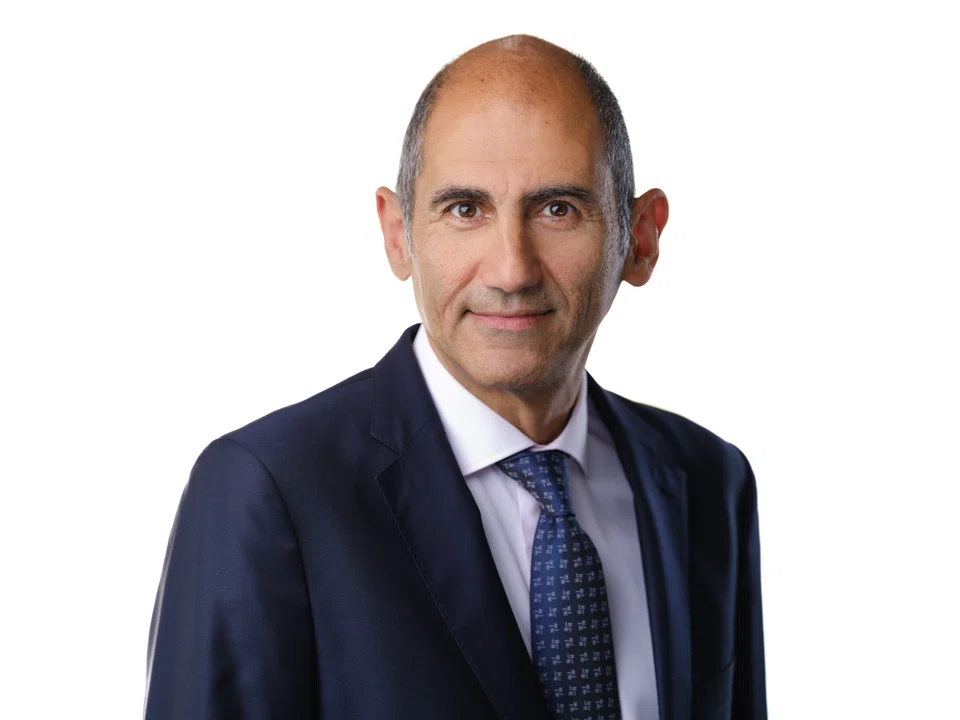
[SINGAPORE] Institutional interest in the total portfolio approach (TPA) to help mitigate concentration risk is on the rise, noted Hooman Kaveh, executive chair of Marsh’s investment platform.
But there are challenges to its implementation. One is the governance approach which needs to be holistic over the entire portfolio.
Second is access to data analytics that can generate deep analyses of asset classes including private assets in real time.
Kaveh said Marsh’s recent investment conference in Singapore brought to the surface the degree of concern over concentration risk in market exposures among institutional investors, not just in public securities but also in private markets.
“AI exposure has been a real shock to many asset owners. The concentration you’re seeing in public indices is just the tip of the iceberg.
“When you look into private credit and other parts of the portfolio, you get a bit of a wake-up call on where the underlying exposures are. Clients are asking: How do I address this? What does proper diversification look like?”
In public equities, AI-themed names dominate indices. But AI exposures are also present in private equity and private credit, infrastructure and real estate in assets such as power generation and data centres.
TPA manages assets on a single unified strategy “guided by the fund’s overarching goals”, rather than asset class silos, indicated the Thinking Ahead Institute. Its research has found that TPA adopters achieved an average performance edge of 1.3 per cent per annum over portfolios using the strategic asset allocation (SAA) approach over a 10-year period.
GIC began to implement TPA around 2013. It recently transitioned to a “refreshed investment framework better adapted to the changing investment conditions”.
Marsh’s Global Asset Barometer found that asset owners planned to raise allocations into infrastructure, inflation protection and emerging markets. It also found that more than 66 per cent of respondents operate within an asset class-led SAA framework.
Inadequate decision-quality data or analytics was cited by 38 per cent as a constraint on effective decision-making.
Kaveh said Marsh is doing a lot of consulting work on TPA, which may also be implemented on behalf of its outsourced chief investment officer discretionary portfolio clients. Marsh has US$846 billion under delegated management as at end-June.
“Typically institutions break down their portfolio into buckets – the public equities bucket, public fixed income, hedge fund and so on. And they have teams of people to manage specific buckets.
“The point we make about TPA is that to maximise your goal for the entire portfolio, you should be able to allocate capital or the marginal dollar to wherever the best return will be. You shouldn’t have to put $1 less in bonds to put $1 more into real estate.
“Your team should say: We don’t have any good investment ideas, so you can take the capital and put it into a different opportunity. But the key to that is good analytical systems – and that is where many clients have challenges. Because you may have a tool to look at the risks in public equities, but not for the entire portfolio.” Marsh employs 25 full-time data scientists.
Kaveh said: “Public markets have certain metrics like price-earnings ratios, but private equity portfolios have different metrics in terms of cash flow improvements and so on. Once you get your data right, you can start to put systems over it. We work with clients to make sure they know how to interpret the analytics as well.”
To achieve balance against AI concentration in public equities, he said, investors may seek to limit AI-themed exposures in their private assets. “In private equity, we put in more traditional buyout strategies in good, strong companies that have little to do with AI. You’d have a more diversified portfolio than just having AI here and there.”
Graham Elliot, Marsh Asia wealth leader, said: “TPA is an evolution of the processes we’ve been working on with clients over the past 20 or 30 years. But it has become more important because the world is more volatile with new challenges. How you help clients navigate this is crucial so they can achieve the desired outcomes from their portfolios.”
Kaveh said Marsh remains positive about growth or risk assets. “Something approaching half of the US economic growth is coming from the AI capex cycle, and that is translating into earnings for many companies.
“While the market has risen by a lot, the PE (price to earnings) multiple has come down over the past six months. A lot of the capex spending is circular – hyperscalers are buying chips from semiconductor companies, and data centres are being built to support more computing power. At the moment, we feel positive about the outlook.”
He said the impact of the massive amounts of debt issuance by hyperscalers on the credit markets would depend on where longer-term Treasury yields settle. “That is why many of us are looking for inflation-fighting credentials from the Fed. If they fight inflation, it would flatten the yield curve and hopefully not make debt more expensive. At some point if yields rise materially over 5 per cent, some projects may not go ahead.
“We think there probably would be one or two more (0.25 percentage point) rate rises in the next six to nine months. Of course the economy could change. Right now, it probably needs two or three gentle taps on the brake.”