More cash, not less digital – expanded cash access does not signal retreat from Singapore’s payments push
Observers note that cash still has a role in building consumer confidence amid scams and fraud

[SINGAPORE] The Republic’s move to expand cash access does not signal a retreat from becoming a cash-light society, observers said, but reflects a growing recognition that financial inclusion remains essential as the country upgrades its payments infrastructure.
Physical cash still has a role in giving consumers confidence amid the rise of scams and fraud, even as digital payments become increasingly dominant, they added.
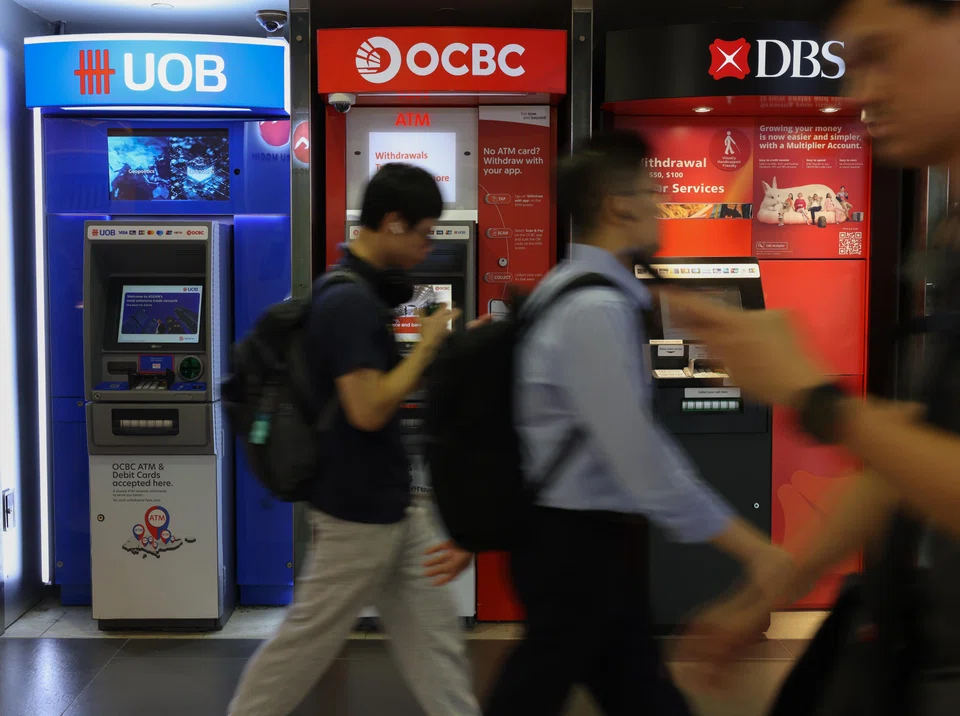
On Thursday (Jun 26), DBS, OCBC, UOB and Nets said they will ensure that ATMs, branches and cashpoints are within 500 m of every Housing & Development Board block by 2027, as part of other moves to better serve the banking needs of seniors.
This comes even as the number of off-premise ATMs in Singapore fell by an average of 2 per cent annually over the past decade, while ATM withdrawals fell more than 30 per cent from 2015 to 2024.
While many Singaporeans are relatively receptive to digital tools, many also view technology with a sense of mistrust amid the increase in fraud and scam cases, said Mohit Mehrotra, financial services industry leader at Deloitte South-east Asia.
“As the likes of phishing, scamming, frauds and AI continue to develop at pace within our industry, then the safest thing for people who… may not be as familiar with digital capabilities or are getting more vulnerable to scams (is) having cash,” said Anton Ruddenklau, partner and head of financial services at KPMG in Singapore.
Global rethink on cash access
The latest move reflects a broader global trend of governments preserving access to cash even as digital payments become more widespread.
For example, countries in the Nordic region are experiencing an ageing population and have been on the journey to be less cash-based societies with a digital payments infrastructure. But they are now exploring cash as a viable option again, Mehrotra said.
In the UK, access to cash is also legally protected by the government, while Australia’s federal government in January mandated that most grocery stores and petrol stations must continue to accept cash.
“(It’s about) understanding customers at the other end of the life cycle,” Ruddenklau said. The move is “at the other end” of the spectrum from children and teenagers, where banks had focused on to capture new market share, he added.
Ruddenklau also noted that the access to cash has been a political issue around the world.
Earlier in the year, the Singapore Parliament discussed the need for more access to cash, as demand for cash and ATM services continue to be resilient despite digital adoption today.
In March, Switzerland also voted to amend a constitution that guarantees the right to use and obtain physical cash.
“No surprises that this is a topic raised in (the Singapore) Parliament, but it’s also good to see that the banking industry was already on top of this topic, and then convening the wider industry around the topic at the same time,” Ruddenklau said.
Balancing benefits of cash with risks
At this stage, it is unclear how much the move will add in terms of cost for the three banks, given the lack of details.
Currently, they already have a combined network of more than 2,100 ATMs and over 150 branches across Singapore. These exclude cashpoints – which are merchants where a customer can withdraw cash while making purchases – and Nets machines that also dispense cash.
Tom Mouhsian, principal analyst at Forrester, said: “The cost-benefit equation of this policy must first exhaust all other feasible options to justify the expense. It is not yet clear whether this has fully been demonstrated or communicated.”
Nevertheless, he said, it is important to balance the benefits of using cash with the risks.
For example, elderly individuals who struggle with cognitive tasks may face similar challenges in managing and safeguarding cash – making them vulnerable in other ways that are difficult to prevent, he noted.
Mouhsian also said the added cost and infrastructure required to support a targeted portion of the population may seem like an “overkill”.
“This decision could result in hundreds, if not thousands, of additional machines, bringing with them increased cash management and servicing burdens that banks would need to fund,” he added.
Even so, observers expect Singapore to continue its push for digitalisation and simplification of existing digital payment modes, rather than slow its push towards a cash-light society.
On Thursday, the government also announced it was enhancing Singapore’s QR payment network PayNow, which includes improving interoperability and online access.
Wong Wanyi, fintech leader at PwC Singapore, pointed out that the behaviours and habits of many Singaporeans have already changed as the ecosystem digitalised over the years.
Ruddenklau added: “It’s trying to make banking simple for the consumer rather than consumers having to make the choices… so that people can use money or payment devices with confidence.”
TRENDING NOW
Fed hike throws Singapore banks a margin lifeline; UOB most likely to feel impact
He built the Vingroup empire. Now South-east Asia’s richest man is handing some key roles to his sons
Real-estate veteran Desmond Sim quits from CEO roles at Realion, ETC
Chagee, Mixue and Luckin won the market. Sustaining their edge is the harder part