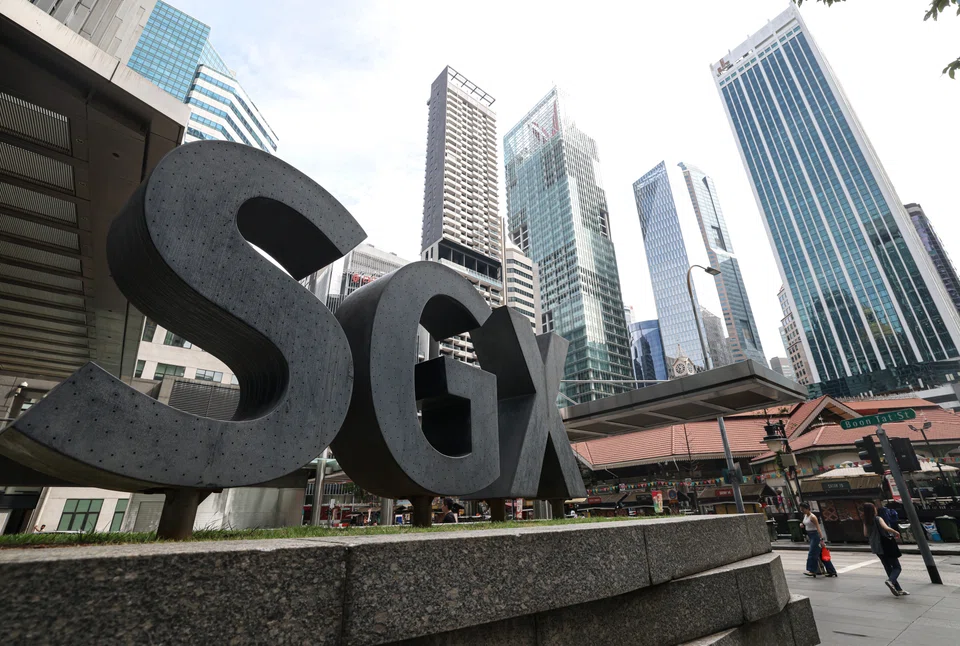
More funds and products expected, as market awaits details about Singapore’s S$5 billion equities push
Analysts see MAS’ initiative as positive step, but add that factors such as investor protection and governance, proper understanding of the scope of the measures are also important

[SINGAPORE] The S$5 billion Equity Market Development Programme (EQDP) that was announced by the Monetary Authority of Singapore (MAS) in February will likely encourage more funds and products to come to the local market, even as questions remain on its potential effectiveness, said industry watchers.
“A lot of the Singapore-based fund managers we spoke with are awaiting more details of the programme to see how they can create a product that is suited to the requirements,” said Jason Saw, group head of investment banking at Asian broking house CGS International.
He expects more funds to launch, given the EQDP’s focus on directing capital into domestic markets.
Lin Yujun, chief executive of Interactive Brokers Singapore, said that the MAS initiative creates a “stronger foundation” for fund launches and growth by “fostering a more active trading environment”.
Under the EQDP, MAS will invest in selected fund managers with expertise to implement investment mandates with a strong focus on Singapore stocks. Not only must they have a good track record, they should venture beyond index component stocks and be open to expanding operations in the Republic. The programme aims to build up Singapore’s fund management industry and boost trading liquidity in the local market.
The funding for this initiative will come from MAS’ investment portfolio and the Financial Sector Development Fund.
Shaping investment strategies
Industry players are closely watching how the initiative shapes the investment landscape.
Sharon Tan, CEO of DWS Investments Singapore, noted that her firm is constantly looking for attractive opportunities to further develop its local footprint and will be evaluating the EQDP to determine how it can enhance targeted solutions for clients.
“Singapore remains an attractive investment market for us in select segments,” she said, adding that DWS currently manages Singapore-focused exchange-traded funds (ETFs) and real estate investment trusts (Reits). She emphasised that launching new ETFs will depend on the “sustainability of trading volume and liquidity”.
However, observers noted that while banking and Reits dominate local equities, opportunities outside these sectors remain relatively scarce, potentially restricting diversification for funds with significant assets under management.
“Beyond the big-cap stocks, there aren’t that many compelling companies to invest in,” said a global fund manager, who declined to be named.
Against this backdrop, newly introduced tax incentives complementing the EQDP could attract more capital to the local equities market. These include a tax exemption on qualifying income from fund management and investment advisory activities tied to funds investing substantially in Singapore-listed equities.
While Tan sees this exemption as a key draw for international investors, she noted that global and Asia-Pacific-focused strategies face constraints, as fund managers are typically benchmarked against indices such as MSCI World and S&P World.
“By definition, fund managers are already constrained by the small geographical exposure to Singapore as part of these indexes, which limits their ability to significantly overweight Singapore equities in client portfolios,” she added.
Apart from these constraints, returns are relatively less attractive. Bryan Yeong, portfolio manager at Eastspring Investments, pointed out that while the Republic’s market has delivered moderate annual returns of 5 to 6 per cent for the MSCI Singapore Index, broader indices such as the MSCI World Index have posted 10 to 11 per cent over the same period.
“Huge multiplier effect”
Beyond its immediate impact on fund activity, market observers see the EQDP as a broader catalyst for strengthening Singapore’s capital markets.
Calling the EQDP “a positive step to bring more excitement to SGX (Singapore Exchange) again”, Saw emphasised the need for stronger investor protection and governance.
He said: “Liquidity begets liquidity. Done right, the S$5 billion EQDP capital can have a huge multiplier effect of drawing billions more into the market to support the next generation of growth companies on SGX.”
DWS Investments Singapore’s Tan believes the EQDP strengthens the Republic’s position as a global capital markets hub. If successful, she noted, it could pave the way for “new job creations, capital and talent to be rooted in Singapore”.
Ho Han Ming, partner and Asia-Pacific funds lead at law firm Reed Smith, also expects more funds.
“With the direct capital infusion and associated tax incentives for such funds in the immediate term, Singapore equity-focused strategies and funds may proliferate,” he said.
For fund managers, Lin cautioned that while greater liquidity can reduce execution risks and enhance investment appeal, managing trading costs – both explicit, such as brokerage fees, and implicit, such as price slippage – will be key.
“The use of advanced trading strategies and execution platforms will help mitigate these costs,” he said.
Still, the EQDP’s success will hinge on a proper understanding of the scope of the measures and how they will be executed, noted Reed Smith’s Ho. This, he added, would “determine the assessment and hence viability of commercial success for each fund manager”.
Saw added that “finding sufficient good, undervalued names to invest in and market timing will be crucial”. Equally important, he said, is for issuers to actively engage with investors and provide regular investor relations updates to showcase how they are creating shareholder value.