More than motoring at Tokyo show as vehicle makers share plans for aviation, AI

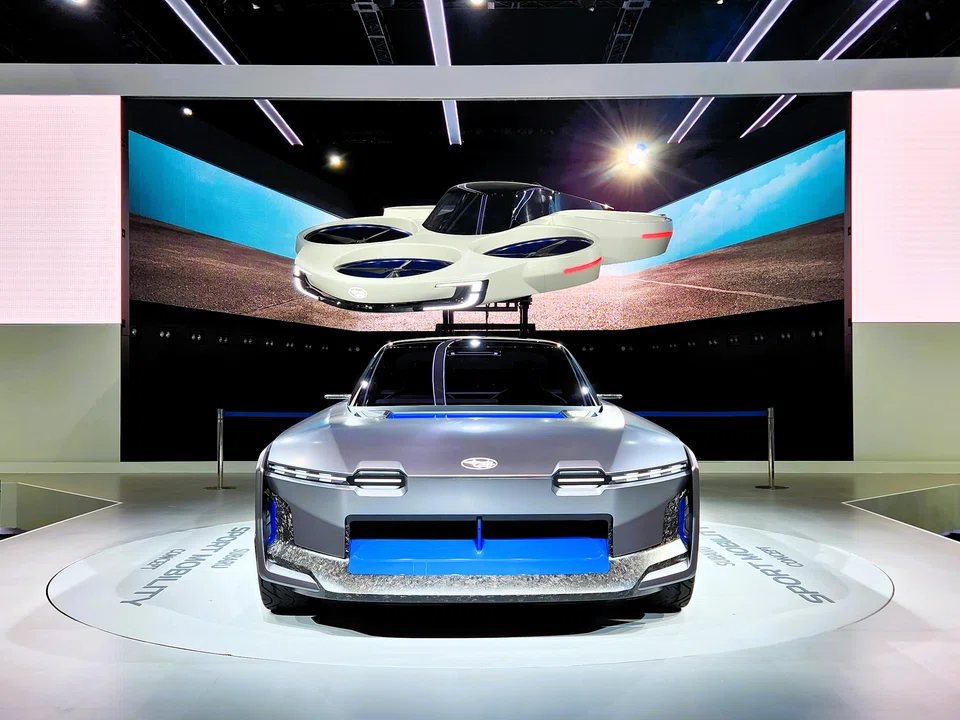
[TOKYO] At this year’s Japan Mobility Show being held in the country’s capital from Oct 26 to Nov 5, cars are sharing the stage with aviation concepts and artificial intelligence (AI), among others, as the former Tokyo Motor Show expands beyond motoring towards a broader concept of “mobility”. (* see amendment note below)
Passenger cars have traditionally dominated the show, organised by the Japan Automobile Manufacturers Association, which comprises all major Japanese vehicle manufacturers.
In past years, the show’s highlights have often been major new releases by mainstream brands such as Toyota, Honda and Nissan.
But this year’s show features more than just cars, and the big spenders could be venture capitalists rather than car buyers.
In a departure from the usual run of concept cars, Subaru showcased a concept electric vertical take-off and landing aircraft, while Honda unveiled its Cruise Origin driverless ride-hail vehicle – similar to a minivan in appearance – and a generative AI tool.
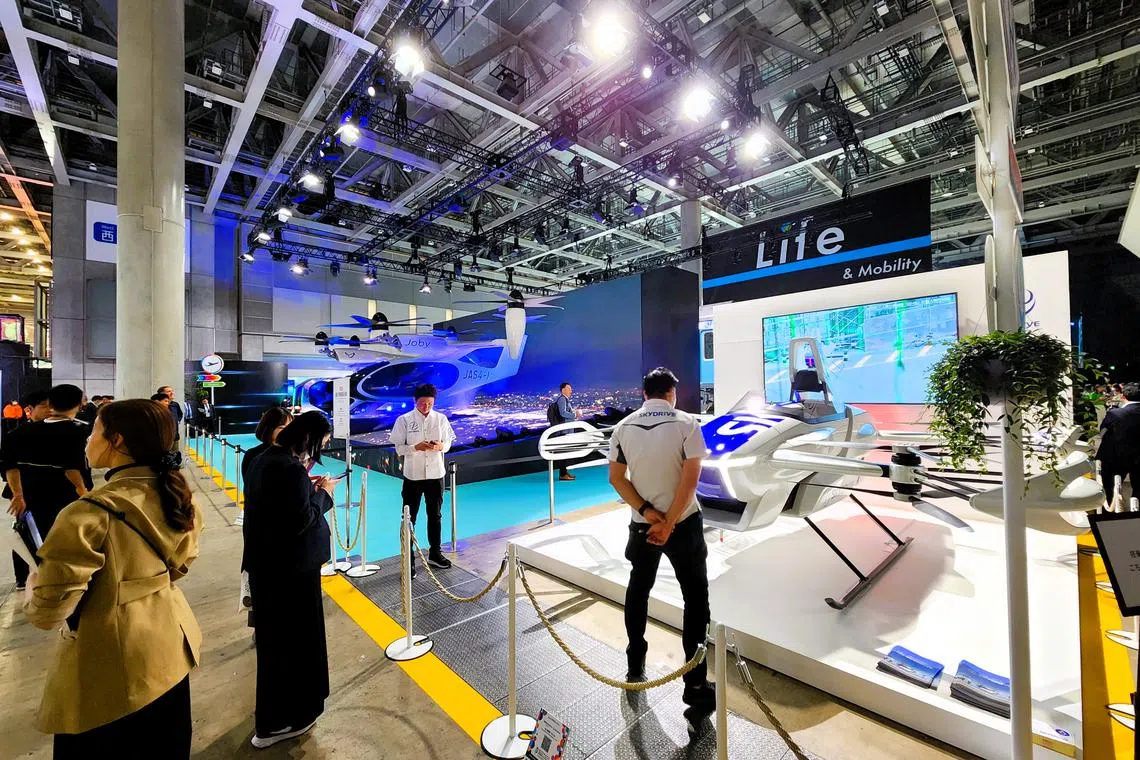
The first edition since the pandemic, this year’s show includes the new major sub-exhibition Tokyo Future Tour. There, transportation technologies – from AI to advanced air mobility – are applied to the areas of lifestyle, food, leisure and emergencies.
Across two halls, the sub-exhibition showcases prototypes which range from food-delivery robots to electric aircraft and to short-range personal mobility devices.
Startups are another significant part of this year’s show, with the Startup Street subsection presenting 100 startups from diverse areas including blockchain, AI and robotics. There is also a pitching contest for very early-stage startups, with a prize of 12 million yen (S$110,000); provision of help with funding, business meetings and promotion; and a programme that matches startups with prospective suppliers from the Japan Auto Parts Industries Association.
Boomers and babies
The bi-annual Japan Mobility Show’s shift of focus reflects demographic trends: Japan’s ageing population is both the focus of a roundtable discussion and a theme in Startup Street. (* see amendment note below)
Demand for cars is falling as the population ages and declines, with the younger generation showing less interest in cars, consulting firm AlixPartners’ managing director Tomoyuki Suzuki told The Business Times. This can be seen in both declining domestic car sales and falling show attendance.
In January this year, new car sales in Japan hit a 45-year low. In 2022, full-year sales were about 3.4 million, down 24.4 per cent from 4.6 million in 2013, and down 32.4 per cent from a peak of 5.1 million in 1990.
Attendance at the then-Tokyo Motor Show, meanwhile, hit its lowest point since the 1960s in 2017, with 771,200 attendees – down from a peak of two million in 1991.
In 2019, attendance picked up to 1.3 million, possibly because certain sections were open to the public with no entry fee.
This year’s show aims to attract one million attendees.
Exhibitor numbers, meanwhile, reached an all-time high of 475, more than twice the number at the previous show in 2019.
Of these, 177 are involved in the Tokyo Future Tour exhibition.
Suzuki said the show’s change of focus reflects how the Japanese car industry is grappling with the transition away from vehicle sales and towards cars or transportation as a service, while finding new ways or technologies to monetise that model.
“Relying solely on vehicle sales is no longer sustainable for profit generation,” he added. “Automakers are exploring diverse revenue streams, including software sales, subscription models, car-sharing platforms, lifestyle integrations and innovative battery solutions.”
* Amendment note: An earlier version of this story incorrectly stated the name of the show as the Tokyo Mobility Show. This is incorrect. It is in fact the Japan Mobility Show. The article above has been revised to reflect this.