

Most SGX listcos fail to offer transparency on how executive bonuses are set: NUS study
SGX RegCo CEO Tan Boon Gin says executive pay is an important indicator of corporate value creation

[SINGAPORE] A large majority of Singapore Exchange (SGX)-listed companies do not disclose how bonuses are determined for executive directors, based on a study on remuneration practices by the Centre for Investor Protection (CIP) at the National University of Singapore (NUS) Business School.
The study, published on Monday (Mar 23), covers 510 SGX-listed issuers with annual reports for financial years ending on or after Dec 31, 2024. It found that 284 companies provided no information on bonus performance measures.
Among companies that did disclose, 22 disclosed only financial measures, 146 disclosed both financial and non-financial measures, and two disclosed only non-financial measures.
The average total remuneration was S$1.18 million for executive chairpersons and S$1.24 million for CEOs, based on annual reports from March 2025 to February 2026.
The study also highlighted the prevalence of executive directors who are either themselves substantial shareholders or related to substantial shareholders, giving them considerable influence over the appointment of independent directors. The proportion of companies with at least one such executive stood at 70.8 per cent.
These findings were presented at “Pay for Value: Rethinking Remuneration for Long-Term Performance”, an inaugural forum hosted by the newly established GDInstitute (GDI).
Founded by corporate governance advocate and NUS Business School accounting professor Mak Yuen Teen, GDI was launched earlier this year as a rival to the Singapore Institute of Directors.
Speaking at the forum, Tan Boon Gin, CEO of Singapore Exchange Regulation (SGX RegCo), noted that the Code of Corporate Governance has long recommended exact pay disclosure for directors and CEOs.
However, most companies “still preferred to take advantage of the leeway offered by the rules, which allowed companies to disclose remuneration in bands”, he added.


Tan emphasised that disclosure is crucial for investors to assess whether the interests of a company’s directors and CEO are aligned with those of shareholders.
He said: “Remuneration disclosures strengthen the accountability of the board and the remuneration committee. They allow investors to set benchmarks and make comparisons. And they enable informed questioning and voting on director election and remuneration matters at the annual general meeting.”
From an investor’s perspective, Tan noted that executive pay serves as an important indicator of corporate value creation.
“How CEOs are paid in the last financial year should reflect how they have performed, (and) how they are paid in the coming years should be aligned with value creation for shareholders,” he added.
In 2023, SGX RegCo updated the rules to require companies to disclose the exact remuneration of their directors and CEOs. The rule applies to annual reports for financial years ending on or after Dec 31, 2024.
“Lack of transparency” on remuneration
Despite greater transparency in directors’ and CEOs’ pay, the CIP report found that there remains a lack of transparency on remuneration paid to key management personnel and employees who are related to substantial shareholders, directors and CEOs. This creates a risk of expropriation of minority shareholders through unearned or excessive remuneration, it noted.
Disclosure of remuneration policies also remains weak, making it difficult for investors to understand the link between pay and long-term value creation..
Based on these findings, the study made 12 recommendations to improve remuneration practices and better align pay with long-term value creation.
These include disclosing the identity of remuneration consultants; providing clearer guidance on performance-based pay for management who are significant shareholders; and proposing that companies disclose specific performance measures and weightings.
This comes as earnings remain the dominant driver behind remuneration.
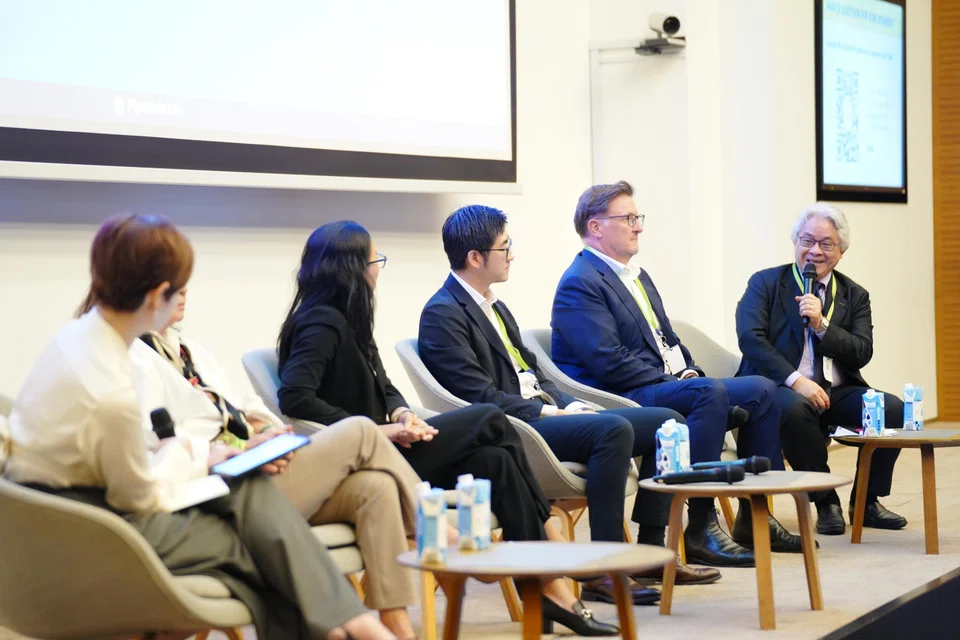
Speaking on a panel at the GDI forum, Prof Mak observed that despite the range of measures listed in annual reports, “remuneration seems to have a strong correlation with the movement in profits”.
Fellow panellist An Chen, director and portfolio manager at AEW Capital Management (*see amendment note), however, highlighted total shareholder return as another key metric, which is viewed “alongside a lot of the short-term, long-term financial and non-financial metrics that the company discloses”.
Echoing her point, Sherman Lim, portfolio manager at Avanda Investment Management, added that return-on-capital metrics are essential as they ensure management prioritises sustainable value creation rather than short-term profit growth.
Avanda is one of the fund managers under the MAS’ Equity Market Development Programme, in which S$6.5 billion will be farmed out to fund managers with a strong focus on Singapore stocks.
Lim believes if “Singapore were to truly value up, there definitely will be more room for improvement in terms of disclosure, because only with disclosure, investors can engage with companies (and their) management to discuss and then look for areas of improvement”.
Remuneration also plays a key role in attracting and retaining talent, said panellist Simon Garing, CEO and executive director of the manager of Stoneweg Europe Stapled Trust.
Using consultants such as AON, his firm benchmarks pay to ensure key management personnel are compensated at or above the 50th to 75th percentile of peer groups, with performance targets clearly linked to key performance indicators and succession planning.
“If they are talented, aligned with shareholders and know clearly what the performance targets are, they will work hard to achieve those outcomes,” he added.
Amendment note: The article has been edited to reflect the correct name
Decoding Asia newsletter: your guide to navigating Asia in a new global order. Sign up here to get Decoding Asia newsletter. Delivered to your inbox. Free.
Copyright SPH Media. All rights reserved.
TRENDING NOW

LTA proposes combining car COE categories, adding rebate-surcharge system

StarHub to acquire MyRepublic’s mobile business amid ongoing telco consolidation

DBS, OCBC, UOB rout lops billions off STI as inflation, rate concerns spook investors

Grab CEO’s wife Chloe Tong on life with Anthony Tan and finding her purpose

