

Nasdaq-listed Grab’s Q4 profit falls to US$27 million, but beats analyst estimates
Full-year loss narrows to US$105 million from US$434 million


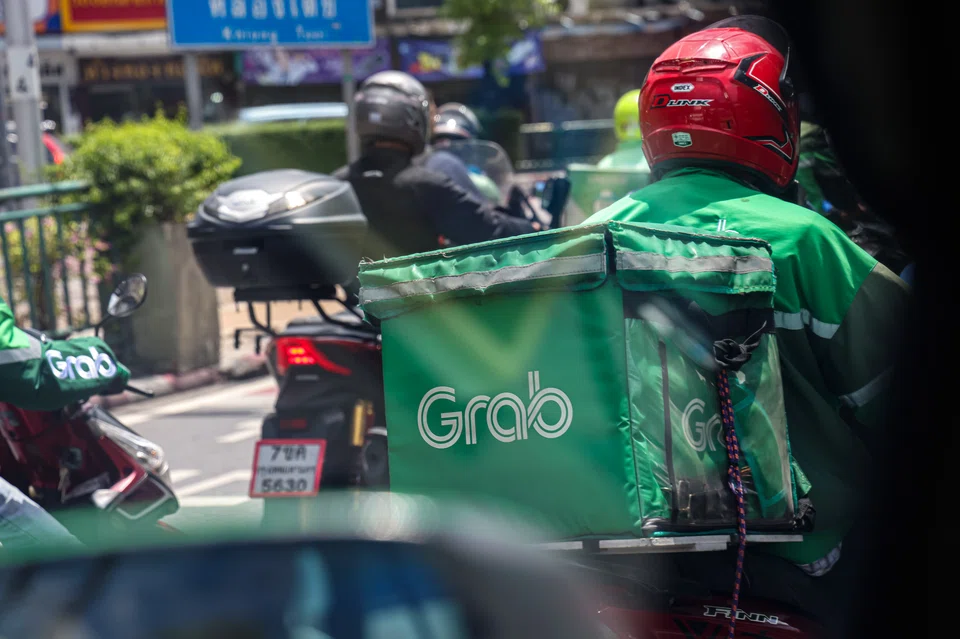
NASDAQ-LISTED Grab on Thursday (Feb 20) posted a net profit of US$27 million for the fourth quarter ended December, down from US$35 million in the previous corresponding period.
The earnings beat estimates of a US$10.3 million profit in a poll of eight analysts by Bloomberg.
Revenue for the three months was US$764 million, up 17 per cent on the year from US$653 million, driven by growth across all segments, said Grab. It met an estimate of US$757.8 million in a 17-analyst Bloomberg poll.
Earnings per share was US$0.01, unchanged from the previous corresponding period.
The group’s adjusted earnings before interest, taxes, depreciation and amortisation (Ebitda) was US$97 million for the quarter, up from US$35 million in the year-ago period.
The improvement in adjusted Ebitda was driven by Grab’s on-demand gross merchandise value (GMV) and group revenue growth, as well as “improving profitability on a segment-adjusted Ebitda basis and lower regional corporate costs”, said the ride-hailing company.
Regional corporate costs are expenses that are not attributed to any of the business segments, including certain costs of revenue, research and development expenses, general and administrative expenses, and marketing costs. They include cloud computing costs.
Regional corporate costs for the quarter was US$87 million, compared with US$100 million in the same period a year earlier.
On-demand GMV, which includes mobility and deliveries, for the quarter grew 20 per cent on the year to US$5 billion, from US$4.2 billion previously, underpinned by growth in on-demand monthly transacting users and transactions.
Adjusted free cash flow for the three months was US$61 million, up from US$1 million in the previous corresponding period.
For the full year, the company’s loss for the period narrowed to US$105 million from US$434 million the year before. Revenue gained 18.6 per cent to US$2.8 billion from US$2.4 billion.
Grab’s priority with excess capital is in returns to shareholders, with any acquisition having to hit a high bar, said Peter Oey, chief financial officer at Grab. The company did not deny recent market talk of a potential acquisition of GoTo in Indonesia.
“These opportunities we evaluate on a case-by-case basis, but the bar is very high, we have to make sure that key synergies and value-add is instrumental in these inorganic opportunities,” said Oey.
Customer deposits across Grab’s Singapore and Malaysia digital banks hit US$1.2 billion at the end of Q4 2024, up from US$1.1 billion at the end of Q3 2024. GXS Bank now has 172,000 users, while GXBank crossed a million users at the end of Q4 2024.
Grab’s loan portfolio grew 64 per cent in Q4 2024 to US$536 million, from US$326 million in Q4 2023. The loan growth was bolstered by the launch of a retail loan product by GXBank Malaysia.
The company is building up its balance sheet provisions as the loan portfolio grows and credit models are refined. Loans are expected to drive profitability in the financial services segment.
Alex Hungate, chief operating officer at Grab, said: “Financial services overall will be profitable by the second half of next year, and the banks overall will be profitable by the fourth quarter of next year.”
Anthony Tan, Grab’s group chief executive and co-founder, said: “Q4 was our strongest quarter ever. We finished 2024 with on-demand GMV growth accelerating to 20 per cent year on year, and as we continue to generate profitability at scale.”
He added: “We have more users on our platform than ever, and our unique platform advantages place us in a strong position to continue this growth momentum into 2025, and to deepen user engagement across our ecosystem.”
Grab is also looking to support a transition to autonomous vehicles (AV) in South-east Asia.
Citing its fleet utilisation rate as among the highest in the region and track record in working with regulators, Grab wants to play a critical role in this transition, said Tan.
The company is in active discussions with regulators on this, and anticipates a longer road to mainstream AV adoption in other parts of South-east Asia. Grab is also actively pursuing several partnerships in this space.
“As we think about this AV transition, we’re also proactively thinking about how can we play a part in upskilling our driver partners as part of this shift,” said Tan.
The company has issued guidance for its FY2025 revenue to be between US$3.3 billion and US$3.4 billion, representing a growth of 19 to 22 per cent from FY2024. Adjusted Ebitda is projected to be between US$440 million and US$470 million, representing a 41 to 50 per cent growth from the prior financial year.
Shares of Grab ended 0.8 per cent or US$0.04 higher at US$5.34 on Wednesday on Nasdaq.






