

Navigating China's regulatory storm by balancing growth and risks
Yanlord develops and manages business at its own pace, by seeking growth opportunities while controlling risks.

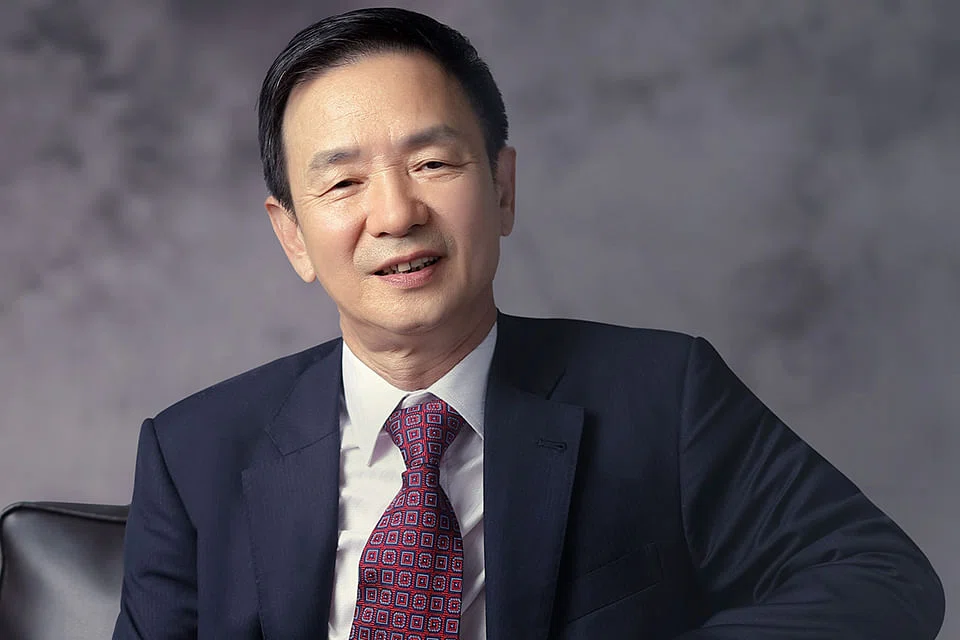
CHINA'S property sector has taken a heavy beating as Beijing continues its deleveraging campaign, but Chinese property developer Yanlord Land Group is navigating the regulatory storm by balancing its growth plans and debt appetite, emerging among the more resilient in the sector.
In an exclusive interview with The Business Times, Zhong Sheng-Jian, 63, founder, chairman and chief executive officer of the Singapore-listed Chinese developer shared how Yanlord has avoided the nightmare facing rival developers which are struggling to find money to make debt payments. Official data shows that China's property slump has deepened, with new home prices seeing their biggest month-on-month drop since 2015.
Speaking in Mandarin, the native of Lufeng, Guangdong province, said China's residential property sector has been developing rapidly for the past 23 years. This has spurred rapid urbanisation at a faster pace compared to other developed countries. During this period, property developers and entrepreneurs adopted vastly different development strategies.
"Some companies prioritise the speed of development, and scale up through higher debt financing," said Zhong, who migrated to Singapore in the late 1980s to grow his business, and is responsible for the overall management and strategy development of Yanlord. "Others seek to strike a balance between business growth and risk control to pursue a more stable and sustainable growth strategy.
"Yanlord belongs to the latter strategy. We develop and manage our business at our own pace, by seeking growth opportunities while controlling risks."
While there is no right or wrong approach as risks and opportunities are always proportional, he said the more aggressive strategy may achieve extraordinary development and growth under certain market conditions, but it is also vulnerable to severe market setbacks.
In the early 1990s, Zhong led his team to pioneer fully-furnished real estate development projects in the key cities of Shanghai and Nanjing. Through years of tenacious effort and keen business acumen, Yanlord has grown to become one of the largest non-government-owned real estate developers in China. It was listed on the mainboard of the Singapore Exchange (SGX) in 2006, and now has a market value of S$2.16 billion and total assets of 156 billion yuan.
Zhong's total interest in Yanlord has crept up to 71.55 per cent, following recent purchases of the shares in the open market. Shares in Yanlord are trading around S$1.10, compared to its initial public offer (IPO) price of S$1.08 in 2006 and the high of more than S$4 in 2007. Its net asset value (NAV) per share was 16.75 yuan (S$3.57) as at end-June this year.
Prudent approach
Yanlord, he said, has maintained a prudent approach in its diversification and investment expansion. The focus has been on first and second-tier cities in the Yangtze River Delta and Greater Bay Area as well as Chengdu, Shenyang, Wuhan and Tianjin. Investments in third-tier cities involve very careful selection.
"This ensures healthy upgrade demand for residential property in the cities where we locate, thereby supporting Yanlord's development," he said. "Judging from the current project position, Yanlord's strategy has been relatively successful."
Over 90 per cent of the group's landbank and development projects are located in tier 1 and 2 cities in China. Another 6.7 per cent are in tier 3 cities in China, and 2.5 per cent in Singapore as at June 30, 2021.
Zhong added: "Apart from our long-term commitment in first and second-tier cities, our business performance has been progressing well in newly entered third-tier cities, such as Nantong and Yancheng. Moving forward, we will continue our strategic city and site selections as well as product positioning based on thorough research and study."
In Singapore, Yanlord has two residential projects under development - Leedon Green and Dairy Farm Residences. Its high-quality investment property portfolio and hotels in the city-state include UE BizHub City, UE BizHub Tower, UE BizHub West, Rochester Mall and Park Avenue Rochester and Park Avenue Robertson.
Gearing and corporate debts are painstakingly kept within the controllable range. It does not have any Chinese onshore bonds, private placement bonds or commercial papers, though it secured a S$340 million term loan from DBS in Singapore in October, amid increasing refinancing risks for developers in China.
Based on Beijing's criteria to assess developers' finance situation, Zhong said Yanlord has scored "green" for meeting the "net gearing ratio of less than 100 per cent" (Yanlord's 49.9 per cent) and "cash to short-term debt ratio of more than 1X" guidelines (Yanlord's 2.7X).
To simplify the implications of its policies, China's authorities created a colour code scheme: a "green" score means no red lines have been breached and the developer is given an allowable annual growth in debt of 15 per cent.
Unlike many rivals, Yanlord has been banking reasonable profits despite the tougher environment.
On Aug 12, Yanlord reported that its revenue for the first-half of 2021 ended Jun 30 grew 45 per cent on year to nearly 14 billion yuan (S$2.7 billion). This was attributed to the increase in gross floor area (GFA) delivered to customers, which was partly offset by the fall in average selling price per square metre due to a change of booking project mix.
As at Jun 30, 2021, the group, together with its joint ventures and associates, recorded an accumulated property contracted pre-sales of about 115 billion yuan, pending recognition in H2 2021 and beyond. Unlike Singapore developers, Chinese developers book property sales as revenue on completion of construction and delivery to customers.
Property development accounted for the bulk of the H1 2021 revenue at 11 billion yuan, with the rest from property investment, hotel operations, property management and others. Net profit rose 67 per cent on year to 823 million yuan. By the end of June, Yanlord had 22.7 billion yuan in cash and cash equivalent. Bank loans due within a year stood at 8 billion yuan, representing its "cash to short-term debt ratio" of 2.7 times. Its next off-shore US dollar bond will only mature on Apr 23, 2023.
While many lament China's tough zero-Covid policy, Zhong said it has safeguarded and maintained stable operations for both society and the economy by preventing imported cases.
"The diversity and market size of China's economy enabled the country to rely on its domestic economic cycles alongside moderate global travel interactions," he said. "Yanlord's business has not experienced significant impact under the pandemic, even in the hotel operations which are closely related to tourism."
The operations of its 4 hotels in China were only affected to a "limited extent". Operations at Yanlord's Crowne Plaza Sanya Haitang Bay Resort in 2020 has rebounded to the same level as 2019, and its performance this year is expected to grow further, compared to pre-Covid 2019. Operations at Yanlord's InterContinental Hotel in Zhuhai this year have also recovered to pre-Covid levels.
On China's plans to pilot property tax programmes in some regions, Zhong was sanguine: "Shanghai, where Yanlord is located, has levied property tax for 10 years since its trial test. During this period, there has been no significant impact on market transactions."
While details are still lacking, he believes the government will adopt a "meticulous and prudent attitude, take into consideration both efficiency and fairness, and strive to maintain an overall taxation stability when executing this major reform of the fiscal and taxation systems".
Revenue contributors
Yanlord's revenue contributors are expected to remain unchanged.
"Yanlord's current major source of revenue is generated from residential property sales. Although commercial, hotel, office, and other property rental sales are also operating well, their respective contributions towards the overall revenue are not as high. There are no major changes anticipated that will alter the revenue model in the short term, hence this proportion in revenue contribution will be maintained," he said.
On Nov 15, the group had another new launch at the Hangzhou Bay project. All 152 units were sold on the launch date. On Nov 24, it had a pre-sales launch of Yanlord Arcadia in Shanghai, and sold all 299 units that day.
Zhong said: "Looking ahead, while maintaining financial health, we will continue to explore opportunities to extend our footprints within Shanghai as well as the rapidly growing cities in the Yangtze River Delta."






