Nearly half of STI constituents raised their CEOs’ salaries, mostly in line with EPS gains
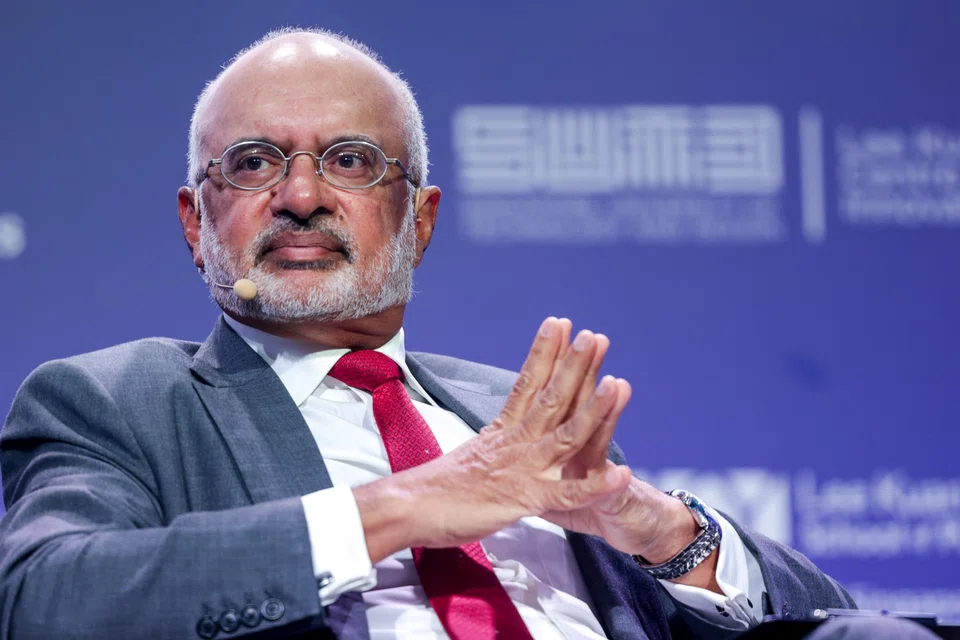
The highest-paid chief is UOB’s Wee Ee Cheong with S$15.9 million for FY2023, up 11.9 per cent.

THE chief executive officers of 12 (see amendment note) Straits Times Index (STI) component companies received higher salaries in FY2023 than they did in FY2022 – nearly half of the blue-chip index’s 27 constituents that disclosed salary information for their top executives for the period.
Twelve (see amendment note) CEOs received pay cuts, while three others saw their salaries remain in the same range for the latest financial year. Although Seatrium – formerly Sembcorp Marine – also disclosed its CEO’s salary, it would not be meaningful to include the information as Chris Ong has been at the helm for only around a year.
Most of the STI companies raised or lowered their CEOs’ pay in line with a year-on-year increase or decrease in the company’s earnings per share (EPS).
One notable exception was DBS, which slashed the salary of its CEO Piyush Gupta by 27 per cent to S$11.2 million for the financial year ended Dec 31, 2023, from S$15.4 million the year before. This was the highest pay cut among STI constituent CEOs.
Gupta saw his variable pay reduced due to a series of banking disruptions that plagued DBS in 2023. The pay cut came despite the lender’s earnings surging to a record high – 23 per cent to S$10.1 billion for FY2023 – as the trio of local banks rode the tailwinds of a high interest-rate environment.
In comparison, OCBC CEO Helen Wong had her pay bumped up 8 per cent to S$12.1 million for FY2023, while UOB CEO Wee Ee Cheong received an 11.9 per cent salary increase to S$15.9 million.
Another marked exception was ST Engineering, which cut the FY2023 pay of CEO Vincent Chong to S$3.9 million from S$5.4 million, despite an increase in EPS. However, Chong’s salary for the period did not include a share component, which was present in FY2022.
The CEO of Yangzijiang (YZJ) Shipbuilding, Ren Letian, saw the biggest salary jump. He received S$626,367 for FY2023, up 702.6 per cent from his FY2022 salary of S$78,229. YZJ Shipbuilding had the third-highest increase in EPS for FY2023, behind SIA and Keppel.
The salary of Sats CEO Kerry Mok was another outlier. His pay jumped 389.9 per cent to S$1.9 million for FY2023 ended Mar 31, from S$387,874 in FY2022. The increase was due mainly to his salary being prorated, as he took over the helm on Dec 15, 2022.
In comparison, Sats’ former CEO Alex Hungate was paid S$981,180 for FY2022. The company had a turnaround in fortunes in FY2023, booking a profit after reporting losses for the three preceding years.
SIA’s CEO Goh Choon Phong saw the third-largest increase in salary, up 87.5 per cent to S$6.7 million for FY2023 ended Mar 31, from S$3.6 million in FY2022. This increase came as SIA reported record profits of S$2.7 billion for the year, with employees receiving almost eight months’ bonus pay.
Reits remuneration retreat
The chiefs of the managers of Singapore’s biggest real estate investment trusts (Reits), however, suffered pay cuts as higher-for-longer interest rates pushed financing costs up and ate into distributions.
The salaries of the Reit managers’ CEOs were reported in bands of S$250,000.
The managers of all three Mapletree Reits – Mapletree Industrial Trust (MIT), Mapletree Logistics Trust (MLT) and Mapletree Pan Asia Commercial Trust (MPACT) – slashed their CEOs’ pay.
MIT reported a fall in distribution per unit (DPU) to S$0.1357 for FY2023, from S$0.1380 in FY2022. This was despite distributable income growing 1.6 per cent to S$356.6 million on the back of a 9.7 per cent increase in net property income (NPI) to S$517.9 million.
Tham Kuo Wei, CEO of the manager of MIT, saw his salary slide to the range of S$1.5 million to S$1.75 million for FY2023 ended Mar 31, from the S$2.25 million to S$2.5 million band in FY2022.
MPACT reported a 0.8 per cent increase in DPU to S$0.0961 for FY2023, from S$0.0953 in the previous financial year, largely due to the merger with Mapletree Commercial Trust. NPI rose 62.6 per cent to S$631.9 million, in tandem with the 65.4 per cent increase in revenue to S$826.2 million.
Sharon Lim, CEO of the manager of MPACT, also saw her salary fall to the S$1.5 million to S$1.75 million range for FY2023 ended Mar 31, from S$2 million to S$2.25 million in FY2022.
MLT reported a 2.5 per cent increase in FY2023 DPU to S$0.09011, from S$0.08787 in the preceding financial year. NPI remained was up 7.2 per cent ato S$634.8 million, with revenue inching up 7.7 per cent to S$730.6 million.
Meanwhile, CEO of MLT’s manager Ng Kiat saw her salary slip to the S$2 million to S$2.25 million band for FY2023 ended Mar 31, from the S$2.25 million to S$2.5 million range in FY2022. (*see amendment note)
Of the Reits on the STI, only Frasers Centrepoint Trust (FCT) raised the pay of its manager’s CEO. Richard Ng received between S$1 million and S$1.25 million for FY2023 ended Sep 31, up from between S$750,000 and S$1 million in FY2022.
While FCT’s FY2023 DPU fell 0.6 per cent to S$0.1215, from S$0.12227 in FY2022, the heartland shopping mall landlord outperformed most of its Singapore-listed Reit peers, earning its inclusion in the STI at the March quarterly review.
The CapitaLand Reits – CapitaLand Ascendas Reit and CapitaLand Integrated Commercial Trust – kept their CEOs’ pay at the same level for FY2023 ended Dec 31.
Meanwhile, CapitaLand Investment (CLI) CEO Lee Chee Koon’s salary fell 14.3 per cent to S$5.2 million for FY2023 ended Dec 31, from S$6 million in FY2022.
CLI reported a 79 per cent fall in FY2023 earnings to S$181 million, stemming from revaluation losses of its investment properties. Revenue also fell 3.2 per cent to S$2.8 billion due to lower leasing income in the US, and lower rental revenue from properties in China.
The rest of the STI constituents broadly cut their CEOs’ pay if EPS fell, or raised it if EPS rose. Only a couple of companies – Thai Beverage and Wilmar International, whose CEOs belong to the majority shareholder families – bucked this trend.
Despite EPS for FY2023 ended Sep 30 falling 9 per cent year on year, ThaiBev raised the pay of its CEO Thapana Sirivadhanabhakdi 5.5 per cent to S$4.9 million, from S$4.6 million the year before.
Wilmar also raised CEO Kuok Khoon Hong’s pay by 1 per cent to S$13.4 million for FY2023 ended Dec 31, from S$13.2 million in FY2022, despite a 36.3 per cent fall in EPS.
Amendment note: The story has been amended to reflect the correct number of CEOs who received higher salaries.
*Amendment note: This article previously used MIT, MPACT and MLT’s FY2024 results instead of FY2023.