New Green Mark rules could drive up data centre capex, but are seen as necessary
Market watchers say the tighter standards are needed to push the industry to become more sustainable

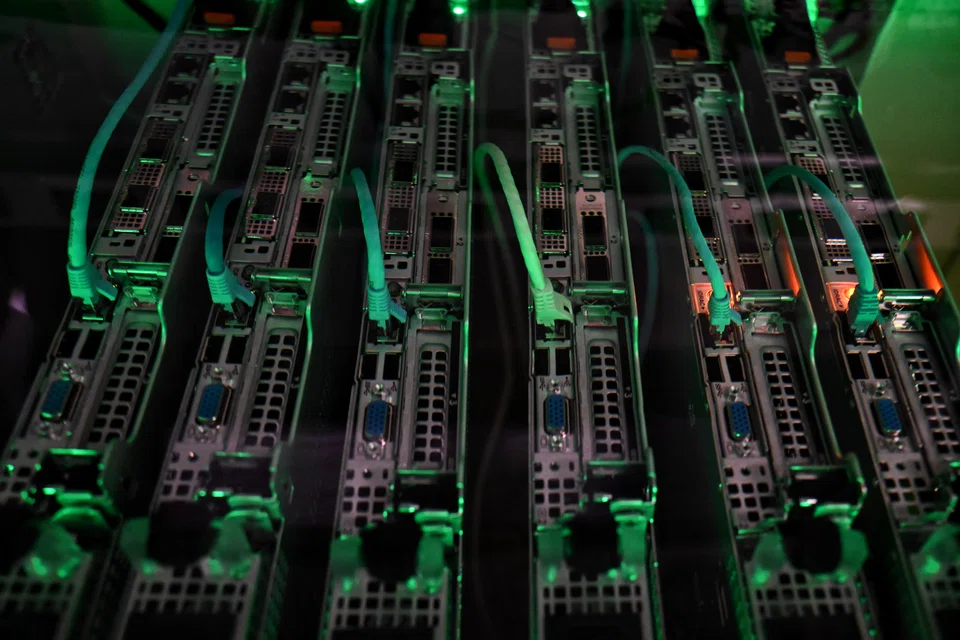
OPERATORS are expected to increase their capital expenditure to meet Singapore’s updated Green Mark standards for data centres. But market watchers believe that the tighter standards are necessary to push the industry to be more sustainable.
The Building and Construction Authority (BCA) and the Infocomm Media Development Authority (IMDA) on Oct 18 introduced changes to the Green Mark for data centres. It will replace the existing certification on Mar 1, 2025.
Professor Lee Poh Seng, executive director of the Energy Studies Institute at the National University of Singapore (NUS), said that the tightened power usage effectiveness (PUE) standard is a significant change.
PUE is the ratio of the total energy used by the data centre to that of IT equipment energy used. A data centre with a lower PUE is more efficient.
He said that this is particularly important as more companies run artificial intelligence (AI) workloads, which consume more energy.
Prioritising energy efficiency
As Tony Kang, Schneider Electric’s secure power business vice-president for its Singapore and Brunei cluster, sees it, data centres will need to adopt more sustainable and higher-performance solutions as energy costs rise and environmental scrutiny grows.
“As new AI applications place significant demands on energy resources, Singapore’s data centres must prioritise energy-efficient infrastructure,” he said.
Still, companies may face some challenges in retrofitting their existing data centres to adopt new solutions.
ST Telemedia Global Data Centres (STT GDC) Singapore country head Lim Mingcheng said that the updated Green Mark standards are “significantly bolder” compared with existing ones, particularly in PUE and cooling system efficiencies.
It will take “careful planning and potentially significant adjustments” to retrofit existing facilities to meet the stringent new requirements, he noted, adding that the company is “committed to working closely with the government agencies to explore available grants and support, ensuring a smooth transition while managing the costs associated with upgrading equipment earlier than planned”.
Although STT GDC does not control the type of IT equipment that its customers use, Lim said that it has been encouraging them to adopt more energy-efficient hardware.
“It may be advantageous for IMDA to encourage or even enforce a minimum energy efficiency standard for IT hardware used in data centres, as there needs to be emphasis on IT equipment efficiency as well,” he added.
A Keppel spokesperson said that the company has invested in solutions which will help its data centres meet more stringent PUE and cooling efficiency standards.
These solutions include the company’s floating data centres, which are cooled by surrounding waters, as well as its 1-gigawatt nearshore net-zero DataPark+ concept powered by hydrogen and solar energy.
The spokesperson added that Keppel can draw from “multiple pools of capital” to meet more stringent requirements and grow its data centre business with “speed and scale”.
Updates a “welcome addition”
Scott Halyday, South-east Asia regional director at project management consultancy Linesight, said operators will need to consider the structural implications of implementing new cooling technologies, such as liquid cooling, to achieve better cooling efficiency.
“(Operators need to manage) potential cost and management implications associated with downtime as alternative, greener energy sources are implemented, and that the operational status of data halls is maintained through staged construction processes,” Halyday said.
He noted that any proposed on-site power generation could also be limited, since sites have “typically been maximised for prior usage requirements”.
Aside from driving greater energy efficiency, the new rules introduce water efficiency standards. Prof Lee of NUS said this is a “welcome addition”, especially in light of global water scarcity.
He added that many operators have, historically, not focused on water efficiency as energy has always been the primary concern.
He said: “This shift to include water usage efficiency (WUE) as a core criterion will require operators to rethink how they manage cooling, especially those that rely heavily on water-intensive cooling towers. “Achieving these targets will likely require additional investments in water recycling or alternative cooling methods, which could be challenging for operators unaccustomed to such metrics.”
WUE is calculated by dividing the annual water consumption of a data centre by the annual IT energy used. A facility with a lower figure is more water-efficient.
To ensure that the Green Mark standards are more comprehensive, BCA and IMDA could consider including a carbon usage effectiveness metric, Prof Lee said, as this could encourage the use of renewable energy sources.
He added that future updates to the Green Mark standards may also need to account for the growth of edge data centres, which are growing in prominence.
Edge data centres typically have smaller capacities and perform lighter functions closer to clients.
“Tailoring some Green Mark standards for these facilities could ensure that the entire data centre ecosystem remains aligned with sustainability goals,” the professor said.