New Nanofilm CEO Gary Ho intends to build 'specialised teams' to grow its business units
Claudia Tan HS
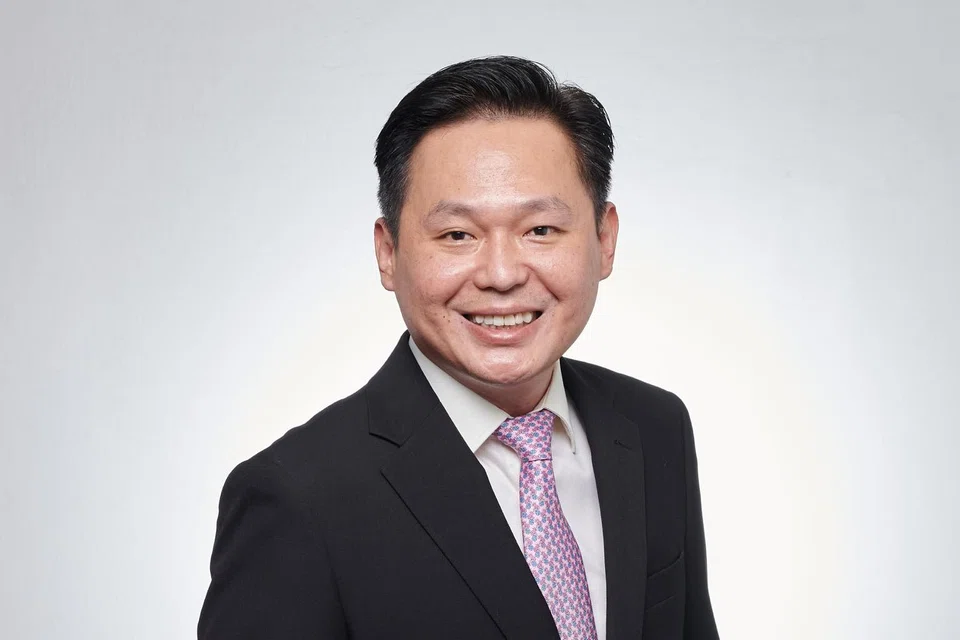
SHARES of Nanofilm Technologies International MZH closed at their lowest point this year on Oct 13 - the day before Gary Ho was named the next chief executive.
The company, which specialises in nanotechnology solutions such as coatings for premium consumer electronics, has taken a beating this year, after investor confidence was shaken by management changes and financials that disappointed.
From a high of S$6.53 on Jul 26, shares of Nanofilm fell to S$4.25 on Aug 16 following its results announcements. They have yet to rebound, closing at S$3.96, on Tuesday (Dec 7).
It falls on Ho now to reinstill market confidence in the company. His appointment as CEO was announced on Oct 14, and takes effect on Jan 1, 2022.
He replaces Shi Xu, who founded Nanofilm and was made interim CEO earlier this year after the previous CEO Lee Liang Huang resigned for health reasons.
In an interview with The Business Times, Ho said his key focus will be to steer and develop the company's various business units as well as to create new growth verticals for the commercialisation of Nanofilm's deep technology capabilities.
"I will spend a lot of time building specialised teams (that are) focused on specific industries and markets," said Ho.
He also hopes to spend more time communicating with investors about Nanofilm's business and its plans.
Humble beginnings
Ho credits an unusual upbringing with giving him a taste for independence from a young age.
He was mostly raised by his aunt; and only saw his parents for a couple of hours on Sundays, before they had to head back to Pulau Bukom - an island some 5 km south-west of mainland Singapore - where they sold fruits for a living.
Meanwhile, his brother and sister lived with his grandparents.
The family only began to live under one roof when he turned 16, and his parents were able to afford a HDB flat on the mainland.
After obtaining a diploma in production technology at the German Singapore Institute, Ho had to complete a 3-year attachment with a company assigned to him.
But when he was offered a job as a technician, he declined.
"I knew that a routine 8-to-5 job in a factory may not be the right fit for me," he said.
Instead, he requested for a sales position. He was subsequently offered a job at Hi-P International - a contract manufacturer that was delisted from the Singapore Exchange this year.
Two years into the job, Ho was selected for a China posting - to expand the company's business.
The job was a tough one, as Ho was then the only salesperson in China for Hi-P.
It was also a different time - without the convenience of the Internet or instant messaging apps. Ho recalled having to flip through physical business directories - the likes of Yellow Pages - and cold calling prospective clients.
Ho's capabilities shone through, however, and he had a hand in securing some of Hi-P's top customers, including Motorola, Nokia, Kodak and Gillette.
Over 18 years in China, Ho rose through the ranks to take up several senior management positions. His last role at Hi-P was chief operating officer.
In 2016, Ho moved back to Singapore, partly to allow his son, then 14, to assimilate into the local environment before having to serve his national service.
It was also an opportunity for Ho to recharge and make up for lost time with his family.
"It was a very memorable period of time for me," said Ho, adding that he got to travel for leisure and spend quality time with his wife and children.
When the time came to look out for his next role, Ho said he was drawn to Nanofilm. "What attracted me to the company was their technology and how it was applicable to a wide variety of industries," said Ho.
"The technology is very unique, it is disruptive... and the company (had) over the last 22 years established a very strong track record in commercialising deep tech."
He became Nanofilm's chief marketing officer in 2018, and in July 2020 was made deputy CEO and chief commercial officer.
Driving change
Since Nanofilm's listing, the group had been gradually restructuring for its business units to be ran individually.
Business unit heads have been appointed to directly oversee each division and report directly to the CEO instead of a chief operating officer (COO).
Hence, when Ricky Tan, the company's COO resigned in August this year, there were no plans to look for a replacement.
Nanofilm's key business units are advanced materials, nanofabrication and industrial equipment. The company serves a range of industries, including new energy, biomedical, aerospace and the Internet of Things.
It is not easy "connecting the tech to the commercial world", especially across such "diverse and different" industries, said Ho.
It therefore made sense for the company to operate the various business units as individual growth pillars. This will help Nanofilm "fan out to multiple industries simultaneously" and at a faster pace, he said.
Ownership and accountability are some of the key qualities Ho hopes to inculcate across all the business units.
Efforts are also being made to seek collaborations and partnerships.
Nanofilm is constantly on the lookout for M&A (mergers and acquisitions) opportunities that can complement its technology in order to bring new, unique products into the marketplace, according to Ho.
"I'm not trying to look for a revolutionary change; it's more about evolution (by) leveraging our strengths and core capabilities," said Ho.
Meanwhile, Nanofilm has also been actively working on boosting stakeholder engagement.
Ho said many investors are not familiar with deep tech companies. This had in the past brought about challenges in managing expectations.
"As a deep tech company, developing (new) products and services, and for them to be commercially-ready takes time," said Ho, adding that it is a message the company has been trying to convey to investors.
Nanofilm has recently put in place an investor relations policy to outline key processes and practices when it comes to communicating with stakeholders. It has also engaged an external investor relations company.
"We are now one year in the IPO... we are gaining experience and also learning from it.
"We are also working on improving our disclosure and transparency to educate the investment community on our business and strategy. We will also have more regular... dialogues with the investment community," he said, adding that these efforts will help the market better understand the company's business.
READ MORE: