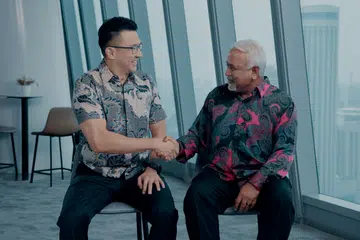
New Silkroutes Group focused on transforming into a healthtech play
Group currently has 16 medical and dental clinics, and the manufacturing facility in China through its subsidiary, Shanghai Fengwei.

Singapore
WITH the winding down of its loss-making legacy energy business, New Silkroutes Group Limited (NSG) is sharpening its focus on becoming a tech-based healthcare company, chief executive officer VicPearly Wong says.
Dr Wong - who took over the CEO reins last October from Goh Jin Hian, son of Singapore's former prime minister Goh Chok Tong - said healthcare will be the driving force for the mainboard listed group.
"Going forth, the group will be sharpening its focus on healthtech - innovative solutions to empower our clinicians and patients to give better diagnoses and outcomes," said Dr Wong, a specialist orthodontist.
"The pandemic has pushed our envelope in accepting technology in the archaic world of medicine; and that healthcare is no longer just a brick-and-mortar story. The restrictions on travel and mobility have created a gap that we intend to bridge with technology," she added.
NSG embarked on its transformation from an oil trading business into a more healthcare-focused group in August 2018. It bought a majority stake in a network of six medical clinics to complement the nine dental clinics that were already held by Healthsciences International (HSI), the healthcare division of NSG.
It also gained a foothold in China's healthcare market through its acquisition of Shanghai Fengwei Garment Accessory Co, Ltd (Shanghai Fengwei), a producer of non-woven biodegradable linen sold mainly for use in China's domestic healthcare sector.
But things turned awry when the Commercial Affairs Department (CAD) launched an investigation last September over a possible offence under the Securities and Futures Act of Singapore. It also got unwanted attention when Dr Goh came under the spotlight for alleged breaches of his director's duties at a marine fuels supplier Inter-Pacific Petroleum (IPP) that had lost its operating licence and is under judicial management. Dr Goh was a director at IPP from June 28, 2011, to August 20, 2019.
"Those problems will be behind us sooner rather than later," said Dr Wong, adding that the group is dealing with them in a "systematic and transparent" manner.
In December 2020, NSG commenced a strategic review of its energy division, IEG, which has been draining cash in recent years. It is in the midst of a voluntary creditors' winding up of the subsidiary. It also appointed KPMG Services to conduct an independent review into two earlier management agreements entered into by its subsidiary Shanghai Fengwei, as well as the valuation of the 4.5 per cent stake in Thai General Nice Coal and Coke.
"We are nearing the end of this painful restructuring to exit our loss-making legacy businesses," she said.
Dr Wong was the clinical director (dental) of HSI, which became NSG's subsidiary after the group bought her firm Orange Orthodontics and Dentofacial Orthopaedics in 2017.
"Our strategy going forward is to focus singularly on the healthcare and healthcare-related industry where many opportunities abound in the region," she added.
Her optimism is underpinned by the strong and growing demand for healthcare due to rising incomes across the region and an aging population. Technology is also advancing rapidly, and "doctors and medical groups with a finger on the pulse of these developments can offer patients far superior outcomes in terms of diagnosis and treatment", she said.
The plan is to grow NSG into a leading integrated healthcare provider in Asia. The group currently has 16 medical and dental clinics, and the manufacturing facility in China through its subsidiary, Shanghai Fengwei.
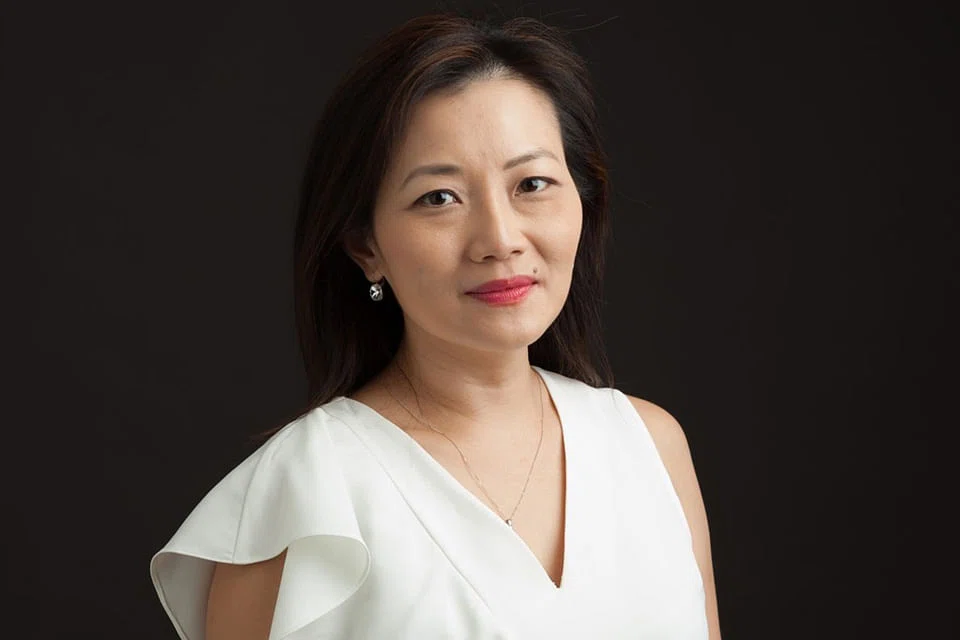
NSG recently signed a memorandum of understanding (MOU) with Huawei International to develop its artificial intelligence (AI) genomic analysis.
"Our vision for this AI machine is to speed up analysis of genomic data; build predictive models for diagnoses, therapeutics; prognoses in oncology and genomics. This move is part of the group's plan to hone focus on tech-based healthcare, and to push the boundaries of medical technological innovations," she said.
The MOU is important for the strategic growth of NSG as the future of healthcare is in technological innovations.
"Genomic medicine involves the study of a patient's DNA and how the information can be used to improve clinical care through better diagnosis and personalised treatment. AI can help speed up the analysis of vast amounts of genomic sequence data to allow doctors and patients to identify and manage conditions at the earliest possible stages," she explained.
"We envision the creation of a healthcare ecosystem with our AI platform as the core driver of this machine. The more we feed into this AI-optimised computer engine, the deeper the machine learning; the better the analyses. Healthcare is lagging behind many industries in technological advancements."
NSG intends to build partnerships with leading tech players to fulfil its new vision.
"We are also exploring other initiatives and will update shareholders and the media if and when we have anything firmed up," Dr Wong said.
On whether the past troubles had made it more challenging for the group to fund funds and woo strategic investors, she shared that on the day NSG announced its MOU with Huawei, the market has responded with a "resounding approval".
"We take that as a positive sign that we are headed in the right direction. Several potential investors have also expressed interest in exploring collaborations with us," she said. NSG is looking to raise S$5-8 million to launch its AI platform.
Asked how long the group will be able to go on without fresh funds, given its cash and cash equivalent, is around US$10 million and it has about US$10 million in borrowings repayable soon, Dr Wong said its healthcare operations are generating sufficient operating cash flows to meet working capital needs.
Although HSI - through which NSG will drive its medical, dental and healthcare supplies business - contributed less than half of total revenue last year, it is growing and profitable.
The healthcare and healthcare consumables segment contributed US$11.94 million in the fiscal second quarter (Q2) ended Dec 31, 2020, an improvement of 34 per cent from a year ago, underpinned by the increase in demand for non-woven material consequent to the Covid-19 pandemic.
The Covid-19 pandemic and lockdowns led to closure of NSG clinics and had a significant impact on its earnings last year.
NSG sank into the red with a net loss of US$1.3 million in Q2, from a net profit of US$355,000 the previous year. Turnover tumbled 92 per cent to US$12 million due to the liquidation commencement of IEG resulting in a significant reduction in trading volumes in the energy segment.
Dr Wong is sanguine about NSG's prospects, as it pivots fully into tech-based healthcare.
"With the rollout of vaccine programmes in Singapore and China, we believe we should return to a more stable operating environment before too long.
"As a medically trained professional with management experience, I believe that I'm in a good position to transform NSG into an innovative healthcare company by leveraging data-driven technology," she said.
TRENDING NOW
He built the Vingroup empire. Now South-east Asia’s richest man is handing some key roles to his sons
Seatrium allocates S$200 million for new share buyback programme
32 companies, 6 individuals bag accolades at Singapore Corporate Awards 2026
Stocks to watch: Mapletree Logistics Trust, Seatrium, Keppel DC Reit, Food Empire