

Newly-listed Lincotrade aims to leverage tourism rebound with hotel upgrading works

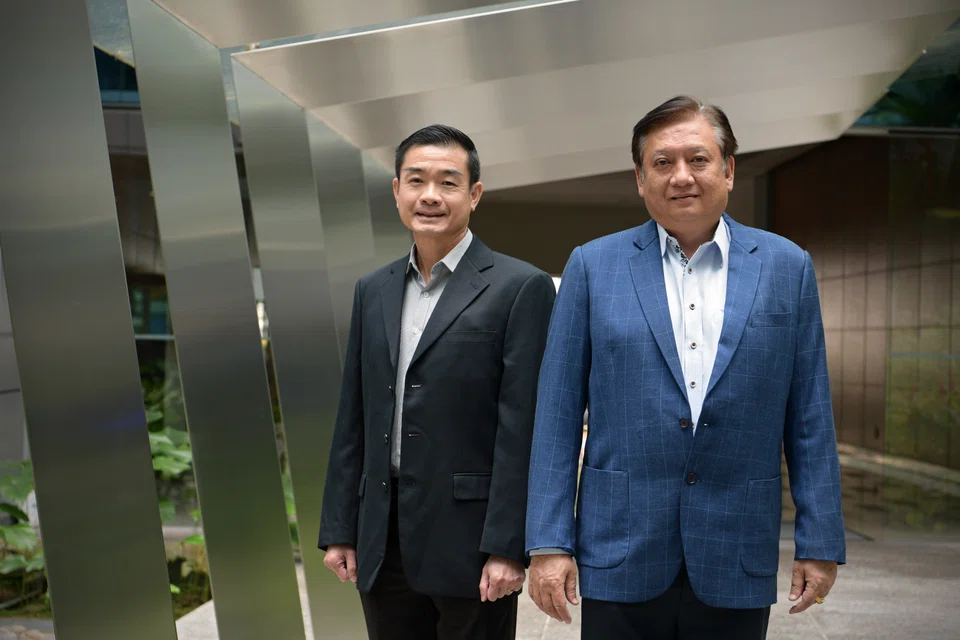
INTERIOR fit-out company Lincotrade & Associates Holdings is looking to leverage increased demand for hotel upgrading works as hoteliers prepare for post-pandemic demand.
The company, which also provides interior fit-out services to residential projects, and constructs showflats and sales galleries, listed on the Singapore Exchange on Monday (Aug 8) through a reverse takeover of Fabchem China.
This comes after Fabchem China disposed its stake in mining explosives manufacturer Shandong Yinguang Technology in March this year.
In an interview with The Business Times, Lincotrade’s business development director Jackie Soh said he expects more hotels to engage in upgrading works as the tourism industry emerges from the pandemic.
The company, which has 30 years of experience in the interior fit-out industry, recently completed its largest project to-date for the serviced apartment Citadines Raffles Place Singapore at CapitaSpring. It worked on the interior design of the rooms and the guest-facing areas of the facility.
The project boosted Lincotrade revenue and profits for its most recent financial year, ended Jun 30, 2021.
Revenue increased 99.4 per cent year on year to S$37.3 million, while net profit came in at S$2.4 million – reversing from a loss of S$1.6 million a year earlier.
“We are also participating in a few tenders for hotel upgrading projects,” Soh said, noting that the company had an order book of S$76.7 million, as at Jun 17, that will be filled in the next 2 years.
The company also believes it has an advantage over its peers, which exited the market or cut manpower during the pandemic to save costs.
“Over this Covid-19 period, I think a few of my peers have given up their businesses; they have sent their workers back, so they do not have the capacity to take on larger-scale projects,” he said, adding that the company kept its close-to-100 employees through the pandemic.
In the residential segment, Lincotrade makes fittings such as doors and kitchen cabinets for apartments.
When building showflats for these apartments, of which it has a 30 per cent market share in, the company gets specifications for the respective condominium projects – giving it an advantage in preparing for tenders, Soh said.
Soh said the company is dealing with higher costs by factoring these into its tender submissions. It is also leveraging economies of scale with its projects, to try and secure cheaper materials directly.
“We bring in plywood from Malaysia, rather than buying from local suppliers. Because our projects are larger in scale, we can buy in bulk,” he said.
The company saw negative cash flows from operating activities of S$4.2 million in FY2021, down from a positive cash flow of S$494,000 in FY2020.
Chief financial officer Kwek Wei Lee, who was formerly Fabchem China’s financial manager, said Lincotrade will work to improve its cash flows by controlling its payments to operators and expediting payments from customers.
The company had also planned to issue up to 13.7 million new placement shares at S$0.22 per share, to raise up to S$3 million for fees and working capital, and had on Jul 27 appointed RHB Bank and Moomoo Financial Singapore as placement agents.
This issue price represents a premium of about 120 per cent to the volume-weighted average price of S$0.10 per share based on trades on the mainboard, where Fabchem China was previously listed.
In a completion announcement on Aug 3, however, the company said only 5.5 million new shares will be placed out.
On Monday, shares of the company closed at S$0.19, down S$0.03 or 13.6 per cent from their placement share price.
At the current share price, the company has a market capitalisation of S$32.7 million based on its enlarged share capital of 172 million. It trades 13.9 times its full-year earnings in FY2021 – based on FY2021 numbers provided in the circular.
After the listing and placement, Soh and managing director Jimmy Tan Jit Meng will hold 26.4 per cent of the company’s shares, while director Tan Chee Khoon will hold 13.2 per cent of shares. Henry Wee and Sun Bowen, who were the controlling shareholders of Fabchem China, will continue to hold an indirect interest in the company of 14.3 per cent and 8.8 per cent, respectively. Public shareholders will hold a 7.2 per cent stake in the company.
TRENDING NOW

Two Singapore-listed palm oil firms named in Greenpeace report on Indonesian plantation fires
Singapore Airlines flight returns to San Francisco after ‘unruly’ passenger incident
Singapore looking into which companies responsible for haze-causing fires: PM Wong
Deluge IPO 3.86 times subscribed ahead of SGX debut

