Next DBS CEO should have the skills to run the ‘Digital Bank of Singapore’
An important challenge will be to maintain the bank’s lead in the age of digital and online challenges, as well as coping with AI risks


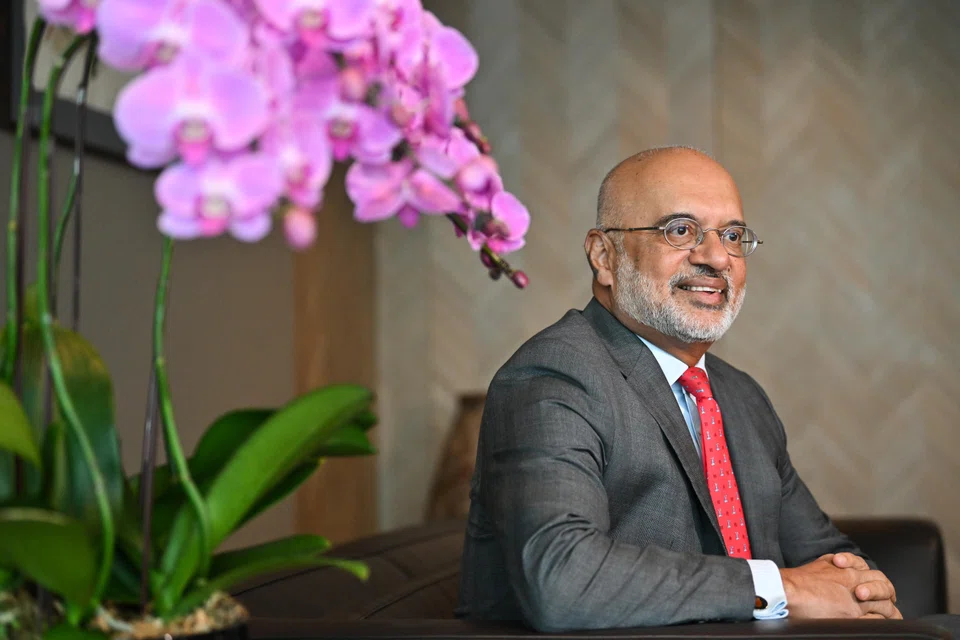
MANY in Singapore’s analyst community have been busy speculating when the DBS chief executive post will become vacant. But they have less to say about who the replacement can be, simply because whoever is tasked with the role has big shoes to fill.
Under CEO Piyush Gupta’s leadership, DBS – South-east Asia’s largest lender – has continued to break its profit records and provide strong returns to investors.
Today, DBS’ return on equity (ROE) ranks seventh among the 100 largest banks in the world, up from 46th place in 2015. It also ranks ninth in total shareholder returns among the 100 banks.
It is the first Singapore Exchange (SGX)-listed company to cross the S$100 billion mark in market capitalisation and, together with the other two local banks, represents a whopping half of the local market’s value.
The bank is going strong, with 2024 earnings expected to exceed even its record levels in 2023, aided by the higher-for-longer interest rate environment and strong operations.
Digital Bank of Singapore?
An important challenge will be to maintain DBS’ lead in the age of digital and online challenges, as well as coping with artificial intelligence risks.
Howard Yu, Lego professor of management and innovation at IMD Business School, expects DBS would want a successor that has visionary leadership – much like Gupta demonstrated when he recognised the disruptive potential of fintech companies early on.
“This foresight must be coupled with a deep technological savvy, enabling the new CEO to continue DBS’ digital transformation journey and implement cutting-edge technologies,” he said.
Already, Gupta has made great strides in getting DBS digital-ready. He was among the first to see that digital was the way to go when it came to competing in large markets without a large physical footprint.
Ahead of the competition, DBS was the first to enter Singapore’s mobile wallet market with the ambitious launch of PayLah! in 2014. The bank even started a completely paperless and branchless mobile-only bank in India in 2016.
It termed itself the “Digital Bank of Singapore” in its annual report for the financial year 2017 to highlight its commitment to digitalisation.
Even more ambitiously, Gupta said in a 2018 interview that he wanted DBS to be benchmarked against the biggest tech companies in the world – Google, Amazon, Netflix, Apple, LinkedIn, Facebook – effectively, representing the “D” in “Gandalf”.
The success on the digital front has seen the bank land a slew of awards. In 2016, DBS received the World’s Best Digital Bank and Asia’s Best Bank by Euromoney, the first time an Asian bank has won a global award from Euromoney.
But some of the shine of the above achievements has been lost given digital disruptions to the bank’s services between 2021 and 2023, the most severe of which lasted around two days in November 2021.
Following the spate of incidents, Singapore authorities imposed several exigencies on the bank, which included additional capital requirements, and barred it from making non-essential IT changes and acquiring new business ventures.
At the end of 2023, DBS set aside S$80 million to enhance its system resiliency, while its management committee took a pay cut to take accountability for the disruptions.
It is still too early to say if the money has been well-spent and has resolved all the tech issues. This will be something that Gupta or his replacement will need to assure investors that the disruptions are a thing of the past.
IMD’s Yu said the tech disruptions have highlighted the critical need for enhancing digital infrastructure resilience.
“The new leader must prioritise strengthening DBS’ technological backbone while simultaneously pushing forward with digital innovation,” he said.
Growth and expansion
While tech will remain a key focus area, analysts also noted the bank’s ample capital base, which provides room for mergers-and-acquisitions (M&A) plans ahead.
For FY2023, DBS’ common equity Tier-1 (CET-1) ratio stood at 14.6 per cent, while its total capital adequacy ratio was 16.1 per cent.
In a research note dated Jul 24, Citi analyst Tan Yong Hong noted that DBS had enough capital to both raise its dividends as well as make further acquisitions.
DBS currently has operations in 19 markets, and is the sixth-largest commercial bank in Hong Kong.
Tan thinks M&A will be a better use of capital. Given the Singapore-Johor Special Economic Zone, among other developments between Singapore and Malaysia, a move to acquire a Malaysian bank and attain an onshore banking licence could be on the cards.
Meanwhile, Lorraine Tan, director of Asia equity research at Morningstar, expects improving capital allocation to remain an important focus point both for the bank and its shareholders.
For the immediate term, the bank mainly has to manage the risks of slowing global growth as well as easing net interest margins on its earnings, she said.
Uncertainty
Gupta’s replacement will likely have to match, or even outdo, what has been achieved.
DBS was not in the best shape when he first took over the role in November 2009.
Predecessor Richard Stanley died of leukemia in April 2009, less than a year into the job, while global economies were also recovering from one of the worst worldwide economic crises in years.
Gupta streamlined the group’s operations across all markets, simplified its management structure, and worked to fix its consumer banking business in Singapore, to build the DBS of today.
Yu noted that succeeding a long-tenured, high-profile CEO such as Gupta presents significant challenges, but it is “certainly not an insurmountable task”.
Amid the increasingly uncertain and volatile global operating environment, plagued by higher-for-longer interest rates and rising geopolitical tensions, a successor will need to be an outstanding individual who can handle the unknown.
This ideal successor would need to have a “unique blend” of traditional banking acumen and forward-thinking leadership, Yu said.
He added that mere technological prowess will not suffice as IT capabilities become increasingly commoditised.
“The true differentiator will be the ability to blend traditional banking knowledge with innovative problem-solving skills, addressing the complex and evolving needs of customers across DBS’ diverse markets,” he said.
Additional reporting by Srinidhi Ragavendran and Benicia Tan.