

No to durians, but 'yes' to high-tech farming
Homegrown electronics company Excelpoint says agriculture is a sector the firm might venture into.
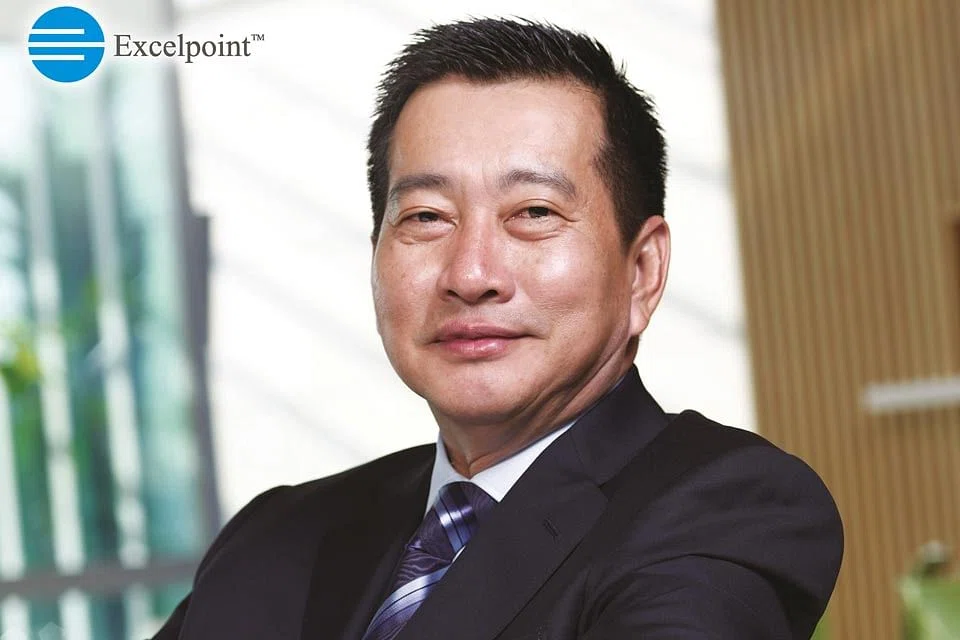
THE durian question had to be popped right at the beginning of the interview. Given declining margins in its electronics components distribution business, is Excelpoint Technology about to tread the path of Singapore-listed counterpart Serial Systems, which invested into durian purée manufacturing among other random businesses? After all, with net profit margins of 0.5 per cent, surely Excelpoint has better things to do with its capital.
Excelpoint founder and chief executive officer Albert Phuay has other ideas. The firm is not making durian puree anytime soon, he said. However, agriculture is a sector the firm might venture into.
It sounds outlandish, until one realises that in the IoT (Internet of Things) world of wirelessly connected components, the firm might distribute sensors with applications in vertical farming.
After all, one important way to grow margins is to focus on the latest technology, Mr Phuay said.
"When new technology happens in the market, there will be a premium for early birds," he said. Thus the firm invests in hiring relevant staff, and educating customers, to prepare itself for the time when orders will flood in.
Wireless powerhouse
Mr Phuay pointed out that Excelpoint's investments into understanding technology standard Bluetooth had begun way back in 2003 with no returns for many years.
Today, Excelpoint's Bluetooth-related business brings in more than US$200 million of revenue a year. It has become a sizeable chunk of its total revenue of around US$1 billion.
Where new technologies are concerned, the firm will focus on designing and supplying circuits enabling wireless connectivity, sensing and navigation.
Smart homes and smart cities with their attendant robots and sensors will arrive in the years ahead, Mr Phuay said. The automotive and agriculture industries will also contribute to the firm's growth.
It has been a long journey for Mr Phuay, who began his career in electronics manufacturing in the late 1970s.
He founded Excelpoint in 1987, when he was 30, on the suggestion of his then-customer, US semiconductor giant Analog Devices. The firm wanted him to distribute its chips in South-east Asia.
It was no easy decision. As the eldest son in a poor family, he had a responsibility to take care of his parents and siblings. However, a friend lent him US$25,000 to start the business.
Excelpoint Tech soon moved beyond simple buying and selling. Nudged by more demanding clients in a maturing market, it began "value-adding" to components from the 1990s.
Essentially, Excelpoint designs entire circuit boards using chips from suppliers such as Analog Devices, Samsung and Qualcomm. These circuit boards are sold by Excelpoint to customers such as smartphone and speaker brands, which use the boards as a key component in their products.
"We tell our customers, they don't need to waste time and spend resources to hire engineers to design (their circuit boards). . . It's not impossible for the customer to do it themselves, but today they want (a shorter) time to market. If we have already designed something like that, they can just take, put into a casing and go."
Today, Excelpoint's key strength is in wireless-related circuits. And some 70 per cent of revenue now comes from its "value-adding", beyond pure distribution.
By segment, its circuits for mobile computing products such as smartphones account for about 35 per cent of revenue. A quarter of revenue comes from circuits for consumer products such as speakers, and a fifth from industrial and instrumentation products such as energy meters.
From 2012 to 2016, revenue has grown at a compound rate of 14 per cent a year.
Despite the value-adding, component costs still account for a large proportion of the total price of the finalised circuit board. So the firm might not be able to sustain its solid pace of growth by organic means alone.
The firm's executives told The Business Times that as part of their normal business operations, they examine potential acquisitions of complementary and connected businesses.
"We are in some talks now. There are some targets we're in the process of exploring," Mr Phuay said.
On the organic growth front, the firm is also exploring frontier markets in Asia such as Pakistan, Bangladesh and Myanmar. While over half of the firm's revenues come from China today, future growth will also come from India, followed by Indonesia and Vietnam, he said.
Industry trends
Even as Excelpoint plots its future, the upstream electronics industry it supports is undergoing a shake-up. Qualcomm, for example, is in the midst of a merger with automotive chip provider NXP. Earlier this year, Analog Devices completed its acquisition of Linear Technology, another chipmaker.
With industry consolidation, selling prices for components might rise. But it will not be enough to move the needle for Excelpoint, hence the search for acquisition targets, Mr Phuay said.
Another industry development, and potential threat, is the rise of e-commerce. But Mr Phuay said online components distributors in the United States focus on distributing to smaller customers, not the large ones that require the technical support Excelpoint provides.
E-commerce also plays a role in supplying components for localised products, such as LED lanterns in India, said Excelpoint's senior vice-president of operations Stanley Chan.
In 2014, the firm set up an e-commerce platform in China, and will extend it to South-east Asia and India. Its objective is not to make money, but to build relationships with small customers who might grow bigger, Mr Chan said.
Mr Phuay said that success in business over the years comes down to people.
"Family support is critical at the beginning. You have to work really long hours, plus entertainment, probably 17 to 18 hours a day. I have a good wife who really supported me," he said. "Then the team that you build is very critical."
Asked about whether he will retire soon, Mr Phuay, who is 60 this year, hesitated. "The succession plan is there, it can be triggered any time. But I love the industry, and this company. . . I'll definitely still be a mentor," he said.
TRENDING NOW

Singapore identifies 7 firms responsible for haze fires, notices issued urging action: Grace Fu

Philippine power giant First Gen rebuffs foreign offers, plans up to US$2.6 billion in expansion

DBS remains analysts’ pick ahead of Q3 earnings after Singapore banks’ share slump
Indonesia imposes US$116 million in fines over manipulation of Sinar Mas, Prajogo-linked stocks

