No plans to erode excess capital given market uncertainty: OCBC chairman

Tan Nai Lun
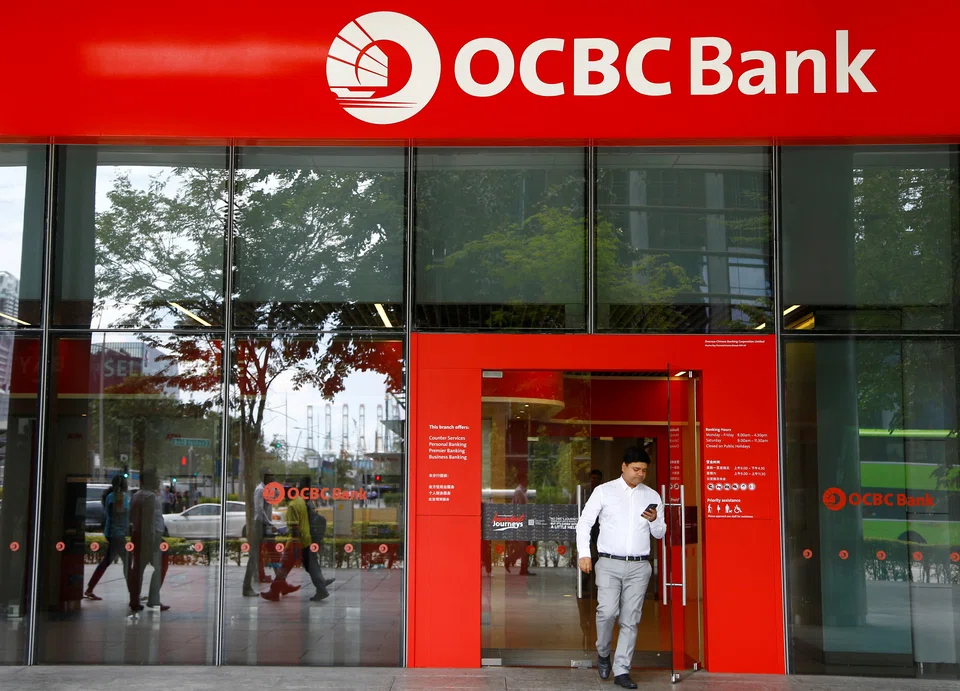
OCBC has no plans to reduce its capital given uncertain and volatile market conditions, said its board chairman Andrew Lee at the bank’s annual general meeting (AGM) on Tuesday (Apr 25).
In response to shareholder queries on how Basel IV – the latest set of capital requirements for banks globally – will affect the lender’s Common Equity Tier 1 (CET1) ratio, he said: “For the moment, we have no intentions of eroding this layer of perceived excess capital.”
Some shareholders at the AGM noted that OCBC had the highest CET1 ratio – at 15.2 per cent at the end of its financial year 2022 – among the three local banks. As at Dec 31, 2022, DBS’ CET1 stood at 14.6 per cent, while UOB’s was 13.3 per cent.
Lee acknowledged views that OCBC’s CET1 ratio “may be a bit too high” compared to its peer banks.
But he also noted concurrent geopolitical tensions and macroeconomic stresses – such as unprecedented interest rate hikes and persistent inflation – in recent times, with no clear signs of issues being speedily resolved.
Lee said the bank has survived due to its prudent management. “Against this background of tremendous stress and ambiguity… there’s a need for us to continue to be prudent and careful.”
Lee added that being well-capitalised puts OCBC in a good position to act on acquisition opportunities as they come.
“In fact, if we go into a crisis, capital would be the new currency. And in a crisis, it will be a tremendous challenge for banks to raise capital and liquidity,” he said.
OCBC posted a record S$5.7 billion net profit in FY2022, up 18 per cent on year, driven by strong growth in net interest income.
The bank also said it will target a 50 per cent payout ratio for its dividends moving forward.
In response to a query on the bank’s new dividend policy, Lee said the lender has committed to a more transparent policy even though it may seem “ambiguous”.
He added that there is no need for the bank to be “so rigid” and commit to fixed payouts. “Leave some ‘ambiguity’ with us, because we need some flexibility (given that) the circumstances are not so clear,” he said.
Lee also spoke briefly about the bank’s plans with its insurance subsidiary, Great Eastern, in response to queries about the insurer.
He noted that Great Eastern exists as a capability within the banking group. “It is not something that we trade, it is something that we build on. As we build on Great Eastern, the benefits will be reflected also in OCBC.”
Lee said Great Eastern’s growth will translate to OCBC receiving higher dividends from the insurer. This will in turn be reflected in a stronger OCBC share price.
To achieve greater and more sustained growth, Lee added that OCBC will engage with Great Eastern’s newly-elected board chairman to review its business strategy.
Shares of OCBC ended 1.6 per cent lower at S$12.62 on Tuesday.