TOPLINE

‘Not an easy company to understand’: Frencken wants to be known for more than semiconductors

The company’s president says its edge comes from engineering capabilities with applications across industries

Summarise
Low Youjin
Published Sun, Aug 2, 2026 · 12:00 PM
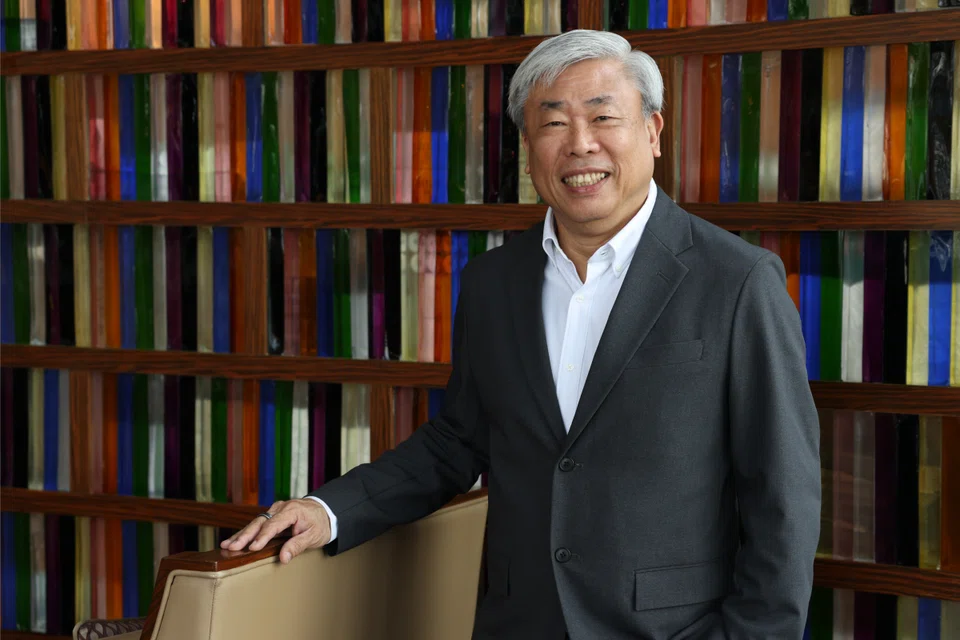
    • Dennis Au, president of Frencken Group, says the company prefers to partner a relatively small group of top-tier customers to ensure its long-term growth.
    • Dennis Au, president of Frencken Group, says the company prefers to partner a relatively small group of top-tier customers to ensure its long-term growth. PHOTO: TAY CHU YI, BT

    [SINGAPORE] What do smartphones, luxury cars and operating theatres have in common? More than most people realise.

    Mainboard-listed Frencken Group has a hand in all three – with its components finding their way into machines that manufacture smartphone chips, analogue clocks used in luxury cars and cardiovascular patient tables used in operating theatres. 

    “You don’t see ‘Made by Frencken’ or Frencken branding around it,” said the precision engineering company’s president Dennis Au. “It’s more like ‘Frencken inside’, because we’ve created the modules that are placed in those systems.”


    Yet, Au, who has led the company for the past 11 years, acknowledged that Frencken is “not an easy company to understand” for investors, with some mistakenly viewing it as a play on a single technology despite the company’s presence in multiple industries.

    Rather than producing finished consumer products, Frencken manufactures high-precision components, modules and complete sub-systems for multinational companies.

    Among its customers are health technology company Philips and chipmaking equipment maker ASML.

    The semiconductor segment accounted for 49 per cent of Frencken’s engineering revenue in the first quarter. The remainder came from analytical life sciences, medical technology, automotive and industrial automation, among others. 

    Another misconception, Au said, is that investors see Frencken as a purely Singapore company. In reality, the group has 18 operating sites across Asia, Europe and the US.

    This global footprint allows it to work in the same time zone, language and regulatory environment as its customers.

    It also gives Frencken the nimbleness to transfer production programmes across its network when companies reconfigure their supply chains amid rising costs and geopolitical shifts.

    Getting sticky

    To Au, however, the industries it works with are merely applications of a broader strategy. 

    Rather than viewing Frencken as a company defined by the markets it serves, he said the group is built around a common set of engineering competencies – including precision machining, motion control, vacuum technologies and high-cleanliness manufacturing – that it applies across multiple sectors.

    Those competencies also determine where Frencken believes it can create the most value. 

    “So customers say, ‘Can you do A to Z?’ The answer is probably yes, but I’m not sure I want to,” Au said. “I’d rather do A, C, E, F because that’s the area where (Frencken’s) competency really comes to the fore.”

    Au says the accumulated skills, experience and know-how that Frencken has built up over years of working with customers make it harder for them to switch suppliers. PHOTO: TAY CHU YI, BT

    Within those areas, however, Frencken seeks to move up the value chain rather than manufacture individual components. 

    Beyond machining, for example, it also undertakes processes such as treatment, assembly and testing, allowing it to become more deeply embedded in customers’ manufacturing operations and build what Au describes as “stickiness”.

    Au said the accumulated skills, experience and know-how built up over years of working with customers make it harder for them to switch suppliers.

    Working with market leaders

    But Frencken is also selective about whom it chooses to build “stickiness” with, preferring to partner a relatively small group of top-tier customers. 

    Au said the strategy is aimed at ensuring the company’s long-term growth. By working with market leaders, Frencken can ride on their expansion as they invest in new technologies and gain market share.

    “If you’re working with the leaders in that segment, typically they are driving the segment. When it grows, they are growing with it. And if I’m relevant to them, and I’m building the parts for them, I grow with them,” he said.

    Winning those customers, however, is not easy. “Why would they want to work with you?” Au said. “That comes back to the stickiness, the customer satisfaction, the responsiveness, the ability to do what they want to do.”

    Partnering market leaders is only one part of Frencken’s long-term growth strategy. The company also seeks to ensure it is not dependent on any single industry. 

    Despite the semiconductor segment’s big share of engineering revenue in the first quarter, Au noted that the industry has always been cyclical. 

    The recent swings in Frencken’s share price have reflected that volatility. 

    Along with other Singapore-listed semiconductor and technology stocks, the counter rallied on optimism over artificial intelligence-driven demand.

    It reached a historic high of S$3.54 in June before retreating amid a broader semiconductor sell-off driven by concerns over AI-related valuations and China’s growing competition in memory chips. 

    Frencken shares closed at S$2.47 on Friday (Jul 31).

    This means that even though AI has fuelled a fresh investment cycle, Frencken must be prepared for the inevitable downturns that follow, Au said, adding that the company’s presence across multiple industries helps cushion those cycles. 

    He pointed to aerospace as one example that gives Frencken “another leg to stand on” when the semiconductor industry goes through a cyclical downturn.

    Though it is a business that takes longer to build, he said it provides more enduring revenue streams once customer programmes are secured, and so Frencken is cultivating the segment to create “yet more diversity” and “yet more stability” within the company.

    Beyond the billion-dollar mark 

    With Frencken moving closer to the S$1 billion revenue mark – following annual revenue of more than S$865 million in 2025 and first-quarter net profit of S$8 million in 2026 – Au said the company is already thinking about its next phase of growth.

    As the company grows larger, sustaining the same pace of organic growth will become increasingly difficult, he said, making acquisitions and new capabilities more important.

    While it is still “premature” to discuss specific plans, Au said one area under evaluation is businesses that are less dependent on customers’ capital expenditure cycles.

    An example is high-tech consumables. Frencken already manufactures semiconductor components that wear out over time and require replacement, creating a potential source of recurring demand.

    “We’re still evaluating all the options,” Au said. “But we’re very clear that we need additional avenues for growth.”

    Au says that as Frencken grows, sustaining the same pace of organic growth will become increasingly difficult. PHOTO: TAY CHU YI, BT

    Looking further ahead, Au also sees humanoid robots as a potential growth opportunity.

    He argued that the same precision engineering capabilities that underpin Frencken’s existing businesses are well-suited to the emerging physical AI industry, which he believes could become the next major wave after digital AI. 

    For now, Frencken is partnering a German company to develop prototype gearboxes for humanoid robots. 

    “I think it will be very interesting for the company,” said Au. “It will also open new avenues that we are not in today.”