

Now back in the black, SGX-listed Trendlines doubles down on core bets
The group is concentrating on assets in its strongest portfolio companies, says CEO Haim Brosh
 Add BT as a preferred source
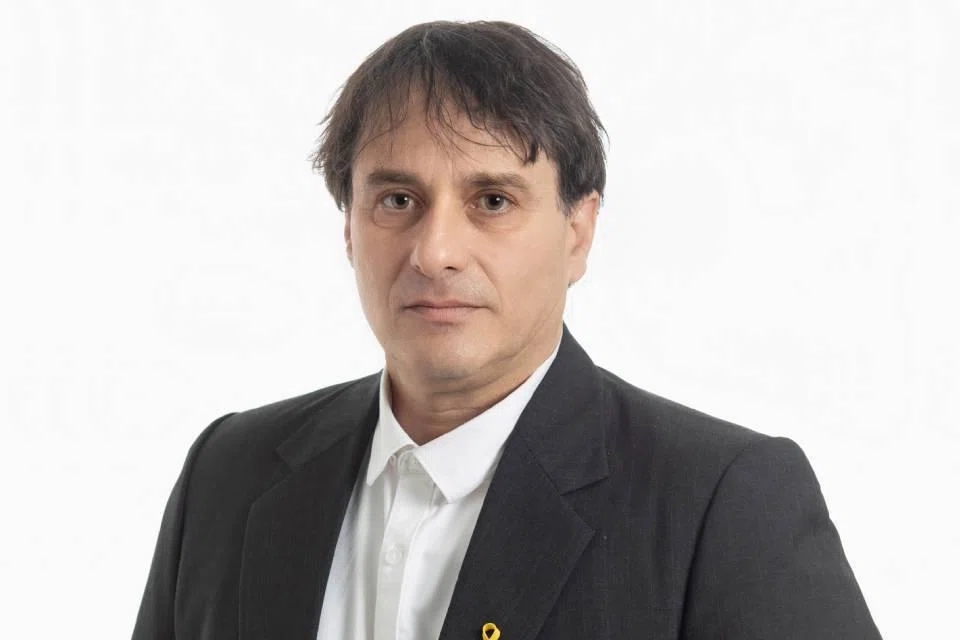
[SINGAPORE] Having returned to profitability in FY2025, startup incubator The Trendlines Group is now narrowing its focus, with an eye towards scaling its most promising portfolio companies.
To focus its resources accordingly, the Catalist-listed company has in recent years shifted away from broad venture-building, halting new investments and exiting non-core businesses.
“We are concentrating on our assets in (our strongest) portfolio companies, promoting them, helping them grow from where they were from up until their exits,” Haim Brosh, executive director and chief executive officer at Trendlines, told The Business Times in a video call from Tel Aviv.
Since assuming the CEO role about two-and-a-half years ago, Brosh has led a strategic pivot aimed at streamlining operations and improving returns. The group has since reduced operating costs by “more than 50 per cent, almost 60 per cent”, he said.
Prioritising capital allocation towards high-potential portfolio companies has led to stronger fundraising outcomes and higher valuations, he added.
Return to profitability
Trendlines’ refocus appears to be translating into financial results.
For the financial year ended Dec 31, 2025, it recorded a net profit of US$1.9 million, reversing from a loss of US$9.4 million a year earlier.
This turnaround was supported by a US$7.1 million net gain in the fair value of its portfolio companies, and an uplift of about US$15 million from favourable fundraising terms and business progress.
The group also raised about S$6.4 million through private placements during the year.



Though Brosh described the profit as modest, he said that it also marked a “pivotal turnaround”.
The group’s portfolio companies also recorded a strong year in external fundraising, with notable rounds completed by firms such as crop protection firm IBI-Ag, biotech-foodtech startup Phytolon, and women’s health firm Escala Medical.
Trendlines has 41 portfolio companies in total, including Singapore-based medtech startups EndoSiq and Nice Surgical.
“Raising capital for Trendlines enables us to raise funds for our portfolio companies at higher valuations, which in turn drives valuation gains and supports their continued growth,” explained Brosh.
As external investment into its portfolio reaches record levels, he said that the group remains focused on positioning its companies for strategic exits and delivering long-term value in 2026 and beyond.
Addressing governance challenges
The group has also had to navigate governance issues.
In 2024, Trendlines terminated Anton Wibowo, the CEO of its subsidiary Trendlines Agrifood Innovation Centre in Singapore, over the alleged misappropriation of about US$2.1 million.
Brosh described the incident as “an unfortunate event” and one of the most significant challenges he has faced.
He travelled to Singapore “hours after” learning of the situation, to oversee the response, engage stakeholders and stop any further loss of funds. A special committee was formed; external investigators were also appointed alongside internal and external auditors to review processes and identify control gaps.
“It was very severe, and we have implemented, by now, all the recommendations of the internal auditors and the external investigator,” Brosh noted.
As the incident unfolded, he prioritised transparent communication with shareholders, ensuring they were fully informed about the situation and the measures taken.
He added: “Seeing the support of the shareholders post the event showed that we probably did the right things and we managed it properly.”
That confidence is reflected in Trendlines’ focus on generating returns. Shareholders remain a key priority for the group, with profits from the portfolio companies intended to deliver returns.
Brosh acknowledged that the group operates in a high-risk business, building companies from the ground up. He pointed out that not all portfolio companies are expected to succeed, with some inevitably being written off along the way. “The expectation is that the best companies’ profit will be so high that we create profit (for) our shareholders.”
Decoding Asia newsletter: your guide to navigating Asia in a new global order. Sign up here to get Decoding Asia newsletter. Delivered to your inbox. Free.
Copyright SPH Media. All rights reserved.
TRENDING NOW

Singapore private housing is ‘decoupling’ from HDB market as buyer pools diverge: NUS survey

Simba’s 5G spectrum hurdle may accelerate Singapore’s telco market reset

Yen hits 40-year low in historic slide that’s rattled Japan

Malaysian tycoon Vincent Tan’s sell-downs point to pruning rather than an exit plan

