


Nvidia Blackwell chips turn up at China site tied to Alice Huang
The semiconductors are in a data centre linked to the woman suspected of spying for Beijing
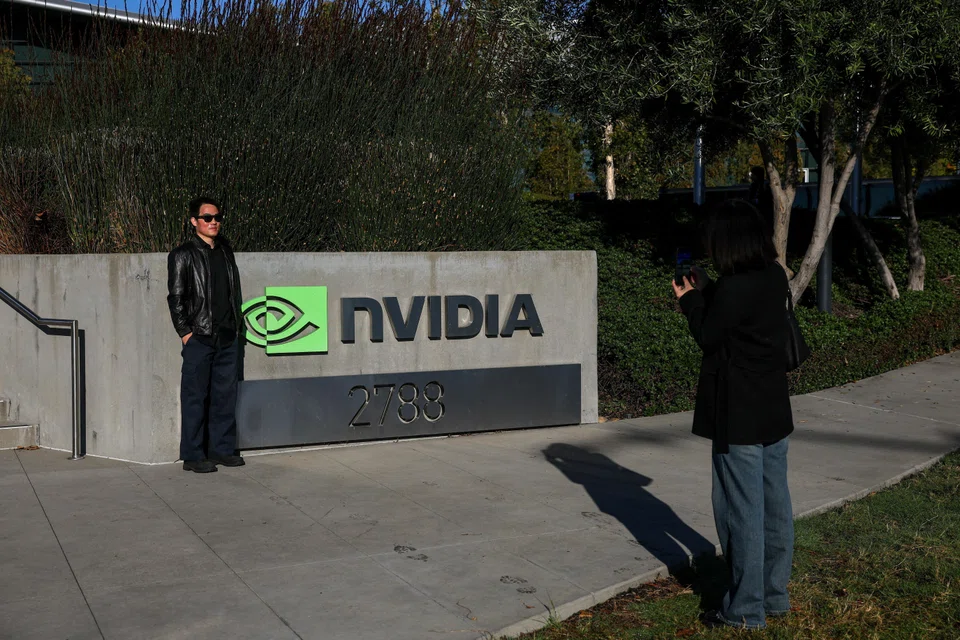
A PAIR of Chinese firms installed Nvidia’s powerful Blackwell semiconductors in a Shanghai data centre linked to Alice Huang, the woman at the heart of a controversy surrounding the US chipmaker.
The gear installed at the Yangtze River Delta Project included a GB300 NVL72 rack, among Nvidia’s most powerful products, according to a serial number specified in documents submitted to Chinese regulators in November.
Shanghai Shuoyao offered the hardware as collateral to obtain a 96 million yuan (US$14 million) loan from Shanghai Innovation Bank, according to filings from the lender that were reviewed by Bloomberg News.
A second firm Shanghai Kezhan, controlled by a Tokyo-based parent, described a GB200 server – which also relies on Blackwell chips – at the facility.
That description was provided in documents when it obtained a 90 million yuan loan in late 2025 from a finance-leasing firm wholly owned by a local Shanghai government agency.
The submissions reveal for the first time that Nvidia’s Blackwell processors found their way into a Chinese data centre that has ties to Alice Huang and Megaspeed.

These processors were until recently Nvidia’s most powerful data centre products, and they have always been illegal to ship to China without a US licence.
US President Donald Trump has explicitly said he does not want these chips – which OpenAI and Anthropic use to train their most cutting-edge models – going to the Asian country, at least for now.
Nvidia chief executive officer Jensen Huang, meanwhile, once claimed they were too big to smuggle: a standard 2 m-tall GB300 NVL72 server rack, which contains 72 Blackwell Ultra chips and 36 Grace processors, can weigh more than 1,500 kg and is about the size of a gigantic fridge.
SEE ALSO




Nvidia and its just-reinstated CEO have come under intense scrutiny in recent weeks for their failure to stop diversion of the company’s products to China, a shadow trade that US officials believe is worth billions of dollars.
It is unclear how the GB300 rack made its way to the country, to Shanghai Shuoyao or to this specific site – described in local media as designed to house as many as 800,000 servers.
By inputting the serial number for the product into a public warranty database, Bloomberg found that it was manufactured by Taiwan’s Gigabyte Technology, which assembles Nvidia chips into servers and racks.
The database also provided a model name for the serial number, which matches a GB300 NVL72 server rack manufactured by the Taiwanese company.
This sort of gear often passes through several hands – including local distribution networks – before it is installed in data centres. In many cases, products that were ultimately smuggled into China were originally sold to parties in unrestricted areas.
Bloomberg provided the rack’s serial number to Gigabyte, seeking information about to whom Gigabyte had originally sold the hardware and when. It declined to answer those questions, citing company policy.
The firm “conducts all business in compliance with applicable laws and regulations”, a spokesperson said in an emailed statement. “All transactions are subject to our internal compliance requirements and the relevant laws and regulations in effect at the time.”
Shanghai Shuoyao – the company that procured the GB300 rack and offered it as collateral – is active at the data centre linked to Alice Huang and also has significant overlap with Singapore-based Megaspeed, which is under US investigation over concerns that it smuggled Nvidia chips to China, Bloomberg has reported.
Shanghai Shuoyao, which has not responded to Bloomberg queries over the past year, confirmed in November in a rare public statement that it is one of Megaspeed’s service providers, describing the partnership as “limited to ordinary commercial cooperation”.
Megaspeed, meanwhile, used a rendering of the Yangtze River Delta Project in 2024 to describe its largest data centre to investors, dubbing the site a “specific area” facility in an unnamed country.
Bloomberg does not have evidence that Megaspeed itself diverted Nvidia hardware there, and Megaspeed has denied wrongdoing in response to the US probe.
The company has not answered repeated queries about the Yangtze River Delta Project. Nor has Nvidia, which for years insisted that there was no black market for its products and did not respond to questions for this story.
The Trump administration in November put Megaspeed on a US trade blacklist, citing a significant risk of involvement in chip diversion.
Alice Huang in 2023 founded Megaspeed, a so-called neocloud that won a coveted stamp of approval from Nvidia within four days of its creation, and went on to become the chipmaker’s largest South-east Asian customer.
She also has ties to a number of companies that invested in the Yangtze River Delta Project, which counts Kang Wei as its president. Kang has been introduced at times as Alice Huang’s romantic partner, people familiar with the matter said.
It is unclear how far along operators are in meeting their overall goal for that project, which at 800,000 servers would be on par with hyperscale facilities used by companies like OpenAI.
It is also unclear what mix of servers they plan to use.
The parameters they have outlined in construction plans reviewed by Bloomberg – specifically, the total processing power as compared to the energy input – would be extremely difficult to satisfy with chips from Chinese companies such as Huawei Technologies.
Still, the smuggled hardware disclosed in the filings reviewed by Bloomberg is just a fraction of what they would need.
These documents only cover hardware offered as collateral for loans – providing a small snapshot of the operators’ ambitions, while also underscoring how some Chinese financial institutions, including with government ties, were aware that restricted hardware was getting into China and willing to lend capital on those assets.
Bloomberg was unable to reach the leasing company that lent money to Shanghai Kezhan, nor Shanghai Innovation Bank, which in addition to the money it lent Shanghai Shuoyao, also provided a 200 million yuan loan to another company called Shanghai Longjie, similarly with restricted Nvidia chips as collateral.
Shanghai Longjie – which has the same parent company as Shanghai Shuoyao – disclosed in documents filed to regulators that it has servers containing Nvidia’s earlier Hopper-generation chips, which are illegal to ship to China without Washington’s permission, Bloomberg reported in November.
That hardware was manufactured by Super Micro Computer and Dell Technologies. It is unclear whether the shipments had US approval.
Those are not the only Hopper chips at the Yangtze River Delta Project.
Shanghai Kezhan, the company that described the GB200 server in filings in 2025, also disclosed that it has 32 servers with H200 chips there.
These products had a Gigabyte prefix in their model name, but the documents did not include serial numbers – making them harder to trace.
Shanghai Kezhan is headquartered about half a kilometre from the Yangtze River Delta Project, at the same commercial complex where Shanghai Shuoyao solicited engineers to work on Nvidia H100 and H200 chips – two restricted models.
In February 2024, both of these firms added “imports and exports” to their business activities, according to data from Qizhidao, a company information provider.
The same month, Megaspeed’s original parent – the Chinese gaming giant 7Road – obtained 16.7 per cent of Shanghai Kezhan via a subsidiary the gaming company bought from Alice Huang in 2019.
The other 83.3 per cent of Kezhan is ultimately owned by NeXPower Japan, according to Qizhidao.
Japan’s official companies registry returned only one company named NeXPower, which was established in March 2025. Caixin, a Chinese business news outlet, said the Tokyo firm is controlled by Alice Huang.
Bloomberg has been unable to reach NeXPower for comment.
Chinese-speaking staffers at the firm’s registered address would not confirm that was NeXPower’s office, and shut the door after Bloomberg News asked about their relationship with Alice Huang and Shanghai Kezhan.
On the intercom was a message saying they are working and will not respond to media questions. The registered address of the company’s director appeared to be a vacated residence.
In May 2025, records compiled by Big Trade Data show, Shanghai Kezhan received a shipment worth US$11 million, flown from Malaysia to Shanghai Pudong International Airport with the company as consignee.
The customs document described the shipment as “storage chassis”, referring to a structure that houses components of a storage server.
But the product code it was assigned to was 847150, which denotes computing servers. The shipment’s unit price was US$264,108, too costly for a storage chassis – but within the price range of servers powered by Nvidia’s Hopper chips. BLOOMBERG
Decoding Asia newsletter: your guide to navigating Asia in a new global order. Sign up here to get Decoding Asia newsletter. Delivered to your inbox. Free.
Share with us your feedback on BT's products and services
TRENDING NOW

JPMorgan, BlackRock among those making bid to manage CPF savings

Andrew Lim to step down as CLI group COO and head of its private funds business from Dec 31
BN-PN’s Melaka election landslide puts spotlight on jobs, investments and political divides

GIC in talks to lease bulk of 88,000 sq ft CapitaSky space to be vacated by Allianz

