Nvidia trading on Tiger, Moomoo, FSMOne explodes after DeepSeek beating opens buying opportunity

Tiger Brokers reports 300% jump in Nvidia shareholders on its platform; brokerages see continued volatility-driven surge
Summarise
Published Fri, Mar 14, 2025 · 03:23 PM
    • Nvidia is one of the favourite US stocks traded by Singapore investors.
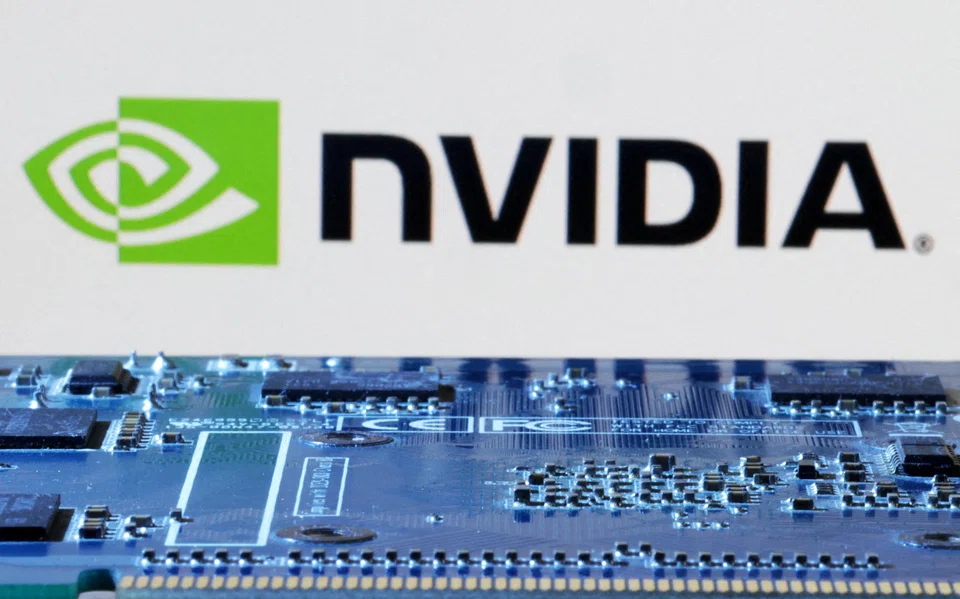
    • Nvidia is one of the favourite US stocks traded by Singapore investors. PHOTO: REUTERS

    [SINGAPORE] When China artificial intelligence (AI) player DeepSeek burst onto the global scene in January, it rocked the AI world and wiped hundreds of billions off Nvidia’s market value.

    But Singapore investors were quick to jump in and buy the dip, leading to huge surges in activity on trading platforms such as Tiger Brokers, Moomoo and FSMOne.

    DeepSeek hogged the headlines when it surged to the top of Apple Store’s download charts in late January. It was touted as an alternative to and able to perform on a par or even outperform OpenAI and Meta’s models. But the bigger shock to the AI market – hitherto dominated by Open AI’s ChatGPT – was that DeepSeek cost a fraction to build, and consumes less power. This led to a sell-off in Nvidia, whose top-end chips drive ChatGPT.

    Tiger Brokers (Singapore) said that between Jan 27 and Nvidia’s earnings release on Feb 26, total transaction value and volume for Nvidia soared 99 and 100 per cent, respectively, from the preceding one-month period.

    Compared with the corresponding period a year earlier, the respective increases were up 67 per cent and 225 per cent.

    Tiger Brokers said that this year, the number of Nvidia shareholders on its Singapore platform surged a whopping 293 per cent in the one year to Mar 4, and the amount of Nvidia shares owned rose 123 per cent in the same period.

    On Moomoo, the average trading volume for Nvidia jumped 75 per cent, and average trading value grew 47 per cent between Jan 27 and Feb 26, compared with the immediate preceding one month.

    Over at FSMOne Singapore, research analyst Joel Phua said: “We observed that Nvidia was highly traded from late January 2025 to late February 2025. Investors continued to buy the dip when Nvidia’s stock crashed significantly from the US$130+ to the US$110+ range.”

    FSMOne said that Nvidia, leading electric vehicle maker Tesla and Big Data software firm Palantir are the three most traded stocks on its platform.

    Plenty of concerns

    After the sell-off in January, Nvidia shares plummeted again in February even though its February earnings report topped analysts’ expectations. 

    James Ooi, market strategist at Tiger Brokers, said that investors turned negative as earnings delivered only a modest beat, with concerns over deteriorating profit margins and slowing earnings growth.

    Like most US stocks, the counter is currently buffeted by the global trade tariff turmoil and recession fears. In the past two weeks, it has retreated over 10 per cent, and more than 16 per cent year to date.

    Is it still yet another opportunity to buy the dip? Or will other factors cloud the outlook?

    DeepSeek’s success could actually boost Nvidia’s graphics processing unit demand despite Nvidia being among the hardest hit, Tiger Brokers said. 

    FSMOne’s Phua agrees: “Investors remain bullish on Nvidia, believing that the success of DeepSeek will encourage and accelerate the adoption of AI by more companies, thereby increasing demand for semiconductor chips, which will benefit Nvidia and other industry players.”

    Tiger Brokers’ Ooi said: “If DeepSeek triggers a Jevons paradox – where lower computing costs drive even greater demand for compute (power) – or if, as Nvidia chief executive Jensen Huang predicts, next-generation AI consumes 100 times more compute, we could see Nvidia’s revenue growth reaccelerate.”

    In addition to fundamentals such as a compelling AI narrative, charismatic CEO and consistent earnings outperformance, Nvidia’s price volatility offers investors and punters opportunities to arbitrage.

    Trade tariffs

    One big unknown is the global trade tariff war being played out.

    Ooi said US President Donald Trump’s 25 per cent tariffs on imports from Mexico and Canada could raise the cost of Nvidia’s AI servers assembled in Mexico, while further potential US trade restrictions on Nvidia’s chip exports to China might also influence sales.

    But Brian Colello, equity strategist at Morningstar, highlighted that TSMC’s announcement of US$100 billion in new spending in the US in the years ahead could reduce the likelihood of heavily punitive tariffs being implemented.

    He added: “Certainly, Nvidia will face ongoing restrictions and legislation on what it can sell into China, and perhaps other countries that might not crack down on any potential Chinese smuggling. But this is separate from tariffs.”

    Morningstar maintained its fair value estimate for Nvidia at US$130. Nvidia shares were trading at about US$115 as at Thursday’s (Mar 13) close.

    Morgan Stanley was bullish enough to raise its price target for Nvidia on Feb 27 – from US$152 to US$162. It said that AI spending is not a “bubble”, with Nvidia going through a “remarkable growth phase”.

    However, Moomoo’s chief market strategist Isaac Lim said that while “Nvidia is not directly affected by the tariffs, there would be some challenges faced from the supply chain angle” as it currently has some parts and systems made in Mexico.

    “With the tariffs of 25 per cent levied on Mexican imports, this would definitely impact the costs of related products,” he explained. “At the same time, with TSMC now committing US$100 billion to expand into the US, Nvidia will be able to produce chips locally at the new US-based facilities, and that could help offset any long-term tariff-related increase in costs.”

    Lim expects Nvidia to trade within a tight range of US$113 to US$125.

    Beyond Nvidia, Singaporeans continue to favour trading in US stocks instead of local listcos.

    “The more astute Singaporean investors are looking to the broader US market for opportunities to own a piece of other undervalued US stocks,” he said.