

NYSE says certain trades to be cancelled after glitch at open
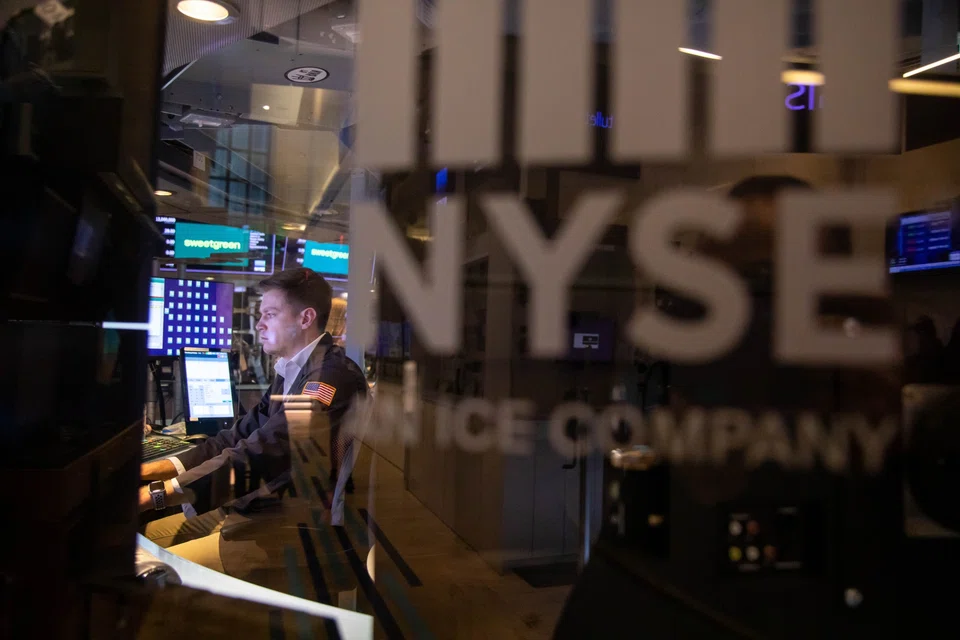
THE New York Stock Exchange (NYSE) said some trades will be declared “null and void” after a glitch caused hundreds of securities to commence trading on Tuesday (Jan 24) without an opening auction price.
The exchange said transactions in a swath of stocks will be reviewed as “clearly erroneous” under NYSE rules. That applies to trades in certain securities that did not conduct an opening auction, that occurred after the 9.30 am bell but before certain pricing thresholds were set, and that were executed further from the reference price.
In an updated statement on its website hours after the debacle rattled firms across the market, the exchange identified more than 250 stock symbols that were impacted. It also noted when it received key thresholds — known as limit-up, limit down bands — and the price range above or below which executions “will be busted”.
The NYSE didn’t elaborate on what prompted the “system issue” — as the exchange dubbed it — that set off wild swings and trading halts as the session opened, causing dozens of the biggest US companies to suddenly plunge or spike — in some cases veering 25 percentage points between a high and low in a matter of minutes. Banks, retailers and industrial companies were among those affected, including Wells Fargo & Co, McDonald’s, Walmart and Morgan Stanley.
The freakish action bears hallmarks of past episodes in which computer malfunctions led to sudden price distortions. A US Securities and Exchange Commission spokesperson said the agency is looking into the matter.
Shares of Intercontinental Exchange, which owns the New York Stock Exchange, fell nearly 2.2 per cent to US$106.25 at 4.00 pm in New York.
The distortions ripped through trading of Wells Fargo, which closed Monday at US$45.03 and then fell as low as US$38.10 before bouncing back. Morgan Stanley similarly plunged to US$84.93, down from US$97.13 on Monday, before making up the lost ground.
Walmart and McDonald’s were up and then down as much as 12 per cent before reverting to more normal trading ranges. By late in the session, the broad stock indexes were little changed.
Tuesday’s transactions occurred in NYSE-listed securities and took place on other platforms, including ones overseen by Nasdaq, CBOE Global Markets and private venues reporting to the Finra trade reporting facility.

Possible relief
The amount of stock traded at away-from-market prices was just a tiny fraction of the usual volume in stocks that normally see millions of shares change hands each day. In companies like McDonald’s and Verizon Communications, a few thousand shares went off at prices well above or below the last trade. Others like Nike and Exxon Mobil saw millions of dollars of stock move, data compiled by Bloomberg show.
The NYSE cited its “clearly erroneous” execution rule in its statement on voiding trades. That rule covers orders executed with “an obvious error in any term, such as price, number of shares or other unit of trading, or identification of the security”.
The exchange also is evaluating marking some trades as “aberrant”. That would exclude those transactions from calculating the day’s high and low prices. Those adjustments will be made to its public data after the close.
Previous glitches
Episodes in which computer glitches lead to erratic pricing are rare on American exchanges but not unheard of. Perhaps the most famous was the August 2012 incident in which faulty software employed by one of the biggest market makers, Knight Trading, riddled exchanges with erroneous orders and sent shares swinging around the market.
The event sent Knight spiralling towards insolvency before it was bought out by a coalition of trading firms. Last year, Citigroup’s London trading desk was behind a flash crash that sent shares across Europe tumbling, while in Canada a software issue caused a 40-minute outage across three stock exchanges.
Another mid-afternoon incident in May 2010 prompted Nasdaq OMX Group to cancel trades of 286 securities that fell or rose more than 60 per cent.
Opening auction
The start of trading in most American stocks involves a complicated but usually routine process called the opening auction, designed to limit volatility resulting from orders for shares that pile up before the start of the regular session. In it, a computer balances out supply and demand for a particular stock by establishing an opening price that can be viewed as the level that satisfies the largest possible number of traders.
“It was a bit of a scramble,“ said Justin Wiggs, managing director in equity trading at Stifel Nicolaus. “Overall, clients were surprisingly more reasonable and understanding than I expected,” Wiggs added. “They all seem to be willing to wait for NYSE to come back with their plan going forward. The message I’m hearing from NYSE is that it’s more or less on the individual broker to report anything they deem erroneous rather than doing a bulk halt/cancel/reset.”
At Meridian Equity Partners, “all of our phones are lighting up”, said Jonathan Corpina, senior managing partner who typically works on the floor of the NYSE. “We’re trying to field calls from our customers and try to explain to them what happened, what’s going on and relay as much accurate information so they understand what’s happening.” BLOOMBERG
Decoding Asia newsletter: your guide to navigating Asia in a new global order. Sign up here to get Decoding Asia newsletter. Delivered to your inbox. Free.
Share with us your feedback on BT's products and services
TRENDING NOW

DBS, OCBC, UOB rout lops billions off STI as inflation, rate concerns spook investors

Grab CEO’s wife Chloe Tong on life with Anthony Tan and finding her purpose

OCBC sheds S$8 billion in value as shares close nearly 6% down; analysts cautious on banks

Deal between tycoon friends sparks scrutiny of Philippine power sector

