

Hot stock: OCBC falls 3.1% after Q4 earnings miss

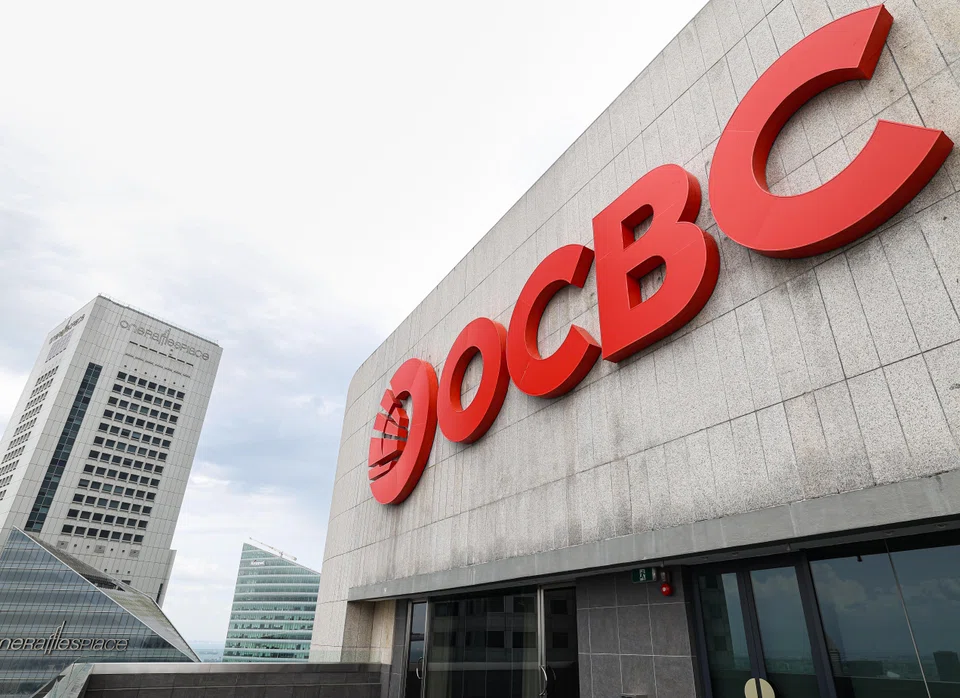
SHARES of OCBC retreated on Wednesday (Feb 28) morning amid heavy trading after the bank reported a fourth quarter net profit of S$1.62 billion, falling short of the S$1.72 billion estimate based on one analyst polled by Bloomberg.
As at 10.08 am, the lender had fallen 3.1 per cent or S$0.41 to S$12.90 after 4.6 million securities changed hands. By 10.31 am, it had recovered slightly to trade at S$12.93, down 2.9 per cent or S$0.38 with 5.6 million securities worth S$72.8 million transacted, making it the top-traded counter at the time by value.
No married deals were recorded in early trade, according to ShareInvestor data.
The latest Q4 figure represented a year-on-year gain of 12 per cent from S$1.44 billion a year prior, driven by a 2 per cent increase in operating profit as well as lower allowances.
Before the market opened on Wednesday, the lender reported a Q4 net interest income of S$2.46 billion, up 3 per cent from a year earlier as average assets grew 4 per cent.
Net interest margin (NIM) moderated two basis points (bps) to 2.29 per cent, which OCBC attributed to higher funding costs that more than offset its increase in asset yields.
Non-interest income rose 25 per cent to S$811 million, as net fee income increased 16 per cent year on year due to higher fees from wealth management, credit card and loan-related activities. Net trading income also improved 22 per cent on the back of higher customer flow treasury income, offset in part by a decline in insurance income.
The bank’s non-performing loan ratio as at Dec 31, 2023, was 1 per cent, down 0.2 percentage point from the prior year.
Operating expenses grew 19 per cent on the year to S$1.31 billion due to higher staff costs and other operating expenses.
Total allowances for the quarter stood at S$187 million, down 41 per cent from S$314 million in the prior year, due to a decline in allowances for both impaired and non-impaired assets.
The bank declared a final dividend of S$0.42 per share, bringing its total dividend for the full year to S$0.82 per share, up 21 per cent from S$0.68 per share the prior year.
It represented a dividend payout ratio of 53 per cent of the group’s FY2023 net profit, which was up 27 per cent to a record S$7.02 billion.
This translated to earnings per share of S$1.55 for the full year, up 27 per cent from S$1.22 in the same period a year earlier.
NIM rose 37 bps to 2.28 per cent, exceeding the previous year’s guidance for NIM in FY2023 to come in at around 2.1 per cent.
Credit costs stood at 20 bps, up 4 bps from the previous year.
For the full year, total allowances grew 25 per cent to S$733 million from S$584 million in FY2022, largely attributable to higher allowances from impaired assets.
Non-impaired allowances of S$400 million were also set aside to account for macroeconomic variable updates, shifts in risk profiles and management overlays as the bank said it was “taking a forward-looking view”.
As at end-December 2023, customer loans stood at S$297 billion or 2 per cent higher year on year in constant currency terms. Customer deposits rose 4 per cent to S$364 billion.
Group common equity tier 1 capital adequacy ratio was 15.9 per cent, while its leverage ratio was 7.2 per cent.
Looking ahead, OCBC’s group chief executive Helen Wong said she anticipates challenges in the global macro environment, including changes in monetary policies, persistent inflationary pressures, major elections and rising geopolitical tensions.
“Nonetheless, we believe that Asia holds immense growth potential... Our strong capital, liquidity and funding positions enable us to seize opportunities as they arise, while providing adequate buffers to navigate uncertainties.”
TRENDING NOW

Once staunchly pro-China, Malaysian Chinese businesses are now distancing themselves from Beijing

New launch or resale unit? Here’s a guide for homebuyers

The lesser-known prospects in the Asian chipmaking supply chain

Cliff Tan has 7 million followers and a 4-month waitlist. Why won’t he expand his business?

