

OCBC revs up data engine for edge in financial management
It's using AI, data science to nudge customers to spend, save, invest via mobile app
Singapore
SINGAPORE'S second-largest bank OCBC is using more data analytics to take a bigger chunk of the mass affluent market, said a senior executive.
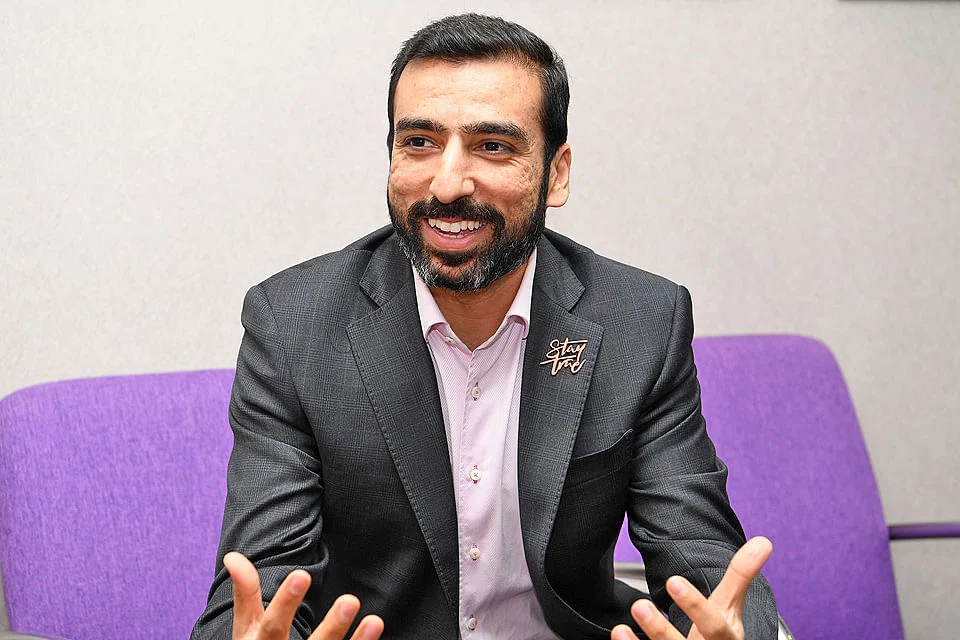
It is using data to improve underwriting decisions for insurance policies, and has employed more personalised data analytics to target "lazy money" sitting idle in customers' bank accounts, Pranav Seth, head of digital and innovation at OCBC, told The Business Times in an interview.
The bank last month revved up its use of artificial intelligence (AI) and data science to nudge customers to spend, save and invest, using its mobile app.
In 2013, OCBC was the first bank here to offer a financial insights tool - Money In$ights - that put together a customer's OCBC savings and card accounts. It has now built off six years of data analytics via this app to predict actions that customers can take to manage their finances.
In 2018 it set up an AI lab on an initial investment of S$10 million over three years and now has a team of more than 40 AI specialists. The bank has also had a data analytics team since 2003.
OCBC's data drive via Money In$ights now goes as far as advising customers to take idle money out of a current account to pay off part of a debt that is being revolved on a customer's credit card.
A move like that, despite it meaning that customers will take on less debt from the bank and keep less of cheap deposits in their accounts, is worthwhile if it helps the bank to boost loyalty, said Mr Seth, who oversees the digital business for the OCBC group's consumer business.
"You might have overlooked payments... here's a reminder," he said.
"If you have lazy money lying in your account, it says 'you should be putting it in unit trusts or blue-chip investment plans'... Even small things like 'hey, you're paying for Spotify and Apple Music. Do you need both?'"
OCBC will use this tool to sharpen its focus on the mass affluent, leveraging off the Bank of Singapore franchise. "Insurance will have a huge role to play," Mr Seth added.
The backdrop to this is: Singapore expects to soon have a single platform for consumers to aggregate their financial information from various accounts across banks, insurance companies and brokerages.
In time, this platform could also make it simpler for consumers to compare products and services for better financial planning, and to easily switch between competing offers.
As the friction in banking is oiled away by regulations, the game here is to level up the competition in financial management by giving consumers access to predictive planning tools, driven by data analytics.
OCBC customers currently interact about 20 times a month with the Money In$ights app. The bank now aims for customers to use it as often as four times a day, said Mr Seth. As it is, about 80 per cent of the bank's digital active customers are banking on their mobile app.
The bank has also said it is on track for six out of 10 customers to be digital customers before 2023.
The rising attention on digital banking comes amid looming competition from fintechs and non-banks that are muscling in on the Singapore financial sector, including new players such as ride-hailing firm Grab that has ambitions to move into wealth management as well.
By the end of this month, the Monetary Authority of Singapore would have collected a number of digital-banking applications, as Singapore ushers in the biggest liberalisation since 1999 for the banking sector.
But Mr Seth sees very narrow room for new digital banking entrants. "We don't think that there's going to be a fundamental life-altering change in the competition. Singapore has been, in a way, a hyper-competitive banking market for a very long time."
He added that Singapore is unlike other markets where there are fat or hidden fees in everyday banking services to be targeted by disruptors.
"If anyone comes out and says that everything goes to zero (fees), there's probably some predatory pricing in it or some loss-leading indicators there, which, in the long term, is either going to impact that entity, or is going to hurt the financial system."
He added that the tech debt that banking incumbents face from legacy systems is "overstated", but did not specify a number.
OCBC is already working to drive overall costs lower using technology, Mr Seth said. The bank has partnered fintech firms to reduce compliance costs, and has - like its banking peers - used MyInfo to raise efficiency in digital applications for online products.
Today, one in four of all OCBC accounts are opened digitally, while credit card acquisition volume has increased 40 per cent since April 2019, when the bank launched its instant application and approval for credit cards.
Digital customers - defined by OCBC as those who have used Internet or mobile banking at least once in the last three months - have already driven down cost-to-income ratio by six percentage points, the bank said. They also contribute twice as much revenue as non-digital customers.
TRENDING NOW

MAS allocates S$1.45 billion to five asset managers in third EQDP batch: Chee Hong Tat

‘My grandfather’s legacy’: Sherman Kwek lays out three-year plan for CDL to drive returns

‘How many will survive?’: Bubble fears arise as China’s humanoid robotics face reality check

CDL to hire dedicated CEO for fund management as it steps up push into private funds

