



OCBC, UOB poised to gain most from JS-SEZ; DBS could seek to expand Malaysia footprint: analysts
The zone will enable the banks with networks that are entrenched in the two markets to gain from stronger investment flows

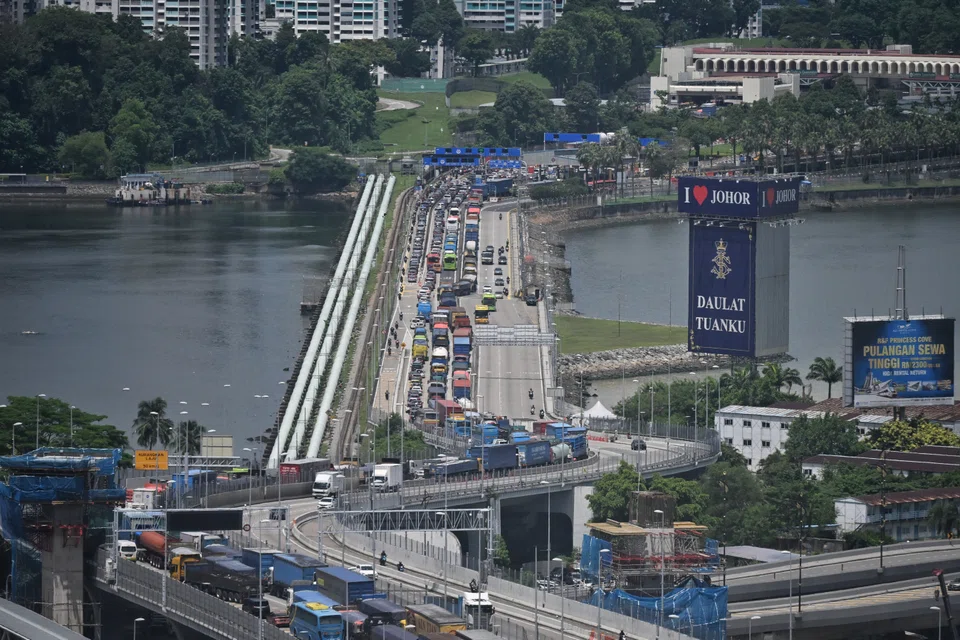
AMONG the trio of local banks, OCBC and UOB stand to gain the most from the Johor-Singapore Special Economic Zone (JS-SEZ) as facilitators of investment and trade, given their sizeable operations in both markets, analysts said.
The landmark JS-SEZ, signed in January this year, is expected to create 100 projects, and 20,000 jobs and investments across 11 sectors.
The zone will likely strengthen cross-border cooperation, enabling the banks with networks that are entrenched in the two markets to gain from stronger investment and business flows.
“Regionally integrated operations and entrenched positioning in Malaysia should enable the banks to participate across multiple verticals, especially as supply chains shift to the JS-SEZ,” said Thilan Wickramasinghe, head of equity research at Maybank Securities.
He noted that the Singapore banks have, in the past five to six years, invested in regionally integrating their wholesale and retail banking. This enables them to capture and facilitate supply chain shifts from North Asia to Asean.
A targeted, government-to-government integration of Johor and Singapore to improve the ease of doing business, and that of labour and capital flows, could provide opportunities for the banks to leverage their integrated platforms, he said.
Specifically, OCBC and UOB should have a strategic advantage in capturing retail and small and medium-sized enterprises’ (SMEs) flows, given their entrenched positions on both sides of the Causeway, he added.
Malaysia is the third-largest market for both OCBC and UOB, after Singapore and Greater China.
Based on financial statements for the half-year ended Jun 30, 2024, OCBC’s profit before income tax for Malaysia came in at S$581 million – accounting for 12.4 per cent of its total profit before tax.
Customer loans to Malaysia stood at S$24.2 billion as at Jun 30, 2024, or 8 per cent of gross loans. (*See amendment note)
For UOB, profit before tax for Malaysia stood at S$372 million in the same period, or 10.5 per cent of total profit before tax.
UOB’s loans in Malaysia amounted to S$31.5 billion, accounting for 9.6 per cent of its gross loans.
DBS could narrow gap
Meanwhile, DBS lacks a similar presence in Malaysia. According to its website, DBS is not licensed to conduct onshore banking services in the country, hence it does not provide ringgit-denominated loans and retail banking services.
But the lender – South-east Asia’s largest – is said to be buying a 29 per cent stake in Malaysia’s Alliance Bank from Malaysia investment firm Vertical Theme.
According to a report by Bloomberg in January, DBS may consider raising its stake in Alliance to up to 49 per cent via a voluntary partial general offer, if the deal goes through.
At the lender’s fourth-quarter results briefing, DBS deputy CEO Tan Su Shan declined to comment on its expansion and strategy in Malaysia.
She noted that the JS-SEZ can help Singapore corporates – SMEs in particular – benefit from lower costs.
“We believe that with our digital capabilities; our big push into technology, sustainability, and renewable assets; and the ability to connect both countries, if the SEZ can be like what the Greater Bay Area is to Hong Kong, there’s quite a lot of potential upside for Singapore,” she said.
Jayden Vantarakis, head of Asean research at Macquarie Capital, said DBS has long wanted to expand in Malaysia, but the country’s regulators have not allowed it to do so.
“Singapore-Malaysia relations are at a high point, so I suspect the Malaysian side may be more amenable,” he said.
While the move could increase DBS’ capability, it is “difficult to argue” that this would immediately bridge the gap between the bank and its Singaporean or Malaysian peers by virtue of this transaction alone, he added.
Michael Makdad, senior equity analyst at Morningstar, also said: “If DBS is able to acquire a large stake in Alliance Bank, that could help it narrow the gap, though not completely.”
He believes Maybank is the best-positioned to benefit from the JS-SEZ, given its leading market share in Malaysia and presence in Singapore.
Nevertheless, Maybank’s Wickramasinghe expects DBS to still benefit from rising wholesale banking demand, as global multinational corporations and large North Asian businesses consider setting up activities in the zone.
Operationally, the JS-SEZ could also support lower cost-to-income ratios as back-office functions could be shifted to service centres in Johor, taking advantage of relatively lower labour and rental costs, he added.
UOB already mentioned at its 2024 corporate day event that it will move some of its back and middle-office functions to Malaysia, mainly in capital city Kuala Lumpur, as it looks to maintain its cost-to-income ratio at 40 per cent by 2026.
*Amendment note: This article has been amended to correctly reflect the total customer loans in Malaysia for OCBC and UOB.
TRENDING NOW

Singapore identifies 7 firms responsible for haze fires, notices issued urging action: Grace Fu

DBS remains analysts’ pick ahead of Q3 earnings after Singapore banks’ share slump

High Court rules against Julius Baer’s Singapore trust arm in US$50 million family trust dispute

Could stablecoins be the future of money?

