

OCBC ups ante on SME sustainability with S$25 billion financing target
This is the first time an Asian bank has set a dedicated sustainable finance goal for the segment

[SINGAPORE] OCBC has set a target to provide 12,000 small and medium-sized enterprises (SMEs) across its four core markets with sustainable financing by 2028, a move expected to lift loan commitments to S$25 billion.
This marks a step up from 2025, when the bank disbursed sustainable financing to 5,000 SMEs, with loan commitments totalling nearly S$13 billion.
About half of the SMEs served in 2025 were from Singapore, with Hong Kong, Indonesia and Malaysia making up the remainder, in that order.
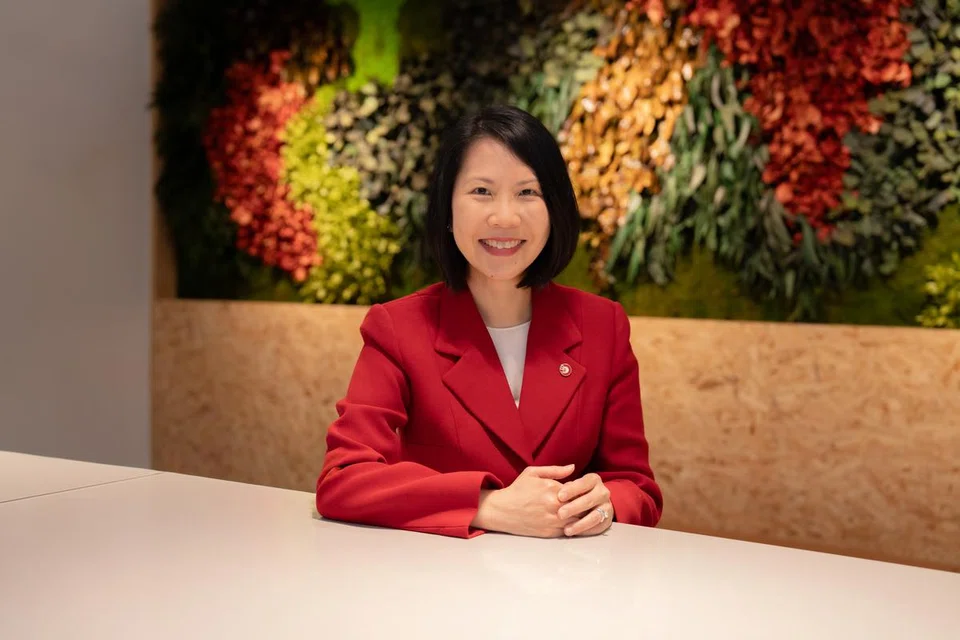
Looking ahead, the geographic split is expected to remain “about the same”, with broad-based growth across all four markets, said OCBC head of global commercial banking Elaine Heng in an interview with The Business Times.
Heng, speaking in her first media interview since taking over the role in October 2025, noted that this is the first time a bank in Asia has set a dedicated sustainable finance target for the SME segment.
In 2025, the number of SMEs receiving sustainable financing rose 34 per cent year on year, while loan commitments increased 40 per cent over the same period.
“We’re seeing this very strong momentum, and it’s very encouraging,” she noted. “It really shows that SMEs are viewing sustainability as (something to embed) in the way they operate, in how they grow, and how to compete differently.”
To achieve its 2028 target, OCBC will “double down” on its “triple-A” approach: building awareness, driving action and providing access to capital.
Under the awareness pillar, the bank’s SME Start-ESG Programme is expected to play a key role.


Launched in 2025 in collaboration with Enterprise Singapore, the programme helps SMEs establish a baseline measurement of their environmental, social and governance (ESG) metrics.
Since its launch, more than 180 SMEs have been onboarded and assessed under the programme.
OCBC also provides advisory support on sustainability practices, as well as access to sustainability-linked loans – which are loans tied to borrowers’ achievement of pre-defined sustainability targets.
Expanding access to capital for female entrepreneurs is another avenue the bank is pursuing.
Its Women Unlimited programme, launched in 2024, offers financing of up to S$100,000 within the first two years of incorporation, with processing fees waived, for startups founded by women.
However, Heng cautioned that progress could be hindered if SME mindsets do not shift towards longer-term thinking. She pointed to fleet electrification as an example, noting that businesses which invested early are now better positioned and more resilient to fuel price increases.
The ongoing conflict in the Middle East, which has driven up global fuel and energy prices, is also making some SME owners more “receptive” to sustainability investments, she pointed out.
Many SMEs are already taking steps to improve efficiency, such as investing in route optimisation to reduce fuel consumption and costs.
“What is the biggest risk? It’s really in the mindset of the SMEs that say: ‘Yeah, this can wait, or this is not important.’ It’s the really resilient, forward-looking, visionary SMEs that are able to say – let’s start today,” she added.
Decoding Asia newsletter: your guide to navigating Asia in a new global order. Sign up here to get Decoding Asia newsletter. Delivered to your inbox. Free.
Copyright SPH Media. All rights reserved.
TRENDING NOW

LTA proposes combining car COE categories, adding rebate-surcharge system

StarHub to acquire MyRepublic’s mobile business amid ongoing telco consolidation

DBS, OCBC, UOB rout lops billions off STI as inflation, rate concerns spook investors

Grab CEO’s wife Chloe Tong on life with Anthony Tan and finding her purpose

