

Office landlords stand out in S-Reits’ Q4 beat, but the drums of war loom heavy on FY2026
Middle East conflict risks triggering a stagflationary environment, say analysts

[SINGAPORE] Singapore-listed real estate investment trusts (S-Reits) landed slightly ahead of expectations for the fourth quarter of the 2025 financial year, anchored by a fiercely resilient domestic commercial market and prudent capital management.
But beneath the headline beat lies a complex narrative of divergence. As the dust settles on the reporting season, a clear hierarchy of winners and laggards is emerging, driven by geographic exposure, asset class, and shifting macro currents ranging from interest rate relief to Middle Eastern geopolitical tensions.
“Overall, S-Reits’ performance this reporting season has been slightly better than our expectations, with more Reits exceeding full-year estimates compared to misses,” Vijay Natarajan, vice-president of equity research at RHB Singapore, told The Business Times.
Office sector standouts
The way analysts such as Natarajan see it, local office landlords were the “standout performers” among the S-Reits in Q4 on the back of “healthy demand-supply dynamics”.
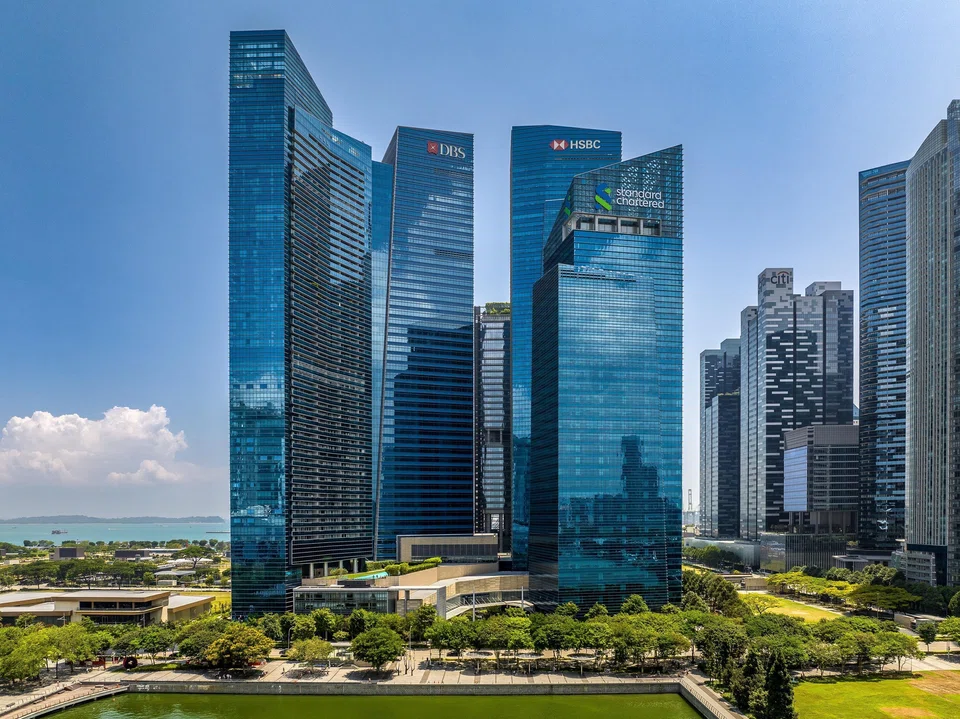
DBS Group Research pointed to strong leasing momentum in Singapore’s core Central Business District, particularly in Marina Bay, which drove office S-Reits with local assets to sustain their “high single-digit growth” in rental reversions for FY2025.
“Both Keppel Reit and Suntec Reit have reported consistent double-digit positive reversions across their Marina Bay portfolios,” said DBS in a recent report led by head of property research Derek Tan.
“With limited new supply and sustained demand for well-located Grade A space, we expect CBD rental growth to accelerate further into FY2026,” Tan added.
For the second half-year ended December, Keppel Reit saw its distribution per unit (DPU) retreat 10.4 per cent to S$0.0251 on an enlarged units base, even as net property income rose 2.4 per cent to S$107.7 million.
This brought full-year DPU down 6.6 per cent to S$0.0523, translating to a distribution yield of 5.4 per cent for FY2025.
However, Keppel Reit remains one of Tan’s top picks among the office S-Reit names given its “concentrated exposure to prime CBD assets”.
The manager in December moved to acquire an additional one-third interest in Marina Bay Financial Centre Tower 3 (MBFC Tower 3) at an agreed property value of S$1.45 billion, which will bring its total stake in the building to two-thirds, post-completion. The remaining one-third stake in the tower is held by DBS.
“While the acquisition of MBFC Tower 3 may introduce some near-term dilution, stronger-than-expected rental growth could mitigate this impact over time,” Tan said.
Meanwhile, Suntec Reit posted a 23.3 per cent increase in DPU to S$0.0388 for its H2, on the back of stronger operational performance and lower financing costs. This brought its full-year DPU up 13.6 per cent to S$0.07035.
Suntec Reit’s assets include a 66.3 per cent interest in Suntec Singapore Convention & Exhibition Centre, a one-third interest in One Raffles Quay, and one-third interests in MBFC Tower 1 and 2 and the Marina Bay Link Mall.
Conflict uncertainty
While local office landlords anchored a broadly better-than-expected Q4, the beating drums of geopolitical conflict threaten to complicate the S-Reits’ recovery narrative in the year ahead.
For one, it could turn into a tug of war between domestic interest rate relief and global macro volatility.
“The key to watch out for would be the prolonged nature of war, and its effects on global inflation and economic growth,” said RHB’s Natarajan.
He warned that a protracted conflict in the Middle East risks triggering a stagflationary environment – a traditionally bearish scenario for yield-focused equities like S-Reits.
Conversely, this geopolitical instability could yield unintended benefits for the city-state. Escalating global tensions may accelerate a flight to safety, redirecting capital flows towards Singapore’s defensive real estate sector.
Furthermore, a shift in global supply chains due to the Middle East conflict and tariff changes could marginally benefit Singapore’s industrial and logistics assets, Natarajan added.
Interest rate tailwinds
DBS’ Tan believes that fundamentals for industrial S-Reits remain steady, with FY2025 rental reversions still largely in the double digits for names such as CapitaLand Ascendas Reit, CapitaLand India Trust (Clint) and Frasers Logistics & Commercial Trust (FLCT).
“That said, rental growth is beginning to normalise after several years of mark-to-market uplift, particularly as new supply enters selected submarkets,” Tan said. “Most landlords are guiding for mid to high single-digit reversions in FY2026 – reflecting moderation rather than weakness.”
DBS noted that retail S-Reits have also outperformed expectations, supported by strong tenant sales and double-digit positive rental reversions across portfolios such as Suntec Reit, Mapletree Pan Asia Commercial Trust and OUE Reit.
While the impending late-2026 completion of the Johor Bahru-Singapore Rapid Transit System Link looms as a potential disruptor, current operating metrics show no signs of immediate distress, Tan said.
Meanwhile, after quarters of punishing interest rate hikes, savings from refinancing will finally provide a tangible tailwind for DPU earnings.
DBS projects a sector-wide DPU uptrend of 4.2 per cent in FY2026.
The research house expects meaningful savings of up to 60 to 70 basis points in financing costs to materialise through 2027, driven primarily by lower Singapore dollar-denominated borrowing rates.
JPMorgan analysts Mervin Song and Terence Khi noted that the macro backdrop for S-Reits has improved, with the Singapore 10-year bond yield falling below 2 per cent in late February.
As S-Reits continue to experience interest rate tailwinds, the analysts eye two broad themes for their preferred picks: quality growth Reits and laggard plays.
Names in the first category include CapitaLand Integrated Commercial Trust and Clint, while those in the latter include FLCT and Mapletree Logistics Trust.
Natarajan of RHB believes that S-Reits may see flattish performance in the first half of FY2026 amid interest rate volatility and a shift in market towards mid-cap value stocks benefitting from Singapore’s S$6.5 billion Equity Market Development Programme.
The second half, however, could be a different story.
“As the year progresses, we expect the sector to catch up in H2 on the back of a stronger DPU outlook and expectations of continued decline in the Singapore Overnight Rate Average,” he said.






