

Oil price rebound may boost O&G contracting
But yards are diversifying into adjacent markets instead of holding out for O&G contracting to return to pre-crash levels
Singapore
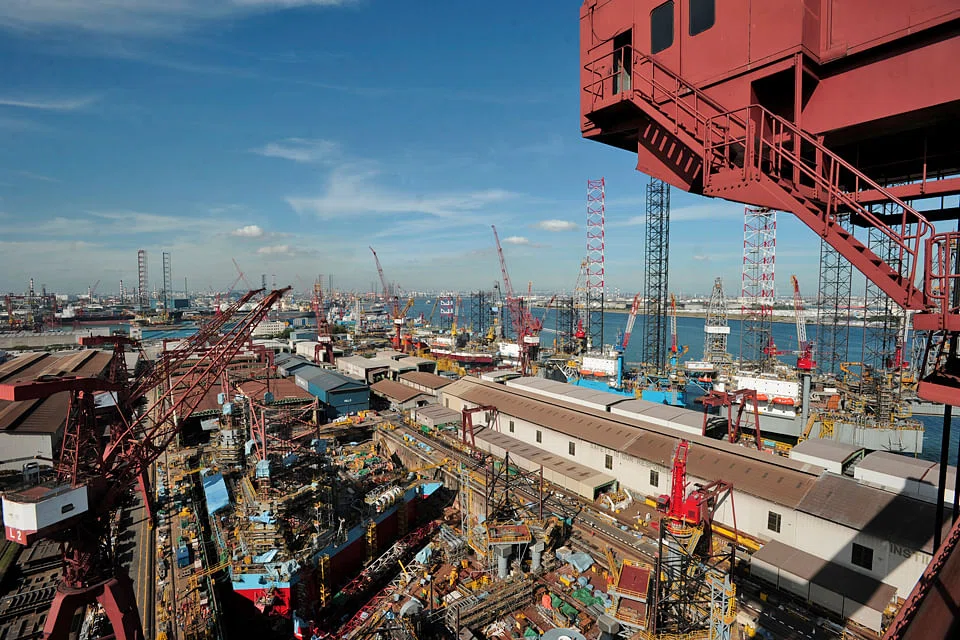
A REBOUND in oil prices towards the end of 2016 - if sustained through 2017 - may stimulate a recovery in offshore and marine contracting activity linked to conventional upstream oil and gas (O&G) projects.
But listed yard groups have not been holding their breaths for conventional upstream O&G contracting to ramp up to pre-oil crash levels. Instead, they have sought opportunities from adjacent markets, some of which are driven by a slew of recently introduced regulatory updates.
Opec (Organization of the Petroleum Exporting Countries) and non-Opec members' pact on Dec 10 to cut oil production by almost 1.8 million barrels per day has spurred an oil price rebound to over US$50 towards the year-end. At the time of writing, oil prices were hovering under US$60 as the market waited on signatory member-states to deliver their pledged cuts in the new year. The expectation that US shale output may ramp up is also pulling back oil prices. But analysts pointed to signs suggesting that the worst could be over for upstream O&G contracting as long as oil continues to trade above US$50.
Most oil majors had held back from investing in new projects and prioritised paying out dividends since the 2014 oil price crash. Consequently, the reserve replacement ratios (RRRs) of oil majors have dropped to record lows. RRR is an indicator of how far oil companies are adding new reserves to replace those spent in production to generate cash. The time has arrived to sanction those deferred conventional projects that are economically viable at US$50 oil, some analysts said.
Assuming oil prices continue to trade at US$50 or more, IHS Markit's principal researcher Kelvin Sam expects at least US$10 billion of upstream O&G contracts to be dished out to yard operators by the end of 2017.
These include about six leased floating production, storage and offloading (FPSO) projects - for both new conversions and relocations of existing units. The leading O&M market intelligence provider sees at least four engineering, procurement and construction (EPC) contracts for large offshore production facilities nearing awards including one newbuild floating liquefied natural gas plant and two non ship-shaped floating production units. Mr Sam qualified that the final awards are subject to geopolitical risks tied to countries hosting the projects.
Wood Mackenzie in a July 2016 presentation also pointed out that among conventional deep-water projects, those backed by world-class reserve volumes such as Brazil's Libra field development may break through at US$50 oil.
A re-tender for the giant Libra oilfield off Brazil was still going on at press time. The contract was re-tendered after the international bid round failed as a result of a very high local content requirement. Brazil is reportedly backing down on the local content demand and the Libra pilot FPSO award is expected to take place in 2017.
IHS Markit's principal researcher, Ang Dingli noted that the two leading listed O&M players - Keppel Offshore & Marine (O&M) and SembCorp Marine - have delivered most FPSO conversions within the project schedules. In the coming years when rig building is projected to slow dramatically, Mr Ang believes the two yard groups can count on their good track records to bid for FPSO conversions although the execution of such projects carry higher risks compared to building rigs to standardised designs.
He argued that Keppel O&M and SembMarine will face tougher challenges bidding against South Korean giants for EPC contracts on newbuilding of large, offshore production structures. Although BP included the two yard groups in a re-tender for the Mad Dog 2 or Mad Dog South production semi-submersible, trade media reports said that the contract award is still likely to go to South Korea's Samsung Heavy Industries.
In contrast, Keppel O&M is understood to remain in good standing to land the Ca Rong Do (CRD) tension leg platform (TLP) contract from Repsol. The CRD TLP award has been held back by the delayed tender of a leased FPSO also intended for the same field development.
Mr Ang also noted that with fewer contracts to hand out on slower exploration and production activity in most oil and gas producing countries, national oil companies are more inclined to jack up local content requirements detailing a larger percentage of work to be executed locally. For yard groups such as Keppel O&M and SembMarine, such covert protectionism implies higher capital and operational costs and often imposes operating risks under politically unstable regimes.
As upstream O&G weakness persists, IE Singapore has encouraged O&M players to tap growth in the liquefied natural gas (LNG) sector, including demand for LNG bunkering and mini-LNG. Three other key adjacent markets are also of interest to yard groups in Singapore - cruise ships, offshore wind and ballast water treatment systems (BWTS).
Updates to environmental regulations and legislations are key demand drivers for LNG bunkering and mini LNG, offshore wind and BWTS.
In October, the International Maritime Organization (IMO) reached a decision to enforce a global cap, restricting sulphur content in ship fuel to no more than 0.5 per cent globally from 2020. While IMO works on the nuts and bolts for implementing the cap, major ports have moved towards sanctioning developments of LNG bunkering infrastructure. Ship owners have also looked at building or converting vessels to burn LNG, a fossil fuel touted for its low sulphur credentials.
In September 2017, the IMO ballast water convention will enter into force. Ballast water is taken in or discharged to improve stability of a ship through its voyage. Ship owners will be required to install on-board BWTS to remove, render harmless or avoid the uptake or discharge of invasive species within ballast water. SembMarine estimated about 45,000 ships worldwide will need to be fitted with BWTS. Ready BWTS in the market ranges between S$200,000 and S$3 million and the on-board installation costs are subject to vessel types and sizes, the yard group said.
On the offshore wind front, interest in the renewable energy source has been on the rise in Asia since world leaders committed towards decarbonising their economies at the 2015 United Nation Climate Change Conference, or COP21. The supply chain for offshore wind is highly regional; as a result, an uptick in offshore wind developments in the larger Asia region may spell contracting opportunities for Singapore yards.
Singapore yards are also well-positioned to benefit from a surge in cruise business in China, South-east Asia and Australasia. SembMarine said: "Singapore is strategically located as a home port for cruise ships plying the South-east Asian market."
SembMarine also said that it is banking on its track record with renowned cruise ship owners and operators including Carnival Corporation, Royal Carribbean Cruises and Star Cruises, to tap growing demand to service their vessels as cruising demand grow especially in China and the Australasian region. SembMarine has traditionally been active in repair, upgrading and conversion of cruise ships. The Business Times understands that SembMarine, Keppel O&M and smaller yard groups in Singapore have lately looked at bidding for shipbuilding contracts for small to mid-sized cruise ships.
TRENDING NOW

‘We don’t want to stay as we are’: CEO Patrick Ng builds a more resilient Huationg
URA to review guidelines on floor space to give developers more design flexibility: Chee Hong Tat

He built the Vingroup empire. Now South-east Asia’s richest man is handing some key roles to his sons
32 companies, 6 individuals bag accolades at Singapore Corporate Awards 2026

