

Oil prices up 3% on worries about Middle East supplies
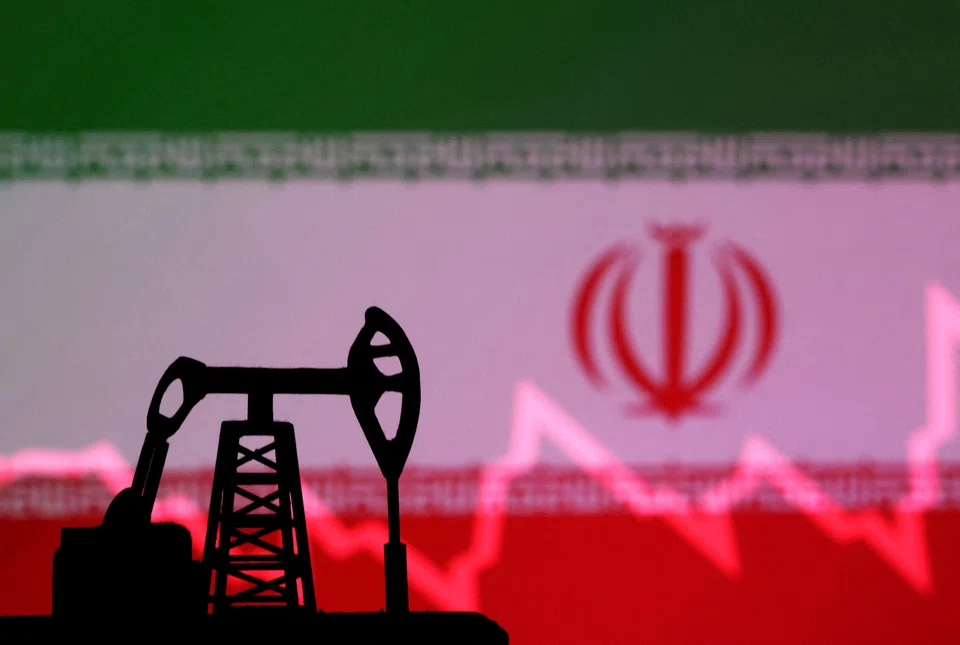
OIL prices climbed about 3 per cent to a one-week high on Friday (Oct 27) on worries that tensions in Israel and Gaza could spread into a wider conflict that could disrupt global crude supplies.
Brent futures rose US$2.55, or 2.9 per cent, to settle at US$90.48 a barrel, while US West Texas Intermediate (WTI) crude rose US$2.33, or 2.8 per cent, to settle at US$85.54.
Brent’s premium over WTI rose to its highest since March, making it more attractive for energy firms to send ships to the US to pick up crude for export.
For the week, Brent was down about 2 per cent and WTI down about 4 per cent.
Trading was choppy. Early in the session, oil prices soared by more than US$2 a barrel after the US military struck Iranian targets in Syria. Then prices briefly turned negative as markets digested various reports on mediation talks between the militant Hamas group and Israel led by Qatar in coordination with the US.
“We are at the mercy of the next headline... and I think that’s kind of what we’ve been seeing today with the price swings,” said Phil Flynn, an analyst at Price Futures Group.
“You’d like to be trading the fundamentals, but you really can’t because you’ve got to be more worried about... what’s going to happen in the Middle East,” Flynn said. “No one wants to be short over the weekend.”
Israeli air and ground forces were stepping up operations in the Gaza Strip amid reports of heavy bombing of the besieged enclave.
A Hamas official, meanwhile, conditioned the release of hostages in Gaza on a ceasefire in Israel’s bombardment of the Palestinian enclave, launched after a deadly Hamas rampage into southern Israel nearly three weeks ago.
Several countries, including many Arab states, have urged Israel to delay a planned ground invasion that would multiply civilian casualties and might ignite a wider conflict.
Middle East developments have so far not directly affected oil supplies, but many fear disruptions of exports from major crude producer and Hamas backer Iran and others.
“(It) remains incredibly difficult even for the most knowledgeable regional watchers to make high conviction calls about the trajectory of the current crisis, as the red lines that could bring more players onto the battlefield remain largely indiscernible,” RBC Capital analyst Helima Croft said.
Goldman Sachs analysts retained their first-quarter 2024 Brent crude price forecast at US$95 a barrel, but added that lower Iranian exports could cause baseline prices to rise by 5 per cent.
Prospects for oil demand were uncertain.
US consumer spending surged in September but was seen cooling off in early 2024. Some economists believe the US Federal Reserve is done raising interest rates to fight inflation, which can slow economic growth and reduce oil demand.
But, economists told Reuters they expect high inflation will continue to dog the world economy next year. REUTERS
Decoding Asia newsletter: your guide to navigating Asia in a new global order. Sign up here to get Decoding Asia newsletter. Delivered to your inbox. Free.
Share with us your feedback on BT's products and services
TRENDING NOW

He built the Vingroup empire. Now South-east Asia’s richest man is handing some key roles to his sons

Chagee, Mixue and Luckin won the market. Sustaining their edge is the harder part

From Haidilao to Oriental Kopi: How some of Asia’s favourite F&B players are faring in 2026

CPIB hauls Multi-Chem CEO, COO in for questioning; stock hits ‘circuit breaker’

