

Oil-tanker rates crash as Opec+ cuts near
 Add BT as a preferred source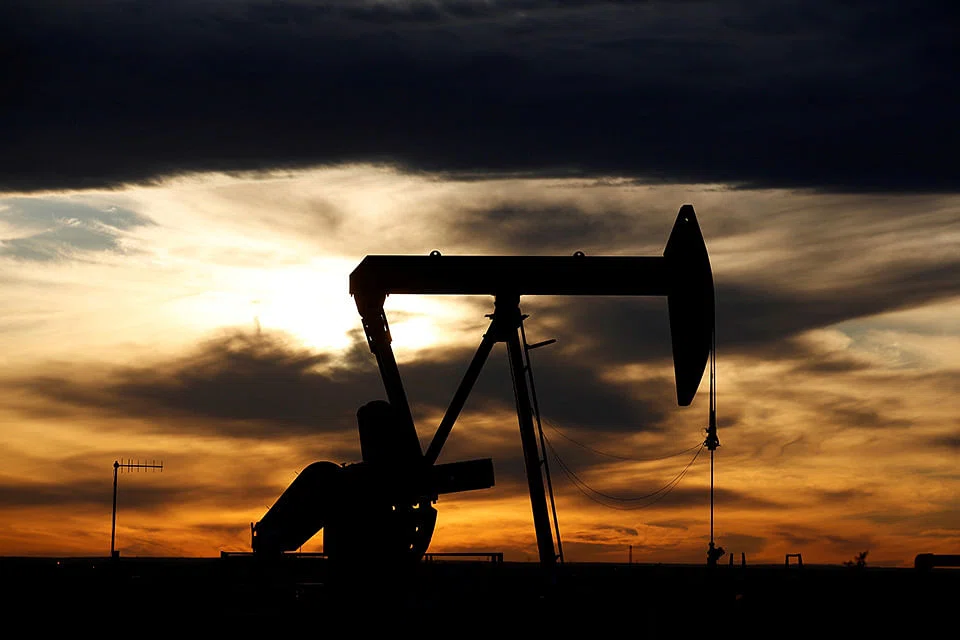
DeeperDive is a beta AI feature. Refer to full articles for the facts.
Houston
OIL tanker rates are crashing on the eve of a pact to limit global crude production.
From Friday, crude producers in the Organization of Petroleum Exporting Countries and its allies (Opec+) will cut their collective output by a level that is unprecedented in history - almost 10 per cent of global consumption. Normally, such huge curbs would have destroyed the tanker market almost as soon as they were announced a few weeks ago, as a dogfight breaks out for a fast-diminishing pool of cargoes. But these are not normal times.
The coronavirus has wiped out so much oil demand that the world will still be over-producing on a huge scale. While that means fewer cargoes, which is bad for the owners, it also means a glut that must be stashed some place. And that place is often on supertankers because space in on-land tanks has already been booked up or filled.
"Opec+ cuts would have led to rates crashing" down to about US$9,000 a day, a level that just covers the ships' running costs, said Frode Morkedal, an analyst at Clarksons Platou AS, a unit of the world's largest shipbroker. Instead, the drop in cargoes will mostly just free up more tankers to act as storage vessels - for which demand remains strong - propping up freight rates.
Shares of Euronav NV, Frontline Ltd and DHT Holdings Inc, three owners whose fleets are dominated by crude carriers, all slumped earlier in the week amid concern that the supply curtailments of 9.7 million barrels a day will ultimately hurt their earnings, and also because an oil-market incentive to store diminished.
Navigate Asia in
a new global order
Get the insights delivered to your inbox.
Day rates to China from Saudi Arabia stood at just over US$100,000 a day on Thursday, according to the Baltic Exchange. That represents a drop of more than 50 per cent in the space of a week - a big decline even by the volatile standards of the spot tanker business.
But tanker owners, and analysts who follow them, remain confident that there will not be the kind of wipeout that normally accompanies deep oil production cuts by Opec+. By one estimate, as much as 35 million barrels a day of demand - more than three times the output curbs - has been lost because buying of transport fuel has been crushed by lockdowns to stop the spread of the coronavirus.
And despite becoming less favourable for tanker owners, the oil market's forward curve is still offering deep incentives to store.
At the nadir of the oil market rout, Brent for the nearest month was trading at a discount of almost US$14 a barrel compared to supply in six months' time. For a supertanker cargo of two million barrels, it implied a gap of US$28 million, meaning potentially big profits for traders if they could book storage for less than that. Since then, the per-barrel spread has narrowed to about US$8 a barrel - but that is still US$16 million for a supertanker cargo.
There are now 143 million barrels of crude oil in floating storage, according the most recent data on Bloomberg from Vortexa Ltd, an oil and shipping analytics firm. That is the highest since at least early 2016, and quite possibly an all-time record. Traders also placed well over 100 million barrels on ships during the 2008-09 recession.
Euronav, which reports first-quarter earnings next week, said that demand for tankers to be deployed for floating storage remains strong.
"Investors and the stock market are pricing in data points as they emerge so the contango spread reduces, tanker share prices sell off; contango spread increases, so share prices rise," said Brian Gallagher, Euronav's investor relations manager. "The demand for storage remains well underpinned for economic profit and increasingly for logistical reasons." BLOOMBERG
Decoding Asia newsletter: your guide to navigating Asia in a new global order. Sign up here to get Decoding Asia newsletter. Delivered to your inbox. Free.
Share with us your feedback on BT's products and services
TRENDING NOW

Shelving S$5 billion office redevelopment plan proved ‘wise’ as geopolitical risks mount: OCBC chairman

Eurokars Group introduces rental car franchises Enterprise Rent-A-Car, National Car Rental, and Alamo to Singapore
20 photos that show how dramatically Singapore has changed in two decades
Singapore’s key exports up 15.3% in March from electronics surge, exceeding forecasts

