Oil trading growing in region: Vopak

Giant oil storage operator sees Singapore and southern Malaysia looking more like leading global Dutch-Belgian oil trading hub.
Published Sun, Dec 27, 2015 · 09:50 PM

    THE region around Singapore is closer to becoming like the world's largest oil trading hub Amsterdam-Rotterdam-Antwerp (ARA), after pricing benchmarks for oil products earlier this year erased the distinction between loading points between Singapore and southern Malaysia.

    The move by oil pricing agency Platts means oil traders can now freely trade between the facilities in Singapore and Malaysia, says Vopak president for Asia Pacific Patrick van der Voort.

    This development is the first step for the region to develop like ARA, he told BT.

    Asked what else is needed for the hub to develop further, he responded that it would require collaboration among port authorities, customs, and port services in the region.

    "What is always wise in any ecosystem is for the different stakeholders to work together and cooperate with one another to make each other stronger. So that's also the case here."

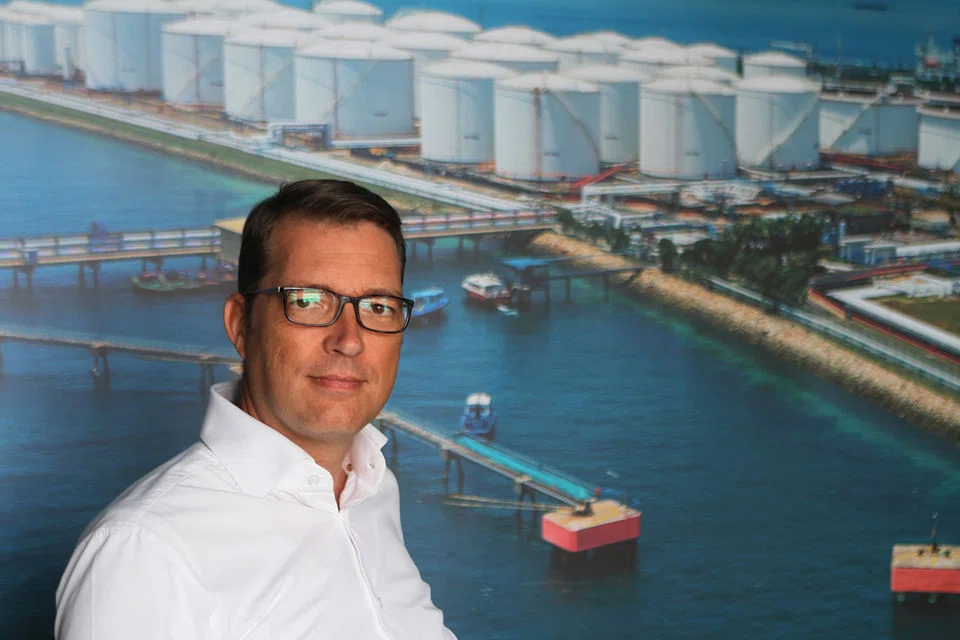
    Vopak is the largest commercial oil storage operator in Singapore with five facilities that have a total capacity of 3.7 million cubic metres, out of a total of about 20.5 million cu m on the island-state.

    Since last year, the largest independent oil storage firm in the world has also been operating a deepwater oil terminal in Pengerang in South Johor, which the Malaysian government is aiming to develop as an oil-and-gas hub.

    The completed first phase of the terminal, which cost RM2 billion (S$654 million), can store up to 1.3 million cubic metres of crude and petroleum products.

    The second phase, costing RM12 billion, is expected to be ready in 2019.

    Meant to serve the new US$16 billion refinery and petrochemical integrated development (RAPID) owned by Malaysia's state-owned Petronas, the facility will have the ability to store up to 2.1 million cu m of crude, oil products, petrochemicals and liquefied petroleum gas (LPG).

    "The nice thing about Pengerang is that it's got room to grow. We really see it as a location that is complementary to Singapore," said Mr van der Voort.

    "This is the area where the limitation is not necessarily there but it is still serving the Singapore customer base."

    Oil storage is crucial for oil trading. As trading activity grew in Singapore, the lack of waterfront space for storage led companies like Vopak, Germany's Oiltanking and Vitol-linked VTTI to pour billions of dollars into building more storage capacity in Malaysia and Indonesia.

    In July this year, Platts changed how it assesses the value of oil products, with traders making a bid or offer for a cargo under Platts FOB (free-on-board) Singapore price assessments no longer specifying a loading point in Singapore or southern Malaysia.

    The borderless approach is similar to that in ARA, and was seen as encouraging the use of regional oil storage facilities.

    "It's a good sign of the fact that in terms of storage services, the setup, the efficiency and the reliability, the Pengerang terminal is on par with other terminals in this area," said Mr van der Voort.

    "That's been a great recognition for the work that our people are doing there and the facility that we've built. And, of course, it's been a boost to the facility."

    In Singapore, the Dutch firm is now building an LPG terminal that is expected to be completed in the first quarter of next year.

    This is to provide its customers flexibility to use an alternative feedstock to naphtha, he said. ExxonMobil has signed on as the first anchor customer for the facility.

    Vopak is also considering building a liquefied natural gas (LNG) terminal in Southeast Asia.

    "If you look at LNG storage, we are interested in locations which have a relatively large and liberal gas market, and shipping routes where we believe LNG is most likely to be traded," Vopak CEO Eelco Hoekstra said in an interview last year. "So Southeast Asia is obviously one of the locations that comes to mind."

    Singapore, which opened an LNG terminal on Jurong Island last year, is looking to build a second one in the east. Malaysia, too, is hoping to build an LNG terminal in Pengerang.

    Asked if the terminal will be located in Singapore, Mr van der Voort said: "We look at all the options that are there and we will never exclude any option, definitely not in what we consider to be our home market in Singapore."

    Much also depends on the type of opportunities, business model and structures that will present themselves, he added. "We look at the opportunities on their own merits."

    Vopak currently owns LNG terminals in Rotterdam and Mexico.

    Meanwhile, despite the contango structure in the oil market (where future-dated oil prices are higher than current ones, which would incentivise oil traders to store oil to sell at a later date), Vopak said in its recent results that it faced continued challenging economic and business developments at specific terminals in China and Singapore.

    This, said Mr van der Voort, is due to a combination of three factors:

    These have cumulatively affected occupancy levels in certain facilities in both countries, he added, though he declined to elaborate on which products are affected.

    Moving forward, with the land for oil and chemical storage in Singapore limited, Vopak will look at enhancing its position by improving connectivity with its customers.

    The company, for instance, completed a pipeline between a refinery and its Banyan facility this year.

    Vopak still has some land left in its Banyan and Sakra sites, and can also optimise its land use more in Penjuru. This supply, however, is limited, admitted Mr van der Voort, adding that "we will use that wisely".

    Future plans will involve looking at how the company can "further optimise the supply chain cost" for its customers", he said, as well as entering new markets and storing new products.

    "Last but not least," he added, "we think we're also able to enhance our position by focusing on increasing our productivity through automation of our facilities.

    " So these are ways that we can enhance our position, and we will continue to do that."