Olam H2 profit falls 24.5% on higher net financing costs

Yong Hui Ting
Uma Devi

Yong Hui Ting &

Uma Devi

Published Mon, Feb 27, 2023 · 08:23 AM
    • Agri-business group Olam has proposed a final dividend of S$0.045 per share, the same as what was declared in the year-ago period.
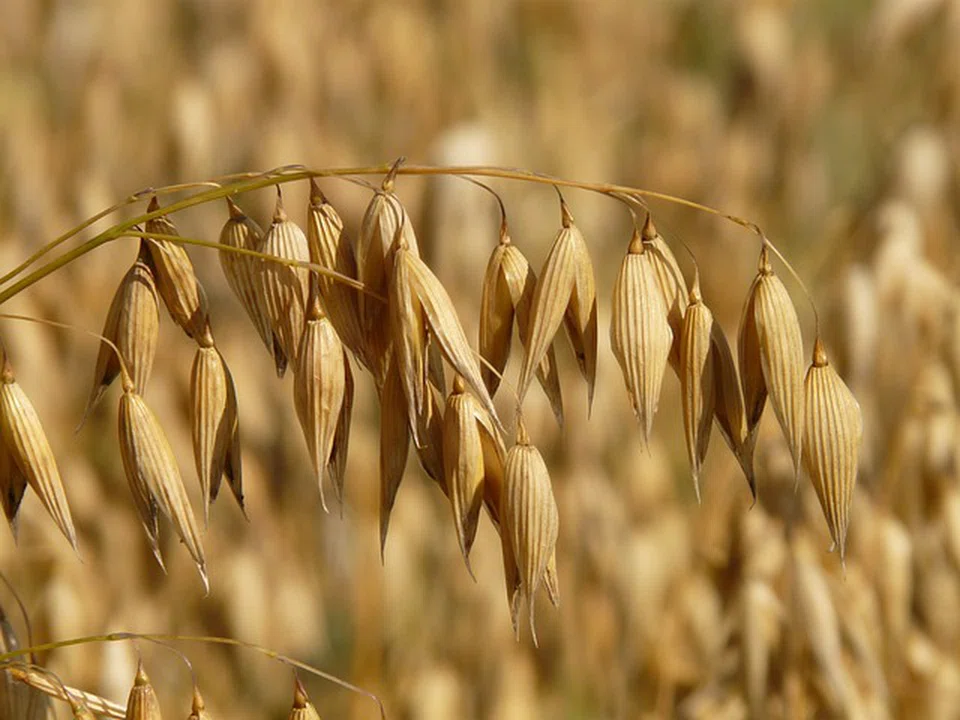
    • Agri-business group Olam has proposed a final dividend of S$0.045 per share, the same as what was declared in the year-ago period. PHOTO: PIXABAY

    FOR the second half year ended Dec 31, 2022, agri-business Olam Group ’s net profit fell 24.5 per cent to about S$200 million from S$264.9 million a year earlier.

    The group said in a bourse filing on Monday (Feb 27) that this was due to higher finance costs, which had doubled over the period.

    Revenue for the second half of the year showed a 9.5 per cent improvement from H2 2021, growing to S$26.5 billion from S$24.2 billion.

    Earnings per share for the period was 4.78 Singapore cents, down from 6.67 cents for the same period in 2021.

    The company proposed a final dividend of 4.5 cents per share, the same as what was declared in the year-ago period. It will pay out the dividends on May 10, after books closure on May 3. The proposed dividends are subject to shareholder approval at the annual general meeting, which will be held on Apr 25.

    For the full year, net profit for the group fell 8.4 per cent to S$629.1 million, while revenue was up 16.8 per cent to S$54.9 billion.

    At a briefing on Monday to discuss the company’s latest financial results, Olam executives said the group’s reorganisation has led to a “sharper focus” for the group and an improved operating performance, despite a challenging year.

    Despite volatility in the markets, Olam Group’s co-founder and chief executive Sunny Verghese said the reorganisation was a “complex process” but the group has been able to meet the milestones on time.

    Verghese, who is also chief executive of Olam Agri, said the group will focus on completing the initial public offering (IPO) of Olam Agri in the first half of this year.

    He added that the company remains committed to the IPO of Olam’s food ingredients unit OFI, and will complete this when market conditions improve.

    In 2022, Olam had to grapple with the effects of macroeconomic events such as the Russia-Ukraine war, the global energy shock and China’s lockdowns.

    The issues in China had a significant impact on Olam’s dairy and nut business segments, because the country is a key consumer of these products, said A Shekhar, chief executive of OFI.

    Olam’s consolidated results showed that Olam Agri accounted for 67.2 per cent of revenue in 2022, while OFI’s share stood at 29.9 per cent. Olam Agri also accounted for 59.7 per cent of invested capital, while OFI’s portion came in at 26.5 per cent.

    Olam Agri accounted for 89 per cent of the group’s volumes, while OFI accounted for 8.4 per cent.

    Verghese said Olam will “continue the momentum of the turnaround” that the group has already begun to see.

    While volatility will continue, Verghese said Olam’s business model will mitigate the impacts of volatility on the group.

    “There’s no way of escaping the cyclicality and volatility,” he said. He noted that Olam has a “rule” to be present in 85 to 90 per cent of the producing countries for every commodity that Olam has business in. This, he said, will help the company “navigate” volatility.

    Although food and feed are currently not under any sanctions, Verghese warned that this could all change depending on the “course and trajectory” of the war between Russia and Ukraine.

    “The uncertainty surrounding (the war) can potentially bring food and feed under sanctions, which will dramatically disrupt trade flows. It is definitely important to be very diversified like we are,” he said.

    “(Olam) can be present in all the global trade flows in a very asset light way”, which gives the company flexibility, he added.

    For cost inflation, company executives said some costs are already tapering off. For instance, energy prices are already “coming off”. Marine freight and transit costs have also fallen from their highs. However, they reckon labour and interest costs will remain high.

    In view of market uncertainties and the high interest rates environment, Olam said it will continue to focus on managing its working capital in a “disciplined manner”.

    The company is also “cautiously optimistic” about its performance for 2023, barring unforeseen circumstances.

    Shares of Olam ended the first half of the trading day at S$1.57, down 1.9 per cent or S$0.03.