

Olam to list new food ingredients unit first: CEO
He says IPO of OFI likely to come first in two years, followed by that of agri unit
Anita Gabriel
Singapore
AGRI-FOOD behemoth Olam International Ltd's (OIL) big reshuffle could see the listing of the food ingredients unit first in two years, followed a year later by the agricultural supply business with the parent owning 75-80 per cent of the carved-out entities post initial public offering, said the group's head honcho.
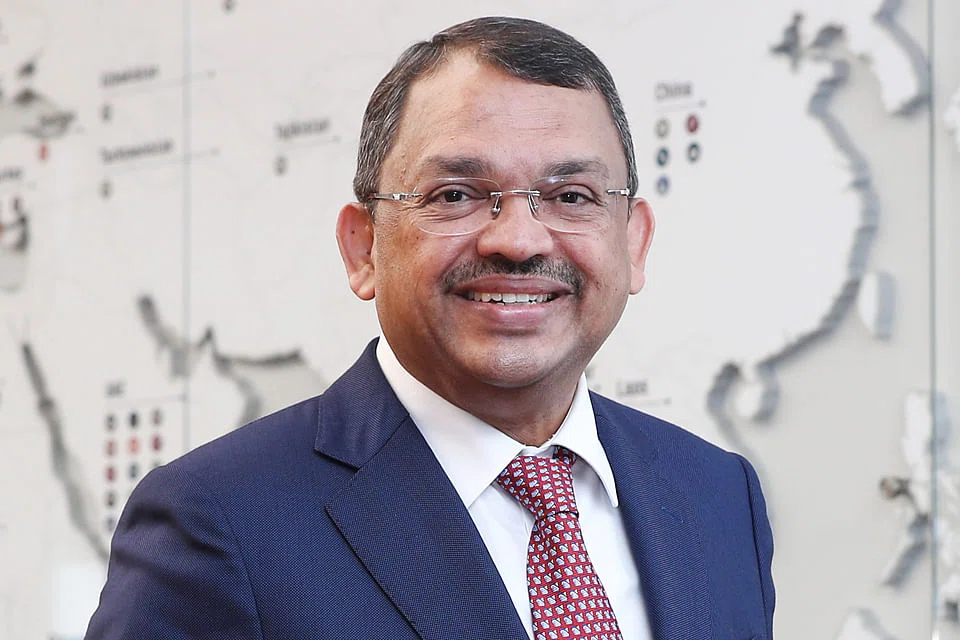
"If one goes by scale, the chances are that we will first list OFI (Olam Food Ingredients) which is bigger and then soon after, we will list OGA (Olam Global Agri). Both have attractive growth prospects, the relevant scale (in terms of market capitalisation) and are listable but have slightly different margin return profiles," said Olam International's chief executive Sunny Verghese.
"We haven't determined yet the extent or size of the IPO... whether we are going to be diluting 25-30 per cent - somewhere in that range," Mr Verghese told The Business Times in an interview.
He said the only reason the IPOs will be carried out sequentially was that it would be "too much challenge overload" to carve out two big businesses and list them at the same time and hence, it would not be feasible.
Over a week ago, the commodity trader majority owned by Singapore's Temasek Holdings announced a reorganisation that essentially crunches down and simplifies its somewhat unwieldy and bulging portfolio that spans the entire agri- value chain and 60 countries into two distinct units.
Analysts say the exercise - borne out of recommendations from Credit Suisse and Rothschilds which were hired to explore options to unlock more value - will increase liquidity and woo a broader spectrum of investors eager to bet on the separate themes.
"The plan is broadly in line with what they (the independent financial advisors) had suggested but there is clearly an element of value-add that the board has brought in to make those judgments based on a broader consultation amongst all stakeholders," said Mr Verghese.
OFI and OGA each has its own "sweet spots", he remarked.
OFI which consists of the cocoa, coffee, edible nuts, spices and dairy businesses caters to the changing consumer trends for sustainable, natural and value-added ingredients.
On the other hand, OGA which involves the grains and animal feed business, edible oils, rice and cotton, is an "emerging market play" amid a growing middle class in Asia and Africa that has prompted a shift in dietary habits. "While there are investors who want to be part of one of these themes, very few investors have an appetite for all of them," said Mr Verghese. "We want to attract the kind of investors who will value these businesses differently and better, rather than them being confused about so many businesses and themes," he continued.
The parent company OIL will provide shared services that could include functions ranging from legal, risk management, finance, treasury to human resources and corporate communications to both the units.
This way, dissynergies and additional costs can be avoided while OIL will also be an accelerator that will own and nurture gestating assets such as palm plantations, package foods and infrastructure & logistics in Africa.
OIL will also take over the four de-prioritised assets including sugar and rubber that will be divested as per its strategic plan up to 2024 that was unveiled a year ago. "In this new structure, OIL will temporarily warehouse these assets that are (now) embedded in OFI and OGA that have been de-prioritised so that they won't be distracted by them. This means that OFI and OGA will get full value straight away, look much better from a financial standpoint and there is no drag from these assets," he said.
On whether the reorganisation was prompted by Temasek which has been taking a proactive approach to maximise value of assets in its portfolio as can be gleaned from last year's S$4 billion partial bid for control of Keppel Corp, Mr Verghese replied: "Not at all".
"This is a board and company decision, not a shareholder decision. We have done this very deliberately, methodically and responsibly in terms of the process. This is not a decision that we have taken or a strategy that we have adopted because our businesses are under threat and we want to restructure to respond to the threat. We are doing this to seize what we see as a major opportunity. And we are doing it from a position of strength." He added: "Long term, this new segmented way is the best way to run the business. We are starting with the intent to eventually do an IPO.
"But let's say our thesis and assumptions today are wrong and there are dissynergies. If the value uplift does not exceed the dissynergies by a good margin of safety and it's (IPO) not going to happen, we are not going to put this (reorganisation) back in the bottle. This is a no-regret move for us."
TRENDING NOW
Simba admits exceeding spectrum limits amid failed M1 deal; full-year profits surge 277%
Temasek’s Wan Chee Foong to helm PIL, Lars Kastrup to be board adviser

He built the Vingroup empire. Now South-east Asia’s richest man is handing some key roles to his sons
One-third of Singapore-listed firms at risk in severe AI downturn: MAS

