

Olam's reorganisation will help unlock units' full potential, says its CEO

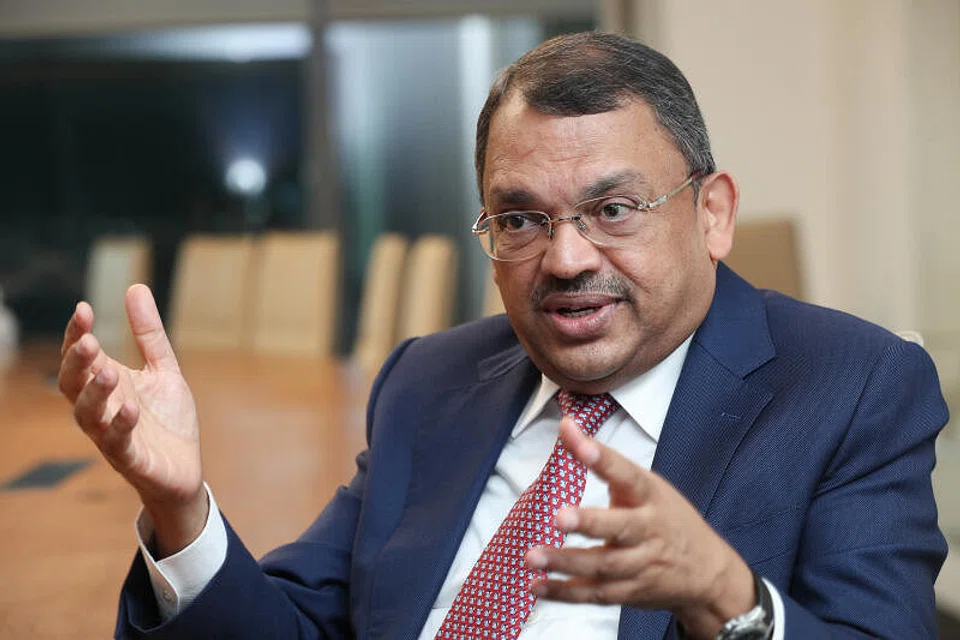
AGRI-BUSINESS giant Olam International's current company structure is a "bit too complex" for the group to unlock the full potential of its business units, but the group's reorganisation plans will soon fix this problem, chief executive Sunny Verghese has said.
Speaking at a virtual dialogue organised by Sias (Securities Investors Association (Singapore) on Wednesday (Feb 9), he said the trends underpinning the Olam Food Ingredients (OFI) unit are different from the trends underpinning the Olam Global Agri (OGA) unit and the rest of Olam International's businesses.
In his view, each unit comes with a different set of geographies, trends and capabilities that are required in order to "succeed in that business".
The way Olam is structured currently, these units are "co-mingled" with one another, making it difficult for the group to unlock the full potential of these businesses, said Verghese. He was responding to a question by Sias chief executive David Gerald on why there was a need to carve out these units when they were both essentially focused on the soft commodities industry.
In January 2020, Olam announced its decision to rejig its bloated portfolio of several agriculture-related businesses into three distinct business units that would simplify the group's structure and give it opportunities to unlock long-term value.
OFI consists of the company's cocoa, coffee, edible nuts, spices and dairy businesses. OGA comprises the grains and animal feed, edible oils, rice, cotton and commodity financial services businesses.
OFI is on track for a primary listing on the premium segment of the London Stock Exchange, along with a concurrent listing on the Singapore Exchange by the first half of this year. However, Verghese warned that any major market disruptions or high volatility levels in stock markets could potentially derail the listing.
Once OFI and OGA are spun off, Olam International will focus on investing in start-ups involved in digital technology and sustainability.
With the carving-out of these units, Verghese said the group will be able to cater to shareholders with different interests. For instance, OGA will be able to attract investors with an interest in food security or the demands for fibre and food staples.
With the reorganisaton, Verghese reckons Olam will have a "new game plan for exploiting these strengths and taking (its) businesses to full potential". "We believe that the cost of separating and doing all of this will be far outweighed by the incremental value that we can create by bringing about this reorganisation and a sharper focus," he added.
Asked why the group picked the London Stock Exchange for OFI's primary listing, he said the group wanted to "stay available" in both the Singapore and London stock markets. The group decided on London for the market's investor pool and liquidity, he said.
OFI also has many peers in the UK and Europe, and the sector is generally "well understood" there, he noted.
Olam is looking to list OFI at a time when capital markets are plagued with fears of interest rate hikes by the US Federal Reserve, as well as high inflation levels.
While Verghese acknowledged that interest rates and cost of funds do have an impact on a firm's valuation, he stressed that the market is already pricing in a certain hike in interest rates.
In addition, interest rates will remain low when compared against historical standards; Verghese said he is not expecting a "huge impact" from these.






