Omni-channel retail still sweet for Luxasia's Baier

Annabeth Leow

Singapore
THE man who put Singapore Post (SingPost) on the road to e-commerce joined regional cosmetics distributor Luxasia in 2016 to do the same.
Just over two years later, Luxasia chief executive Wolfgang Baier tells The Business Times that he is gunning for double-digit revenue growth - and after sampling the company's skincare wares, he looks refreshed for the challenge.
But while he carted over a key e-commerce strategy from his SingPost days, he is coy on his own resignation as CEO and says only this: "The previous job I worked was exciting, and I wanted to see what else was out there."
During his tenure at SingPost, Dr Baier oversaw a push into e-commerce logistics, including a joint venture with China's Alibaba and two high-profile American acquisitions.
And "omni-channel retail" is still his catchphrase. The former McKinsey partner is helping Luxasia founder Patrick Chong add e-commerce platforms to brands' bricks-and-mortar distribution, while putting software tools for customer management into traditional sales.
Dr Baier says that, before he joined Luxasia, Mr Chong told him he wasn't sure whether the 30-year-old homegrown company could survive another three years without a shake-up.
"I came back and said, if you go more into omni-channel and really focus on consumers, start to expand into new categories, I think that there's something we can do together," says Dr Baier of his decision to take the job. "Ever since, I've had a lot of fun and a lot of learning, and we're working very well together."
He reports that the group and its joint ventures together raked in turnover of more than S$500 million last year, and is banking on North Asia and emerging South-east Asian markets to fuel consumer growth.
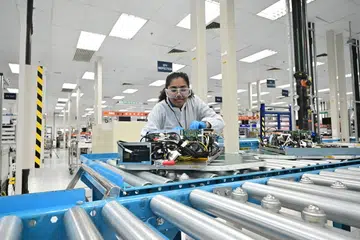
The old Luxasia dealt in mass-volume, business-to-business shipments. Now, the warehouses - it operates more than 250,000 sq ft of them in the Asia-Pacific - must be optimised for more small, daily direct-to-consumer transactions, he notes.
Most of Luxasia's business comes from outside Singapore, including 30 per cent from North Asia. Dr Baier identifies fragmentation across different markets as a main challenge.
"South-east Asia is our backyard," he says, noting that Luxasia's long presence in the Philippines and Indonesia has given the group an edge in retail licences and networks: "We're investing a lot in Indonesia, Thailand, the Philippines and Vietnam, because, while Singapore and Malaysia obviously are big economies now, they are more stable, whereas the other countries have much, much higher growth and there is a lot of demand."
He continued: "Any brand - even if it is a mid-sized brand - in China is already the size of South-east Asia in total, so we are investing a lot in China."
Besides opening up new distribution networks, online shopping has also let Luxasia play with which brands and products to bring into each of its 15 regional markets.
E-commerce is how the group entered India, for one: "India is an investment in the future. It's a huge fragrances market, but currently a little low-end. As we come in with our more luxury and prestigious brands, it will take some time - but we are there."
An online platform offers "a rather low-cost approach, so you can see what works and what doesn't", says Dr Baier - especially true in an industry where "every social media star starts their own beauty line . . . and a year later, they're nowhere to be seen".
But that does not mean that there have not been missteps as he shepherds the group through its revamp.
For instance, he originally planned to double down on Luxasia's historical emphasis on top-shelf fragrances.
"When we did (the strategic review) outside in, we said, 'Oh, there's going to be a very big pillar around that'," he recalls. "(But) it quickly became very clear that the skincare and, especially, cosmetics segments were exploding in Asia."
While fragrances still make up about half the business - and are alluring enough that Dr Baier's personal collection has swelled from three scents to 50-odd - Luxasia had to invest more in the emerging segments to re-balance the portfolio.
"Skincare, as well as make-up and haircare, are growing very fast," he says; for example, the Singapore market's skincare segment has grown by 30 per cent, outpacing fragrances' 11 per cent increase in sales. "There is now also the six, seven, eight-step skincare regime that people are doing much more religiously, so that means you sell a lot of toners and steps in between, versus just the cleanser."
He and Mr Chong have committed to ploughing 30 per cent of profits back into "the investment in the future, which means investing into the whole consumer platform".
That involves software for customer relationship management and other technologies. "We have a Salesforce platform everywhere, we have about 10 to 15 people working it.
"E-commerce and digital, we have about 50 people working there where there were none before. All our warehouses are run by ourselves and they're e-commerce-ready.
"I've always said that I believe the fulfilment centres - which means the warehouses - are the brain of the supply chain. What we do is run all of them by ourselves, except for a few small markets where we just started and outsource them to partners, so we keep them very close. In most of those, we've changed the layout so that we are able to get more in and more out."
As for lessons from his five-year run as SingPost CEO, he notes: "On the last-mile delivery, obviously, knowing all the players in the region is helpful. We are able to choose, in the countries, the right people to work with in certain areas so we don't go blindly into a full set-up and commit to one."
But, when asked whether Luxasia would invest in doing last-mile delivery on his own, he remarks with amusement: "No, because I saw it myself and in many of the markets, a lot of startups and others are so hungry for growth and they basically give the services under cost. Now that I'm on the other side, I'm a beneficiary."