

Once-beleaguered Pacific International Lines delivers US$2.6b earnings for FY21

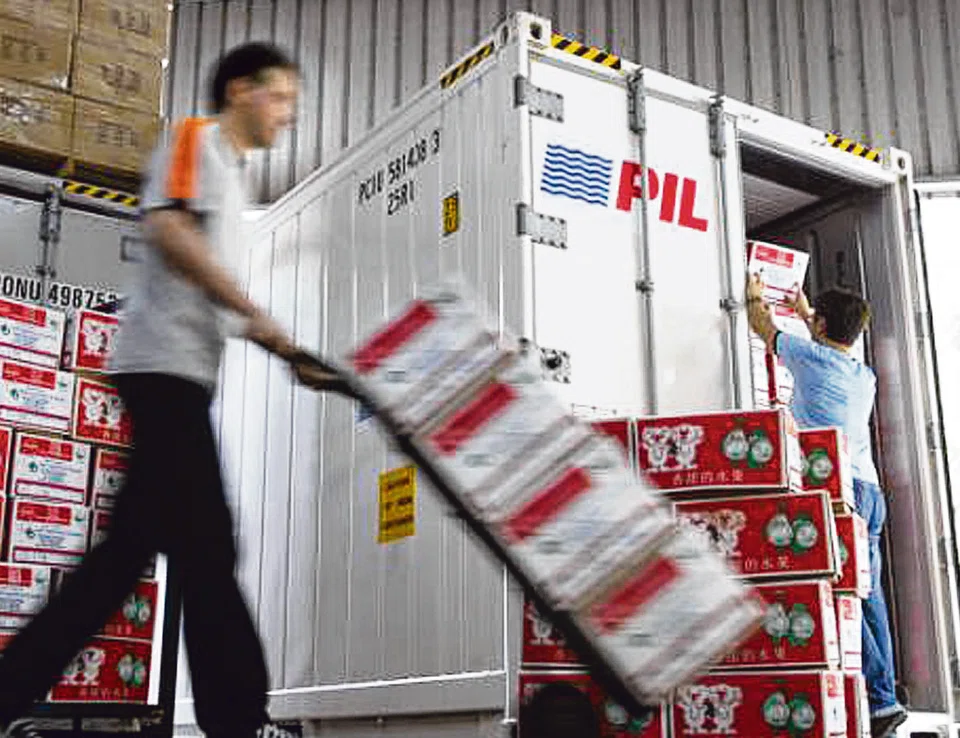
THE once-heavily-indebted Pacific International Lines (PIL) has made a spectacular turnaround, reversing from US$44.7 million in red ink for 2020 to US$2.6 billion in earnings for 2021.
The container carrier generated a topline of over US$5.8 billion last year as the shipping industry benefited from pandemic-fuelled e-commerce and maritime congestion.
Statements filed by PIL with the Accounting and Corporate Regulatory Authority in July showed the company first logged hundreds of millions of losses in 2018 — despite reporting revenue to the tune of billions.
The cash burn reportedly pushed the company to the brink of insolvency, but it managed to stay afloat thanks to a financial lifeline from state investor Temasek’s wholly owned subsidiary Heliconia Capital Management.
Heliconia is now a majority shareholder of PIL, after pumping in US$600 million via a mix of equity and debt.
PIL’s statements show a healthy balance sheet with over US$1.8 billion in equity and US$958.5 million in retained earnings, compared with equity of US$735.2 million and an accumulated loss of US$24.3 million for FY2020.
Net cash flow generated from operations amounted to over US$2.7 billion. There was a net inflow of US$146 million from investing activities and a net outflow of US$1.7 billion in financing, putting the group in a cash surplus position of US$1.2 billion in 2021.
In 2020, US$1 billion in liquidity was expended in financing activities — exceeding the amount of net cash generated from operating and investing activities, and resulting in a cash flow deficit of US$40.4 million in 2020.
Net profit margin improved to 45.1 per cent in 2021, from minus 2 per cent. The company’s current ratio rose to 0.82 from 0.36, and return on equity jumped to 141.8 per cent from a negative 6.1 per cent.
PIL is said to be the 12th largest container shipping company in the world, with a fleet of around 100 vessels. In the past 2 years, container freight rates have surged. PIL, like many other container carriers, is making good use of the buoyant market.
In an earlier exclusive interview with The Business Times, PIL’s senior management team talked about how the company managed to ride the market upturn and even undertook to fully repay a US$1 billion debt — in what was arguably the shortest restructuring ever in Singapore.
Non-core assets, including the PIL Building, were also divested during its restructuring process. Industry players have begun to question the sustainability of ocean-freight rates, as cargo shippers push back.
PIL, for its part, is steaming ahead. The company has appointed shipping industry veteran Lars Kastrup — who was brought in as an adviser in 2020 to help steer PIL out of troubled waters — as its new chief executive.
In March, PIL also ordered 4 container vessels — reportedly its first order in 7 years. In July, the company also launched the PIL Centre for Maritime Efficiency.
Helmed by a team of 7, the centre will be responsible for traffic optimisation and route analysis — aimed at minimising energy usage by PIL’s fleet.
TRENDING NOW

Once staunchly pro-China, Malaysian Chinese businesses are now distancing themselves from Beijing

Philippine power giant First Gen rebuffs foreign offers, plans up to US$2.6 billion in expansion

Grab CEO’s wife Chloe Tong on life with Anthony Tan and finding her purpose
The line between public servants and private property

