

Operating autonomous vehicles in Singapore has ‘symbolic value’ despite small market size: Pony.ai CEO
It is partnering ComfortDelGro to launch commercial autonomous vehicle services in the city-state

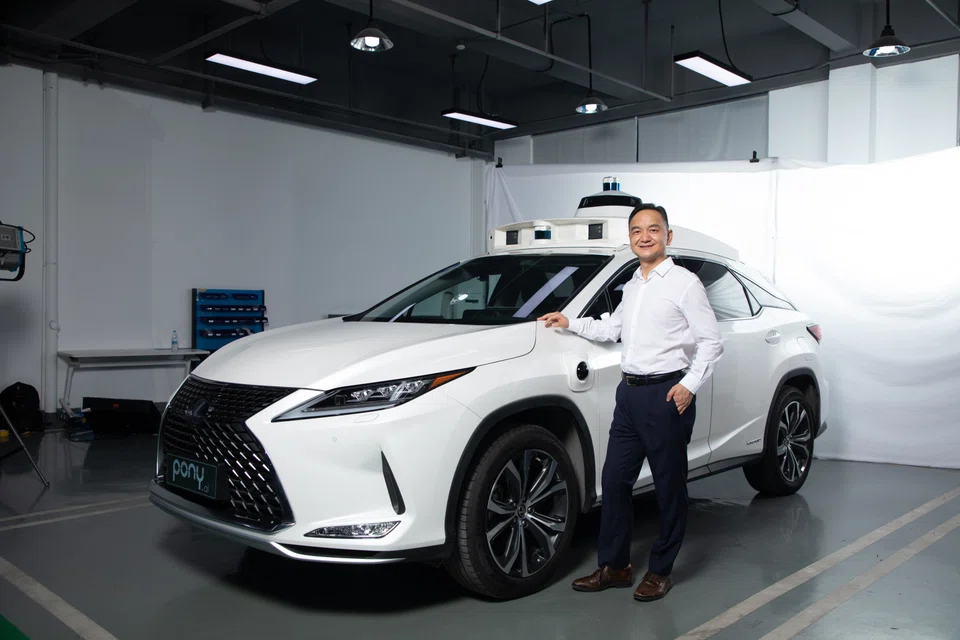
[SINGAPORE] The Chinese self-driving technology firm Pony.ai has been looking beyond the mainland Chinese market in the last 12 months as part of its fleet expansion strategy.
Just this year, Pony.ai has gained a permit to start testing in South Korea and also entered into partnerships with transport operators with a view to bring commercial robotaxi services to countries in the Middle East. In Singapore, Pony.ai has partnered the country’s largest transport operator ComfortDelGro as part of its global expansion strategy.
Pony.ai is one of the first-movers in the robotaxi industry in China and competes with other major Chinese robotaxi players like WeRide and Baidu’s Apollo Go. Pony.ai currently has commercial robotaxi services in four major tier one cities in mainland China: Beijing, Shanghai, Guangzhou, Shenzhen.
Pony.ai’s chief executive officer James Peng said the company is entering Singapore – despite its small market size in comparison with other South-east Asian economies –because of its “symbolic value”.
Being able to kick-start commercial operations in a highly regulated environment such as Singapore will prove that Pony.ai can be successful outside mainland China, he added. It also shows the company can work with another government that is stringently watching this space and playing an active role in rolling out autonomous vehicles in a controlled manner.
In an interview with The Business Times,Peng said: “It builds a great example of public-private cooperation. We need to take thoughtful steps, and in terms of the mobility market, autonomous mobility is such a new thing.”
Being able to scale commercial robotaxi services in Singapore could also allow Pony.ai, to more easily enter large right-hand drive markets with similar demographics, such as Japan and the UK.
Pony.ai and ComfortDelGro got the green light from Singapore regulators to start testing and road-mapping in the Punggol district on Wednesday.
Its competitors Grab and WeRide were given approval to start autonomous vehicle testing with their entire Ai.R fleet in the Punggol district in mid-November. Ai.R is a public autonomous ride service that comprises 10 five-seater autonomous vehicles and one eight-seater.



Punggol is set to be the first residential neighbourhood in Singapore to have an autonomous shuttle service. Acting Transport Minister Jeffrey Siow said in September that therewereplans to have between 100 and 150 self-driving vehicles in Singapore by the end of next year, as part of a push for an islandwide rollout in the next five years.
The partnership between Pony.ai and ComfortDelgro began with a pilot programme in Guangzhou in March this year.
The collaboration in Singapore, specifically in the Punggol residential area, will build on this experience and further test autonomous vehicle deployment in a new environment. It also serves as an important launchpad for Pony.ai to explore opportunities in the wider Asia region.
In its most recent earnings call, the company reiterated its aim to advance robotaxi services and highlighted partnerships with local transport operators in Qatar and Singapore. It has also partnered ride-hailing operators Uber and Bolt as it tries to enter the Middle East and Europe for commercial robotaxi services.
Fleet expansion
The Chinese self-driving technology firm is also confident of expanding its fleet threefold to 3,000 by the end of next year. The company adopts an asset-light strategy, which means its fleet expansion would be partially funded by third-party transport operators.
Pony.ai currently has about 900 vehicles, and expects to cross the 1,000 mark by the end of this year.
Revenue for the three months ended Sep 30, 2025, reached US$25.4 million – a 72 per cent increase from the US$14.8 million in the same period a year earlier. Pony.ai said the jump was mainly driven by robust growth in both robotaxi services and licensing and application revenues.
Peng, however, acknowledged that there may not be a significant bump in revenue in the next year or two – even if commercial operations were to start in Singapore, Qatar or the United Arab Emirates within the next year.
“If you think of all the global markets we entered, it’s sort of the planting seed phase. We’re deploying a small fleet first to build trust locally,” Peng said, addingthat the current phase is about working with regulators and getting people used to the idea of taking autonomous vehicles.
“But I think in a two to three years time frame, these markets can become a significant part of our revenue stream.”
Decoding Asia newsletter: your guide to navigating Asia in a new global order. Sign up here to get Decoding Asia newsletter. Delivered to your inbox. Free.
Copyright SPH Media. All rights reserved.
TRENDING NOW

Once staunchly pro-China, Malaysian Chinese businesses are now distancing themselves from Beijing

Stocks to watch: HPL, Aims Apac Reit, Zico, Advanced Systems Automation, ComfortDelGro
‘How many will survive?’: Bubble fears arise as China’s humanoid robotics face reality check

Smaller board lots can’t fix a market run by three banks

