

Palm oil players report solid H1 earnings, but CPO prices waning

Uma Devi
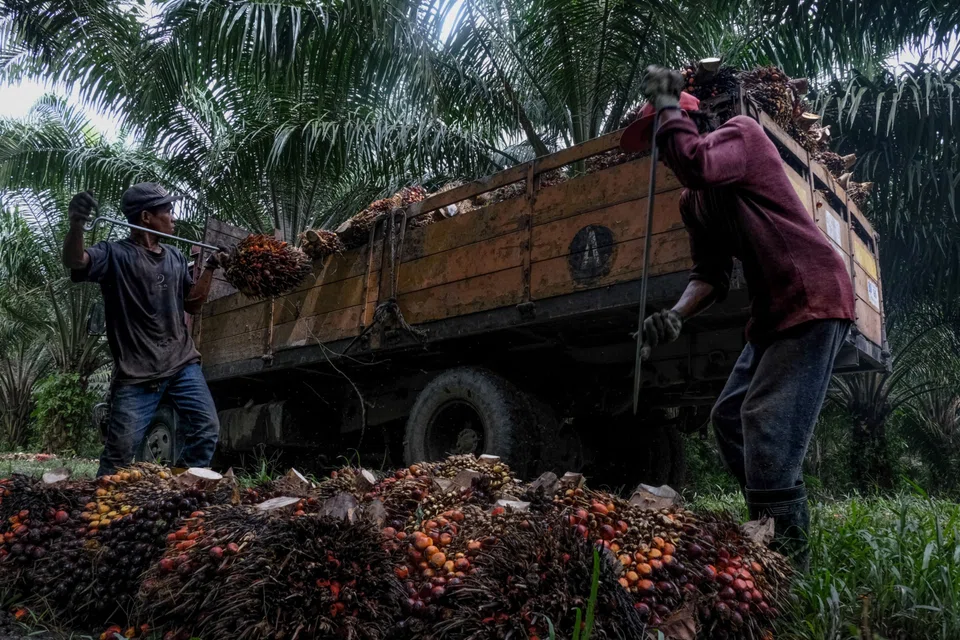
SINGAPORE-LISTED palm oil stocks have performed strongly this year, fuelled by higher crude palm oil (CPO) prices. But they could lose momentum in the months ahead.
CPO futures contracts on the Bursa Malaysia Derivatives market are up about 4 per cent from the beginning of the year. But since late April, the commodity has fallen about 35 per cent due to a number of factors, including higher production and Indonesia’s policy shift to encourage exports by reducing levies.
The absence of quarterly reporting across much of the sector makes this trend difficult to discern, though. In fact, the Singapore-listed palm oil plays reported generally positive results for H1 2022.
In particular, the earnings of pure CPO plays like Bumitama Agri , First Resources and Golden-Agri Resources more than doubled year on year for the period, as CPO prices for the period were higher than prices in the corresponding year-ago period.
The earnings of diversified players like Wilmar International – which has sugar and rice businesses – rose more slowly. The company booked a 55.1 per cent increase in earnings, as all its segments clocked improved performances over the period.
The H1 net profit and revenue figures of smaller players like Kencana Agri and Indofood Agri Resources also advanced on stronger CPO prices.
Mewah International was the only locally-listed palm oil player that saw its net profit decline in H1. The company – which operates refineries and processing facilities in Malaysia, Singapore and Indonesia – saw its earnings for the period fall 42.1 per cent to US$14.2 million, despite a 27.6 per cent rise in revenue to hit a record-high of US$2.7 billion.
Mewah’s sales volume fell 9.9 per cent, and its total operating margin slipped 13.6 per cent. The company said its customers took a “wait-and-watch” approach and delayed their purchases when crude palm oil (CPO) prices reached an all-time high in the first half of the year.
Varied interim dividends
The generally strong H1 2022 financial performance of the palm oil players did not translate to higher interim dividends. Some companies only pay dividends once a year, and many declare the bulk of their total dividends for any given year only after they close their books.
“Generally the interim payouts are smaller than the final dividends, as a company would like to have better clarity on earnings first,” said an RHB analyst, who added that Singapore-listed palm oil companies will probably be guided by some payout ratio.
According to data compiled by The Business Times, 2 companies – Indofood Agri Resources and Kencana Agri – did not declare an interim dividend despite their improved financial performance.
Mewah International declared a smaller dividend of S$0.0015 for H1 this year versus S$0.0027 in the year-ago period.
Another 4 stocks raised their interim dividends on better H1 financial results. First Resources more than doubled its interim dividend to S$0.025 from S$0.01; Golden Agri raised its dividend to S$0.008 from S$0.00528. Bumitama and Wilmar were the other 2 stocks that raised their interim dividends. The former declared an interim dividend of S$0.0125 for H1 this year versus S$0.0045 in the year-ago period; Wilmar’s interim dividend rose to S$0.06 from S$0.05. .
Maybank analysts said they expect Bumitama’s earnings to soften in H2, following the recent correction in CPO prices and higher fertiliser cost expectations.
Waning CPO prices
Is the generally stronger profitability of Singapore-listed palm oil players in H1 2022 a sign of things to come in the Malaysia market?
Investors should keep in mind that the Malaysia-listed palm oil players report quarterly, and their financial numbers for the 3-months to Jun 30 could show that the favourable supply and demand dynamics that have propped up CPO prices are now waning.
In an Aug 15 report, UOB Kay Hian analysts pointed out that Malaysia’s end-July palm oil inventory came in lower than market expectation, mainly due to strong exports to countries like India.
“Despite strong exports, we reckon that inventory would still remain high due to higher production and more palm oil imports from Indonesia,” they said, adding that CPO prices will “remain soft in the near term” and “stabilise at the current range”.
Consequently, investors should expect some downside earnings surprises in the upcoming quarterly results of Malaysia-listed palm oil players – especially those with exposure to Indonesia.
Such companies could have their financial results dragged down by low sales volumes and the lower CPO pricing, compared to their peers, the analysts said.
UOB Kay Hian’s top Malaysia-listed palm oil plays include IOI Corporation and Hap Seng Plantations.
TRENDING NOW

Singapore’s central gas buyer affirms Indonesia’s role as ‘important partner’ amid export review warning

Why the biggest business decision about AI isn’t which model to choose

Is Manila Asia’s new dining hot spot?

KKR founders among investors buying 42% of Peter Lim’s Valencia; club valued at US$1.4 billion

