Pan-United pivots to becoming a solutions provider by selling IP in sustainable concrete

Janice Lim
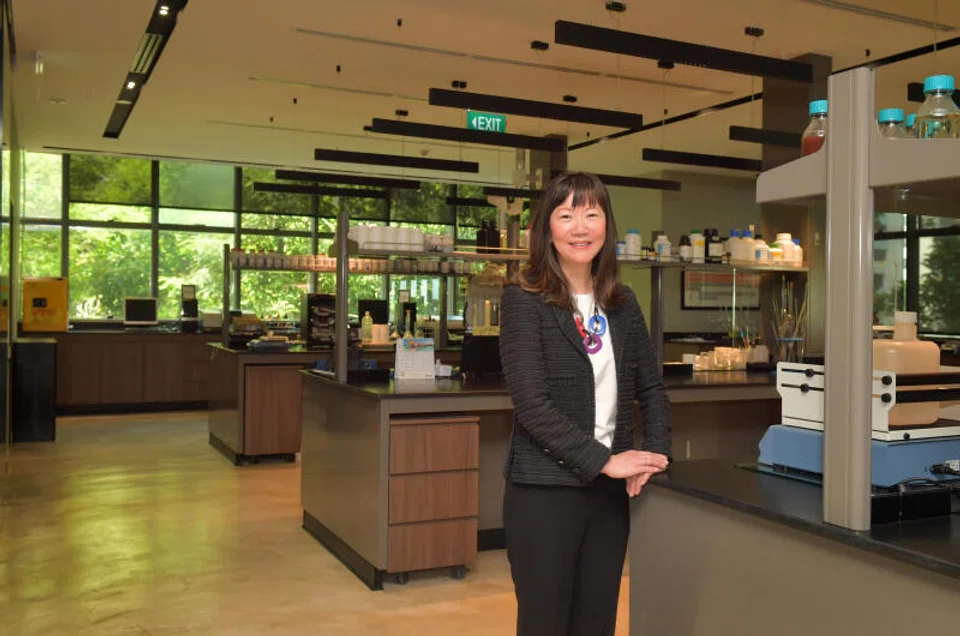
READY-MIX concrete producer Pan-United Corporation is pivoting to be a solutions provider as it embarks on its plans to transform its business model.
As part of this shift towards an asset-light strategy, the company is looking to sell its intellectual property (IP) in sustainable concrete, said chief executive officer May Ng in an interview with The Business Times.
Besides selling its IP, it is looking to offer other capabilities developed in-house as services to other ready-mix concrete (RMC) companies globally.
This includes technological solutions through its subsidiary AiR digital, product licensing as well as technical management.
“Our vision is to share our IP, know-how, learning with other like-minded RMC companies in the world. And when we share our learning with them, we learn from them. We benefit when we learn from them, they will benefit. And if they are prepared to adopt our learning, they can help to decarbonise in their countries of operations. So this is the way we want to expand our impact,” said Ng.
“When these RMC companies use our solutions for sustainability, we can expand the positive impact of our decarbonisation efforts beyond our geographical footprint. This network of like-minded RMC companies can generate or stimulate more ideas to accelerate decarbonisation,” she added.
The pivot to becoming a solutions provider is supported by two other strategies: First, to focus on product innovation through research and development to expand its low-carbon product range; and second, to emphasise digital innovation by incorporating artificial intelligence, mobility, cloud computing and data analytics to add value to its supply chain processes.
Currently, Pan-United has over 300 specialised concrete solutions in its portfolio, with over half of them green certified.
The company has positioned itself as a leader in low-carbon concrete solutions, and has committed to sell only low-carbon concrete by 2030.
Ng told BT that the company is on track to meet this target, with more than 50 per cent of its volume now sold being low-carbon concrete.
Currently, there are two main methods in which the company is producing low-carbon concrete. One is by substituting the most common type of cement – which is one of the key materials of concrete – with alternative materials that are less carbon-intensive. This includes using waste concrete.
The production of cement typically releases a large amount of carbon dioxide, and is therefore very carbon-intensive.
Another method is by injecting carbon dioxide into the concrete mix – a process known as carbon mineralisation.
Low-carbon concrete reduces emissions by 58 per cent on average, compared with traditional concrete, noted Ng.
Given that 70 per cent of the embodied carbon of a building’s emissions – which refers to the amount of emissions released from the materials and construction process before it becomes operational – using low-carbon concrete could reduce its embodied carbon by over 20 per cent, she added.
However, the use of low-carbon concrete is more costly for the company. For example, for its carbon mineralisation solution, Pan-United has to pay for the carbon dioxide produced from industrial manufacturers on Jurong Island.
Ng noted that developers are currently still not prepared to pay more for low-carbon concrete, and Pan-United has to shoulder the cost increase for now.
“While we would like to pass on the higher costs, unfortunately, the market is still not ready for it... The only way forward is to try to get economies of scale so that the cost and investment can be mitigated,” said Ng.
When asked if Pan-United would be looking at generating carbon credits from the carbon savings generated from the use of low-carbon concrete, Ng said that the company would like to eventually be able to get extra revenue through the sale of carbon credits but there are limited specialists and consultants at the moment that could support it in assessing the credibility of such a project.
Still, the company has taken a first step by providing environmental product certificates on its low-carbon concrete. These are disclosure reports that document the materials and environmental impact of the product based on a life cycle assessment, and have been verified by third parties.
“We take it one step by one step... Because you need to verify it, you need to make sure that all these are certified. And then after that, can we move to the next step? Definitely, we hope to, and we want to... It’s a little bit of a long process. But I think this is a trend, because this is the way that will help people to invest more to decarbonise,” she said.
Despite the higher costs of using low-carbon concrete, Pan-United posted a net profit of S$20.4 million for the second half of its 2023 financial year ended Dec 31, up 107 per cent from S$9.9 million the previous year.
Revenue for the period increased 13 per cent to S$414 million from S$365.9 million a year ago.
This brings the group’s profit for the full financial year to S$36.3 million, up 56 per cent from S$23.4 million the year before, while its revenue went up 10 per cent to S$774.1 million from S$703.3 million.
The higher revenue recorded in FY2023 was primarily driven by its concrete and cement business, said the group in its latest earnings results.
Nonetheless, Ng was more cautious about the construction sector’s performance for 2024, noting that the Building and Construction Authority is expecting demand for RMC to be between 12 million and 13 million cubic metres, which is relatively similar to 2023’s activity level of 12.3 million cubic metres.
Pan-United’s shares closed at S$0.445 last Friday (Feb 23), down 1.1 per cent.