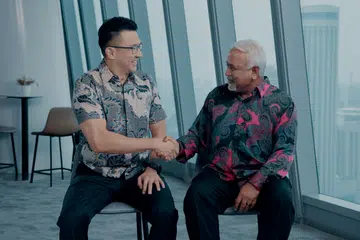
Pan-United sees new opportunities in sustainable concrete
Ready-mix concrete provider is investing in research and development to come up with products that are less carbon-intensive

Yong Jun Yuan
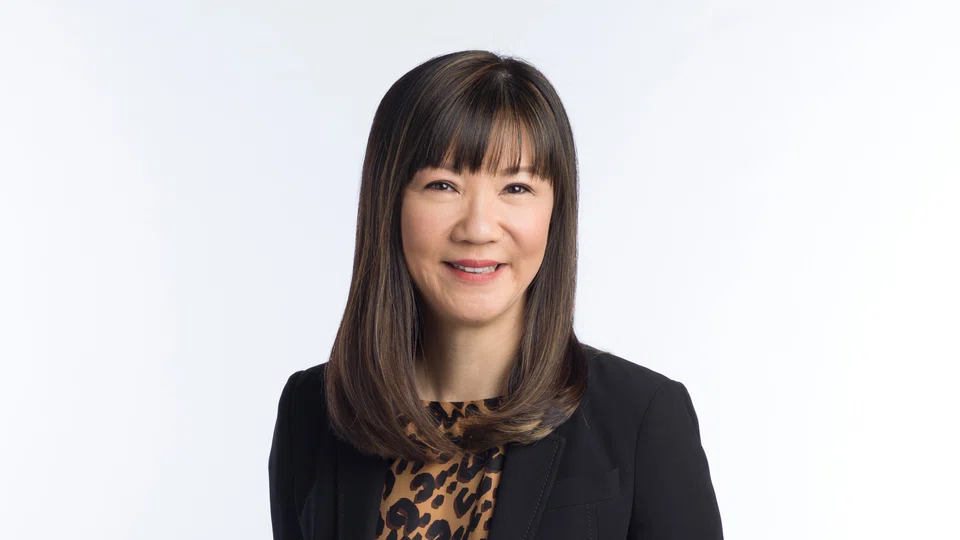
AS Singapore’s largest ready-mix concrete provider, with a market share of about 40 per cent, Pan-United Corporation sees plenty of potential in driving the adoption of sustainable concrete.
In its annual report released in April this year, the company committed to supplying only low-carbon concrete by 2030 and pledged to offer carbon-neutral concrete products by 2040. And by 2050, the aim is to be carbon-neutral.
Pan-United’s chief executive, May Ng, said the company is investing about 2 per cent of its revenue in research and development to make its products more sustainable.
Last year, the company provided Surbana Jurong with concrete that was created with carbon mineralisation technology.
As the concrete is mixed, carbon dioxide is injected to form calcium carbonate. This not only captures and stores carbon, but also strengthens the material.
In January this year, Pan-United signed a memorandum of understanding with Shell to collaborate on ways to repurpose carbon dioxide and industrial waste from the oil major’s Singapore operations as raw materials to produce low-carbon concrete.
“I think we have to be more relentless in reducing natural resources (used) by replacement and substitution with other waste material by-products,” Ng said.
The concrete manufacturing process is highly carbon-intensive. Cement is a major component of concrete, and the former is manufactured out of various minerals – including limestone. These minerals need to be crushed and heated in kilns to about 1,500 deg C to create clinker.
The chemical process that bonds the minerals releases carbon dioxide, while fossil fuels are also used to heat the kilns to such high temperatures.
Other alternatives such as recycled concrete aggregate and solar panel waste have been used as raw materials, but not in large quantities.
Noting that cement accounts for 7-8 per cent of carbon dioxide emissions globally, Ng believes that ready-mix concrete companies can make a dent if they can halve the amount of cement used in their products.
She is also anxious to avoid greenwashing, and said the company will try to avoid the use of offsets to meet its climate targets.
“Offsets can be costly, but it is also an easy way out… Let’s tackle what we do and maximise the opportunities we have to reduce the carbon dioxide emissions until the technology is exhausted,” she said, adding that the company will also seek out good quality offsets if it does use them.
Innovating towards customer satisfaction
Aside from watching its emissions, Pan-United also works with clients to provide solutions that make their operations more efficient.
Below the asphalt of the runways at Changi Airport, a cement-treated base, which is a flexible and stabilised underlayer of concrete, was added to cushion the impact of aircraft landings and other heavy loads. This reduces the amount of downtime required to maintain the runway.
Another product innovation is the company’s self-compacting concrete, which does not need noisy mechanical compactors to place and consolidate.
While these more advanced forms of concrete do cost more, Ng said they also save clients both manpower and time in the construction process.
“Rather than looking at the cost of one material, if you look at it from a total cost basis…the contractor, the developer, even the neighbourhood around the batching plant will benefit from it,” Ng said.
She also believes the adoption of new building materials will depend on whether regulators are in tune with such developments.
In addition, the company has been raising awareness about such products with clients. Pan-United co-organised a webinar with the Institution of Engineers, Singapore, in October last year to encourage industry players to adopt carbon reduction and utilisation techniques.
Road to recovery
The company’s financials, which took a severe hit from the Covid-19 pandemic, have recovered substantially. Net profit stood at S$18.7 million for the year ended Dec 31, 2021, up from S$1 million in FY2020.
Its net profit level has yet to recover to the S$20.5 million recorded for FY19 before the pandemic struck, but net profit margin improved to 3.2 per cent in 2021, from 2.7 per cent in 2019.
Reflecting prudence, Pan-United also brought its net gearing ratio down to 0.01 – as net debt declined to S$1.9 million from S$36.1 million at the end of 2020.
The company declared dividends of S$0.016 for FY21, up from S$0.008 that it paid out in FY20 and equal to the amount paid in FY19.
This gives the stock a historical dividend yield of 3.6 per cent, based on its close at S$0.445 on Friday (Jul 8). Its share price is also 1.5 times its net asset value per share, which stood at S$0.293 as at Dec 31, 2021.
Shares of Pan-United are up 32.8 per cent this year, supported in part by share buybacks. The counter now has a market value of S$312.4 million.