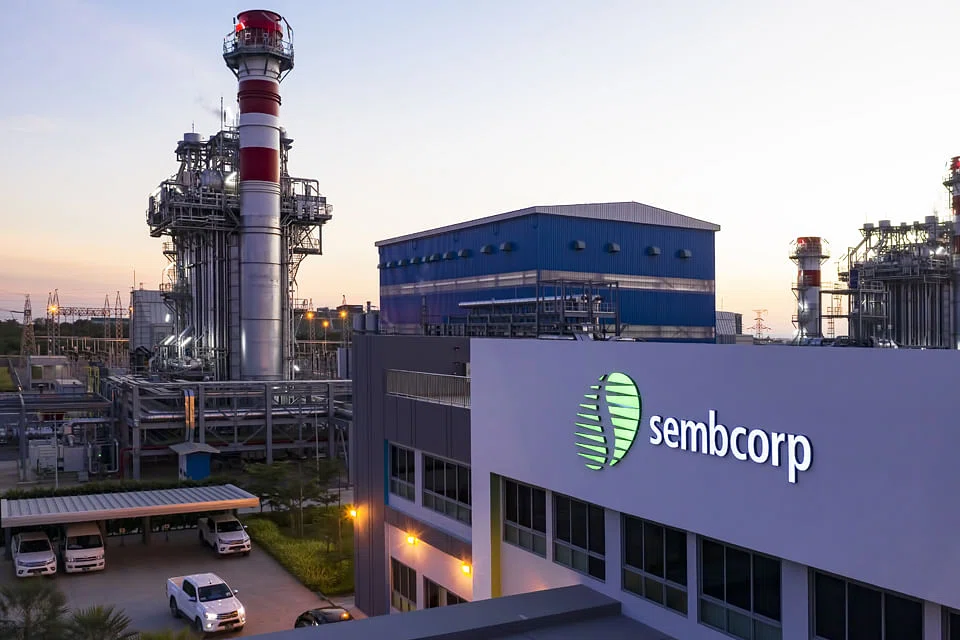
Pandemic shakes up Singapore conglomerates

SINGAPORE conglomerates have had enough of being "cheap" and under-appreciated and the pandemic-led slump seemed a perfect reason to do something about it. To get out of the funk and grow shareholders' money more quickly, diversified firms are chasing unique angles and rejigging portfolios.
Just last week, Olam International, an agri-commodities merchandiser, producer and trader of everything from edible nuts, spices, cocoa and coffee to dairy and grains with farms and supply chains in 60 countries, disclosed details on a plan to shed its heft and carve out two distinct units from its bulging portfolio.
It plans to list its food ingredients unit Olam Food Ingredients (OFI) in just over a year from now, followed by the flotation of Olam Global Agri (OGA), a global food, feed and fibre agri-business, a year later.
The do-over runs deeper than that.
Olam's reset to unlock more value is aimed at capitalising on the booming consumer trends such as protein-based diets and healthier food that is traceable and sustainable.
In addition, to combat the so-called holding company discount or "holdco discount", Olam plans to demerge these entities from the listed holdco. For OFI, this will be done by way of a distribution in specie of shares in OFI to Olam shareholders.
A holdco or conglomerate discount that ranges anything from 10 per cent to higher arises when investors, for various reasons, value a diversified group of businesses and assets at less than the sum of its parts.
The tendency to undervalue conglomerate businesses could be led by concerns over the independence or autonomy of the subsidiaries or under-performance of the various divisions. The market's difficulty in unpacking and understanding the financial performance of huge and disparate businesses could also result in the discount or lower stock price.
For that reason too, the market may favour "pure plays" - companies focused on their core competencies. That's not to say "congloms" are running out of fashion. In fact, those that have offloaded unattractive units and are growing various businesses in a cohesive way appear to be all the rage now.
Think Keppel Corp and Sembcorp Industries, who after a disastrous year roiled by an oil crash led by the pandemic, have decided to exit their low-yielding offshore and marine business. In place, they are recasting themselves as mostly clean energy and urbanisation players - both are big trends - and, with that, have reshaped their portfolios into more nimble and customisable businesses.
Last year also saw agri-based conglomerate Wilmar International spin off and successfully list Yihai Kerry Arawana on the Shenzhen Stock Exchange ChiNext Board. (Spin-offs are one way for conglomerates to get the most out of their subsidiaries and close the "conglomerate discount").
The initial public offering of Wilmar's Chinese subsidiary was in the making since 2017 and analysts are not ruling out the possibility of the group listing other businesses to unlock more latent value in the longer term.
The investment case for conglomerates to reinvent themselves is crystal clear, more so in an environment of shrinking shareholder returns in South-east Asian markets and especially given the pandemic-induced headwinds.
According to a report issued last September by Bain & Company, while conglomerates in the region led "pure plays" by four percentage points in terms of annual total shareholder return (TSR) between 2010 and 2014, that dynamic has since flipped.
Since 2015, they have substantially underperformed pure-plays and the gap has been widening over the last five years.
The report pointed out that the advantages of size, diversification and close government connections which fuelled decades of success for the region's conglomerates have now turned to disadvantages. It recommended that diversified firms reconsider strategies, tackle costs and fundamentally rethink their structures and business models.
Singapore conglomerates that have already done this - with innovative pivots to boot - are off to a good start. One should not be surprised if many more follow suit to survive and compete in a much-altered post-pandemic era.
TRENDING NOW
He built the Vingroup empire. Now South-east Asia’s richest man is handing some key roles to his sons
Grab CEO’s wife Chloe Tong on life with Anthony Tan and finding her purpose
What role can Japan play in Asean’s future?
From folding clothes to factory work: Why China is sending humanoid robots to school