

Parkway Life Reit’s five-year journey to the West
Trust is marking its first foray into Europe with acquisition of 11 nursing homes in France

SIXTEEN years after it first expanded its portfolio beyond Singapore to Japan, healthcare-focused Parkway Life Real Estate Investment Trust (Reit) is finally making headway into a third key market.
The Reit announced on Tuesday (Oct 22) that it is acquiring 11 nursing homes in France for about 111.2 million euros (S$159.9 million), marking its maiden investment in Europe. The acquisition will be fully funded by a private placement to raise gross proceeds of about S$180 million.
On Wednesday, the trust closed its private placement at the issue price of S$3.80 per new unit. This represents the lowest end of the estimated issue price range of between S$3.80 and S$3.88 when the acquisition was first announced.
Speaking to The Business Times on Wednesday, chief executive officer of the trust’s manager Yong Yean Chau said that the manager felt it was “a very good time” to enter a third market given that Parkway Life Reit had grown in scale and established itself as a market leader in Japan.
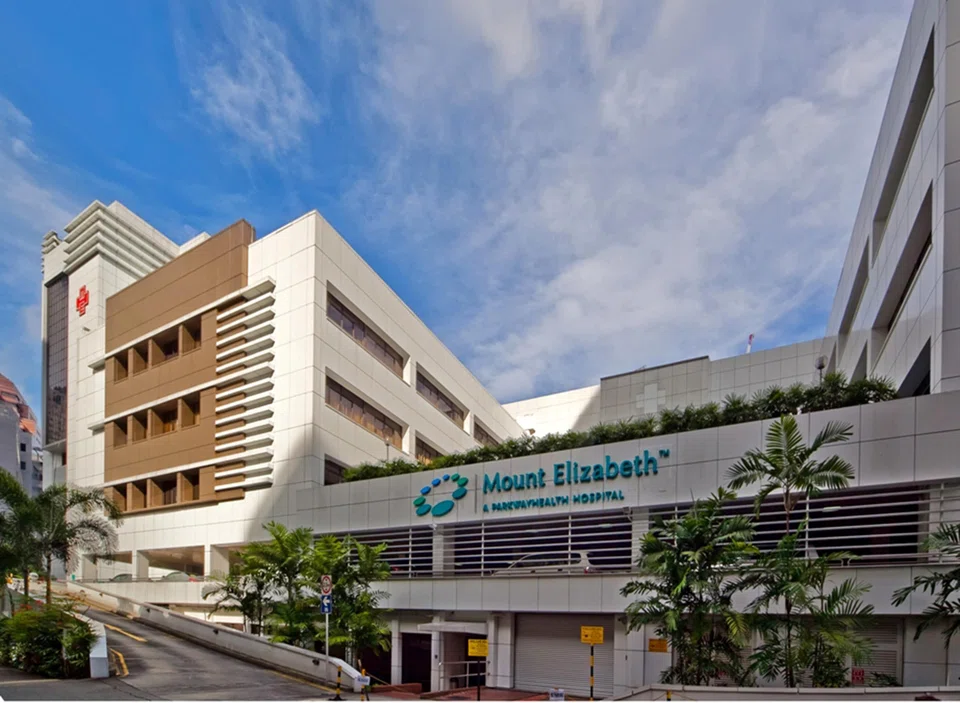
The trust, which listed on the Singapore Exchange in 2007 with three hospital properties – Mount Elizabeth Hospital, Gleneagles Hospital and Parkway East Hospital (previously East Shore Hospital) – entered the Japan market a year later. It has since grown its portfolio to 64 properties, of which about 60 per cent by gross revenue is in Singapore. The gross revenue for Singapore also includes a 0.2 per cent contribution from the Reit’s stake in a specialist clinic in Malaysia. The remaining 40 per cent of the Reit’s gross revenue comes from its Japan properties.
Level of risk
In considering its third market, Yong said that the manager took into account the level of risk, particularly that of tenancy defaults, that a new market would pose to Parkway Life Reit. The manager also considered the trust’s ability to scale its growth in the new market.
To this end, Europe fits the bill as it has a fast-ageing population and a very developed long-term care sector, said Yong. Healthcare is also a less politically contentious sector in Europe, unlike other emerging countries in Asia-Pacific such as India, Thailand or China, and is less susceptible to risks, he noted.
Over the last five years, the Reit manager has been exploring opportunities across various markets in Europe, including bigger economies such as France, the United Kingdom and Germany.
While there were potential opportunities during this period, these deals had to be aborted due to various financial concerns, added Yong.
That was until the management team met with DomusVi, a nursing home operator in France. “We think DomusVi fits into what we hope to achieve and is a good partner that we can scale together with over time,” said Yong.
He explained that DomusVi is looking to reduce its assets while growing its operations. At the same time, Parkway Life Reit can establish a foothold and build its credibility in the European market by partnering with DomusVi, which is the third-largest aged care operator in Europe.
As for choosing France as its entry point into Europe, Yong assuaged concerns that France’s reputation for strikes and protests would pose a risk to Parkway Life Reit. He noted that the eldercare sector is mostly shielded from risk, as there is consensus across the political parties that it is a necessary service. Given that eldercare operations in France receive significant government subsidies, there is also “a good level of stability” in operators’ income, and by extension, rental revenue for Parkway Life Reit.
In terms of portfolio allocation, Yong stressed that Singapore assets will continue to make up the core of its portfolio at around 60 per cent, while the Japan and Europe markets will be maintained at around 30 and 10 per cent, respectively, and help to diversify risks within the portfolio. Hospitals will continue to make up about 60 per cent of the Reit’s assets, while the remaining will be other long-term care properties and related medical facilities.
Rewarding “sticky” investors
In light of its foray into Europe, Parkway Life Reit also announced its first equity fundraising since its initial public offering.
Loo Hock Leong, chief financial officer of the Reit manager, explained that the manager chose to fully fund the acquisition through equities, rather than a loan, as it would not lower the Reit’s debt headroom. The acquisition would also remain yield-accretive at 1.6 per cent.
Noting that the private placements were oversubscribed, Loo said that the placements were mostly allocated to “long-term sticky investors” such as long-only funds, real-estate specific funds as well as blue-chip institutional investors. “We deliberately allocate more funding towards the longer-term investors because these are the partners that will continue to support and partner us over a longer-term,” added Yong, the CEO. Introducing new institutional investors also improves the liquidity of Parkway Life Reit’s shares, he explained.
Ultimately, the healthcare-focused Reit’s foray into Europe is intended to ensure sustainable dividends for unitholders and promote organic growth, noted Yong. “The intention from here onwards is that we are looking to do more deals. And then, I think, we will be in a good bargaining position to talk to people. We have shown the capability to do deals with one of the top three operators in Europe, and it will help us to grow in Europe.”
TRENDING NOW

Indonesia’s coal tycoon Low Tuck Kwong replaced as Bayan Resources president-director

Nvidia reinstates Jensen Huang as CEO; Trump says move poses no national security risk

Six workers file employment claims against Crystal Jade Food Manufacturing

AI agents and stablecoins a ‘perfect match’ for payments, says MetaComp’s Tin Pei Ling

